
Last updated September 20, 2026
Full 25-point door and opener safety check with every visit - springs, cables, rollers, tracks, and your LiftMaster or Chamberlain opener included
You get a price before we start. It does not change when the truck arrives.
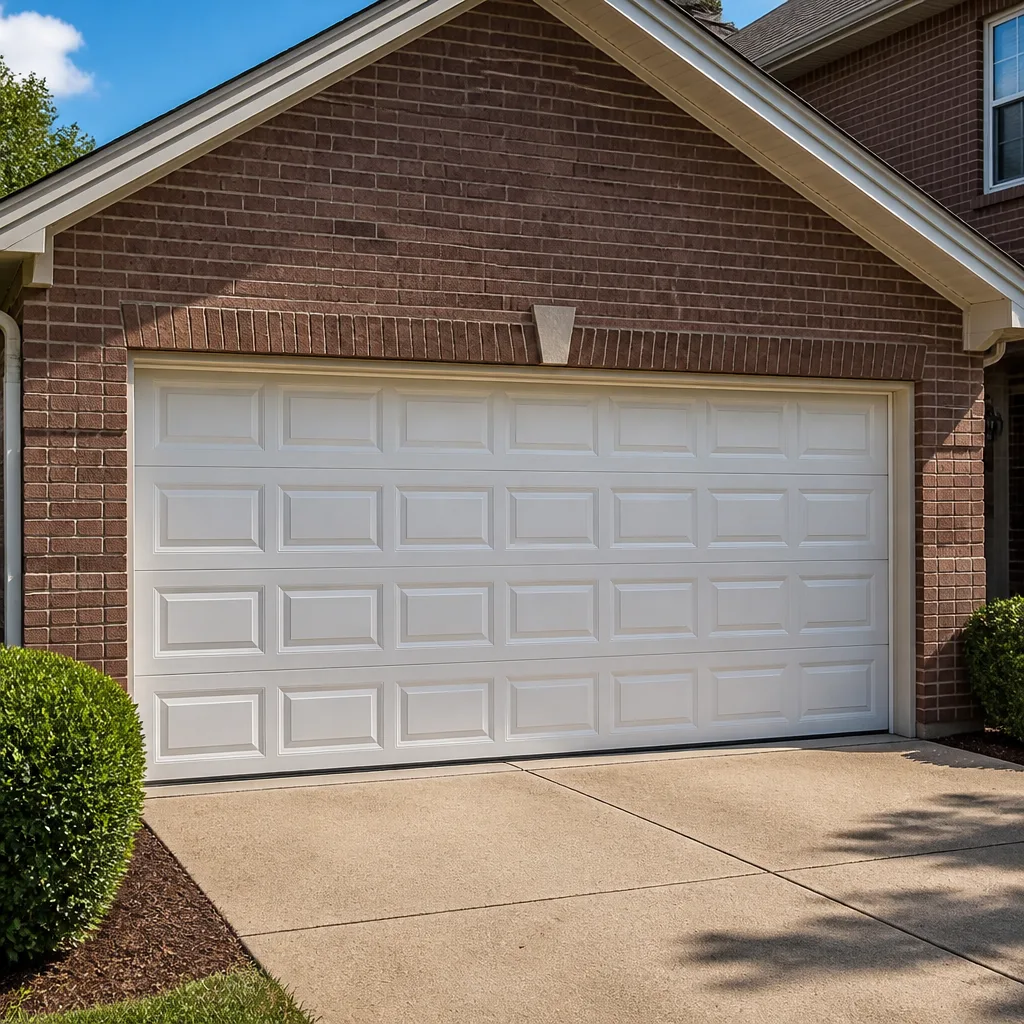
Carriage house
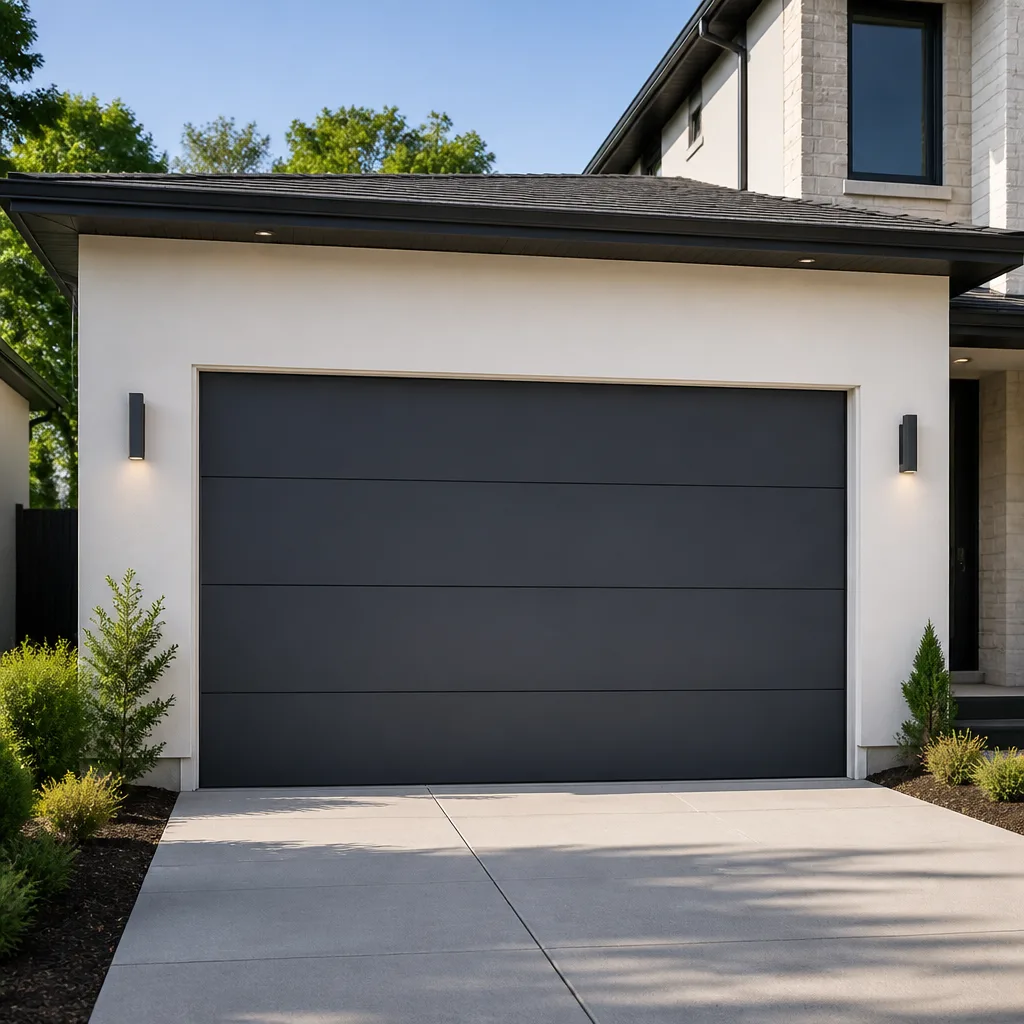
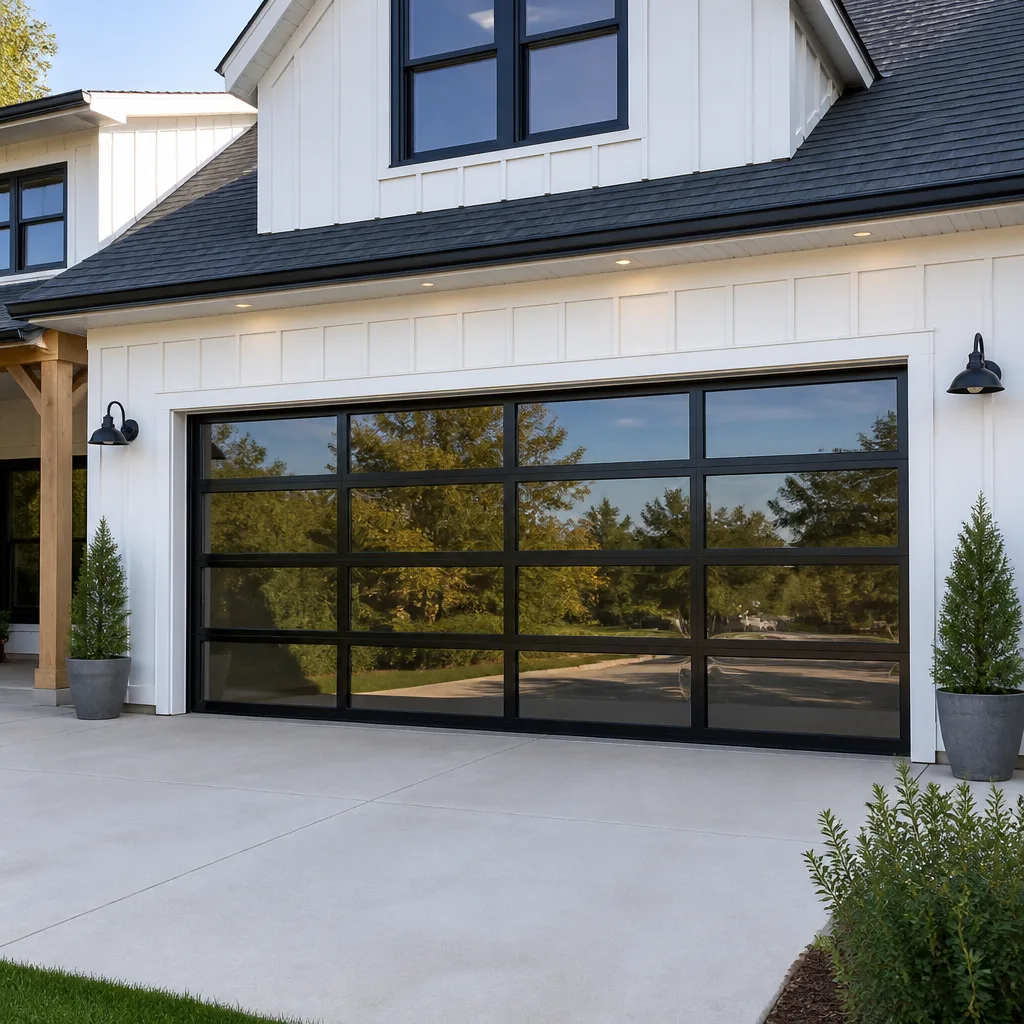
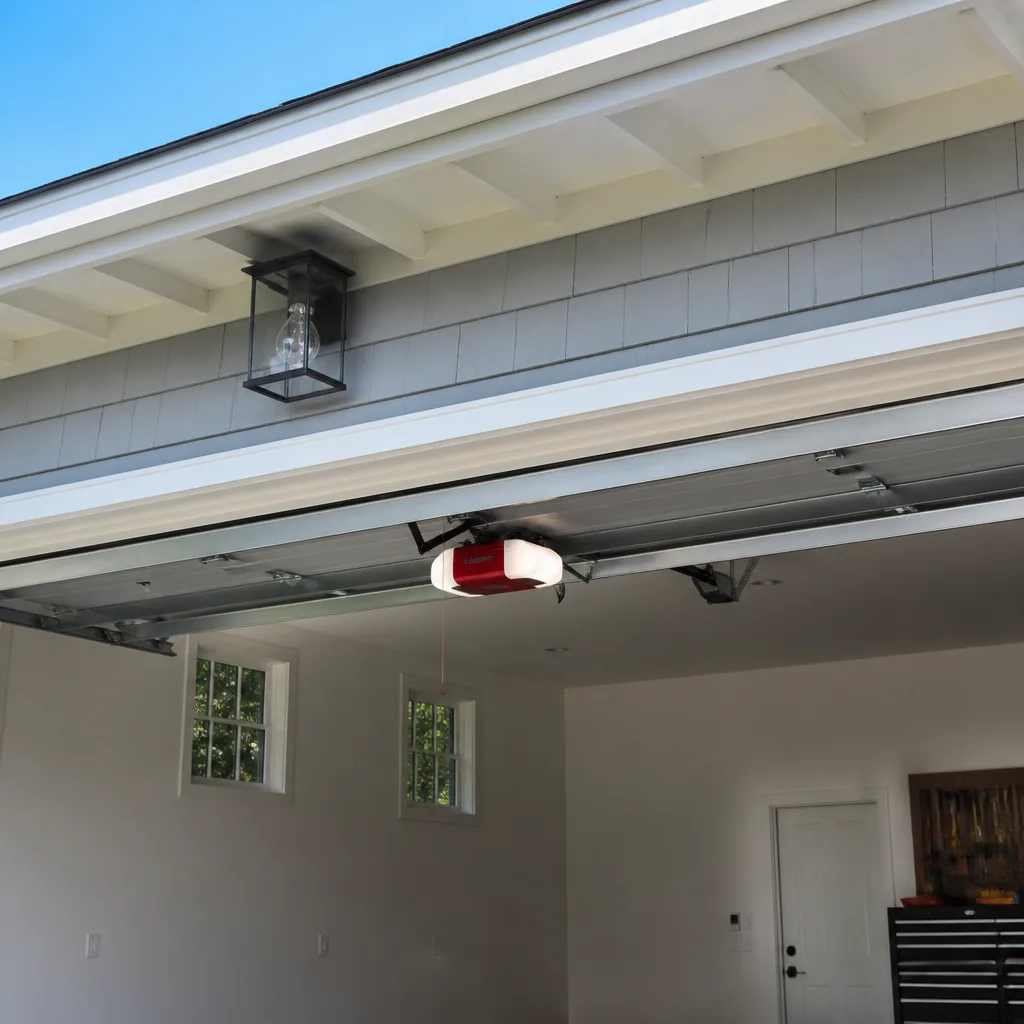
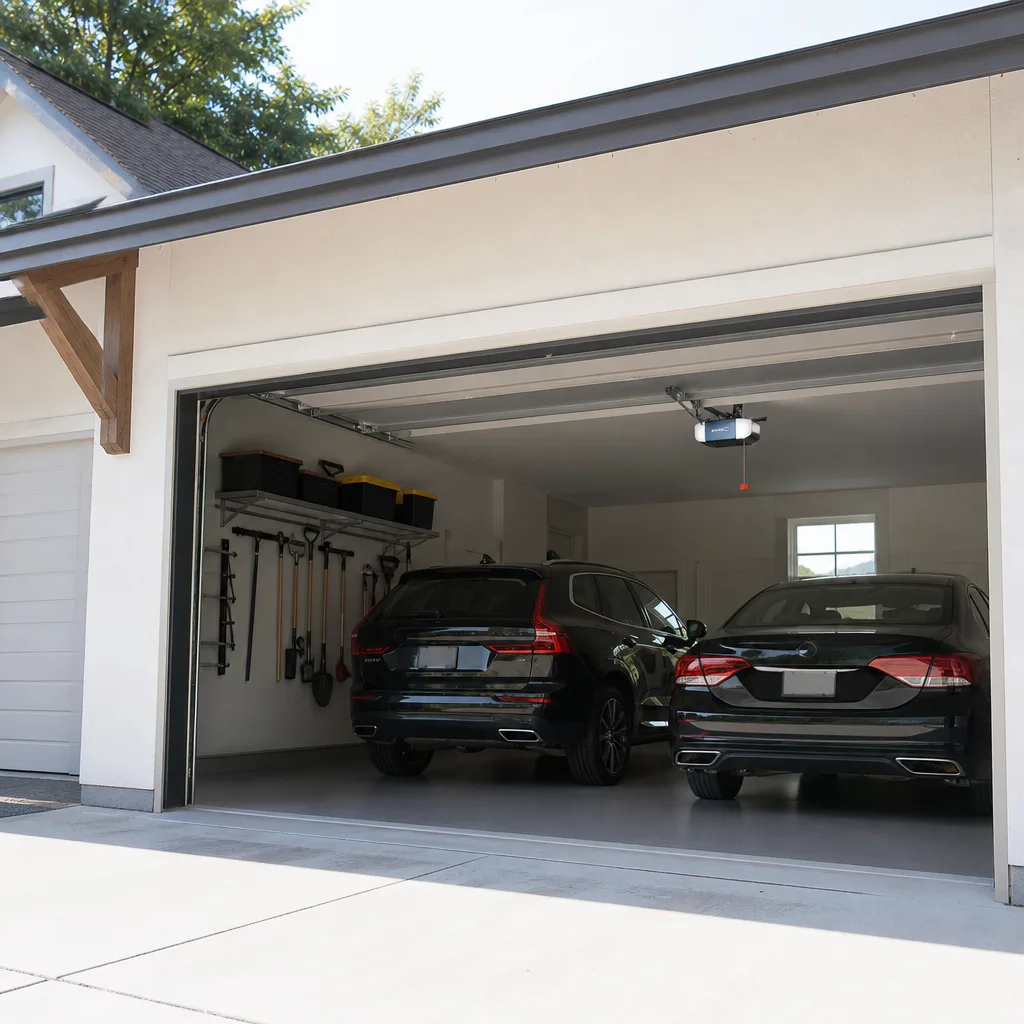
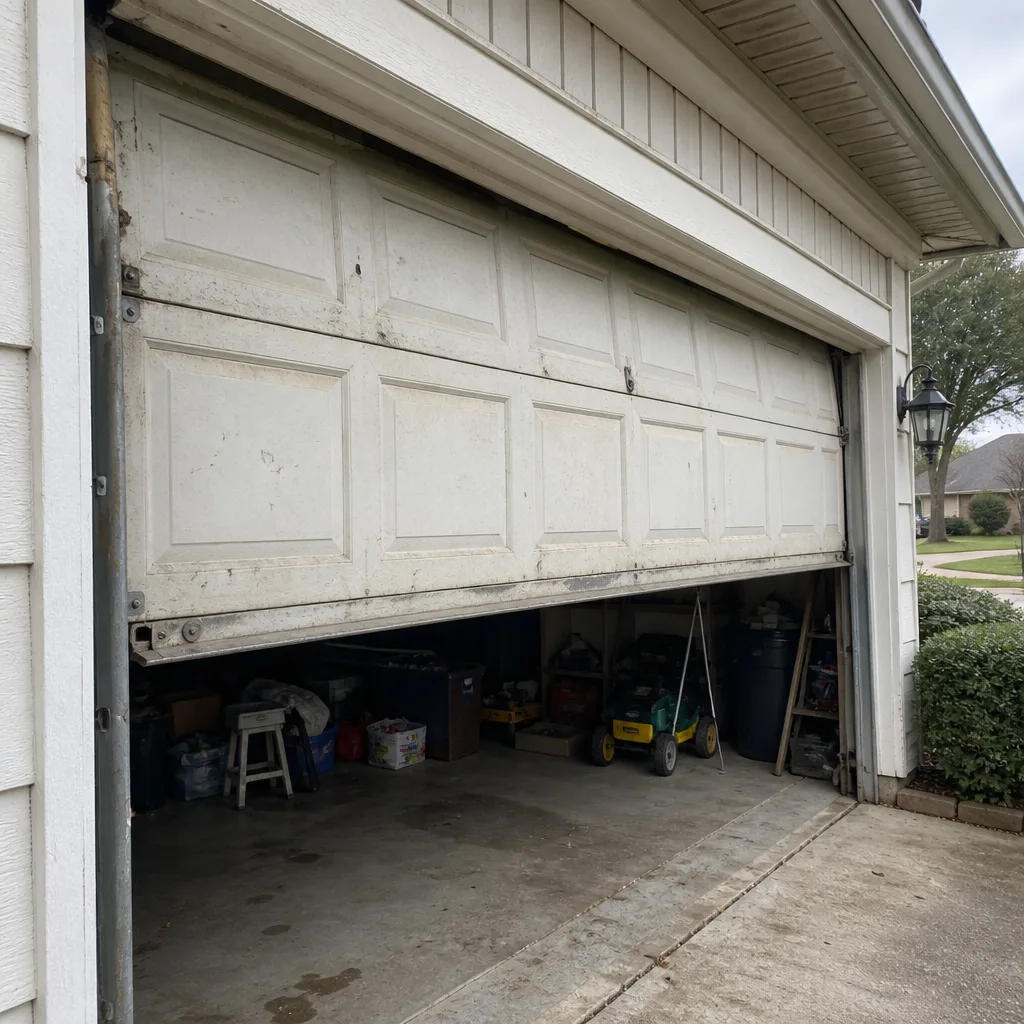 Before
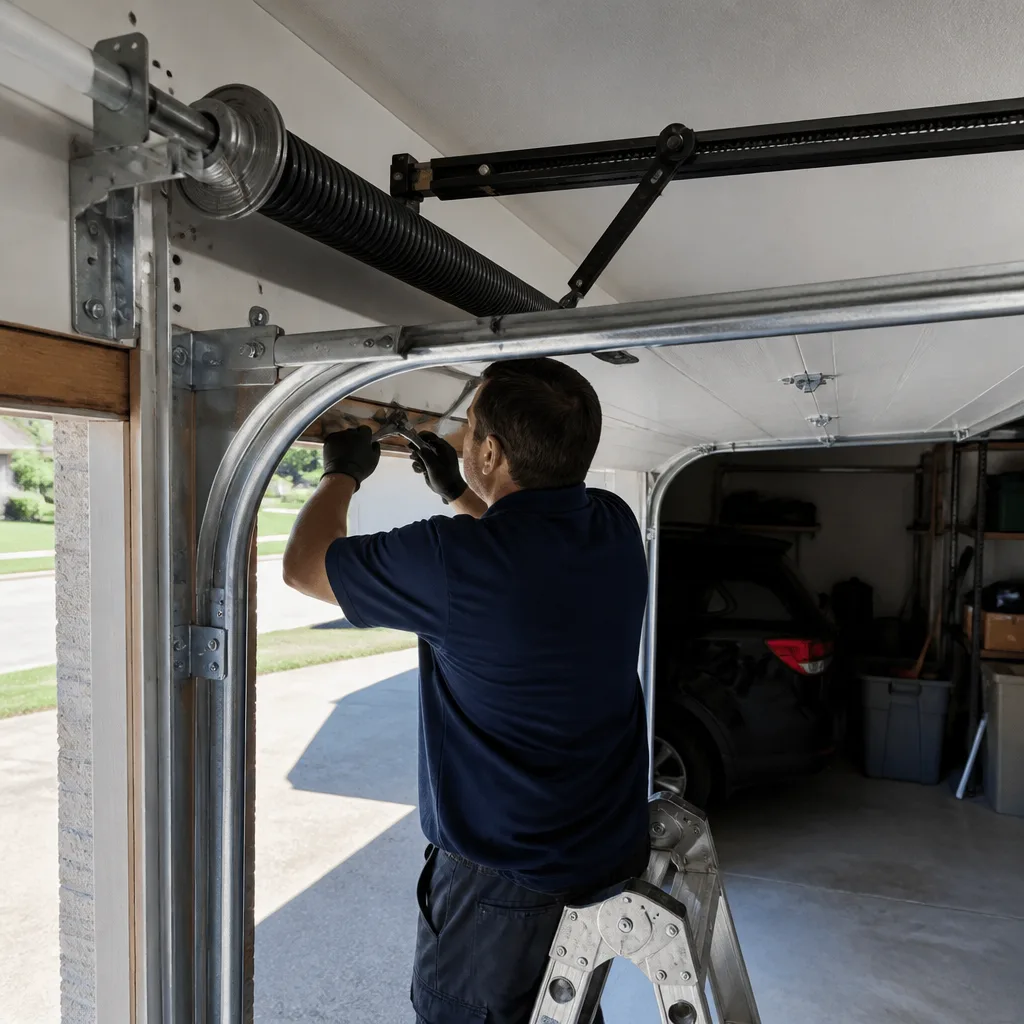 After
After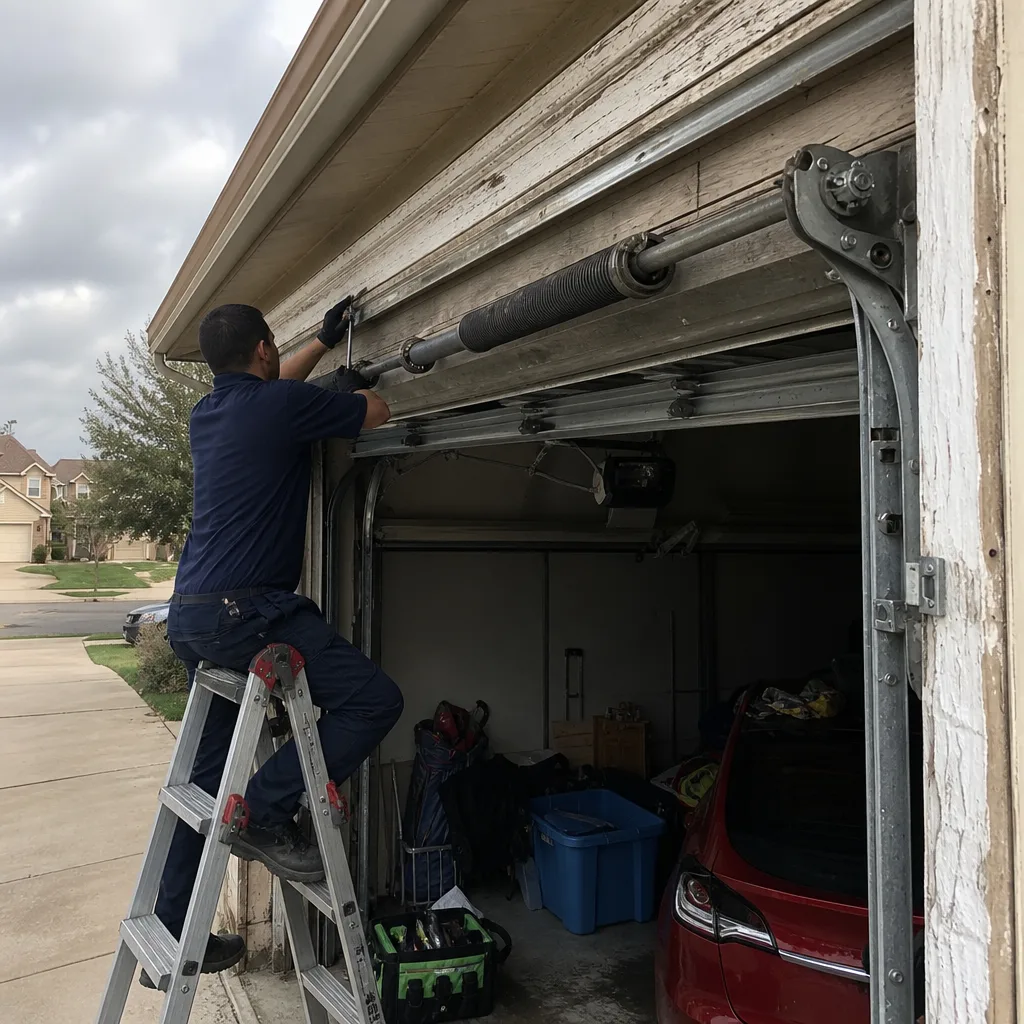 Before
 After
After Before
 After
AfterGarage Door Warning Signs: A Allen Homeowner’s Reference Guide
A garage door that hesitates for two seconds before moving is not “getting old.” It is exhibiting the exact behavior of a failing capacitor on the opener’s motor start circuit - a $25 part that becomes a $400 motor replacement if ignored for another six months. This reference guide reverses the usual warning-sign article. Instead of grouping vague symptoms, we start with the specific component most likely failing and name the observable evidence you can verify from your driveway in Allen. You’ll learn which signs are cosmetic, which need scheduling within 30 days, and which mean stop using the door immediately. For a broader overview of maintenance and repair topics, see our The Complete Guide to Garage Door in Allen.
Quick Answer
The most serious garage door warning signs in Allen, TX are frayed lift cables (more than 3 broken strands), a torsion spring with a visible gap in the coil, and a door that slows down while lifting - each indicates a component under tension that can fail catastrophically. If you see any of these, stop using the door and call a professional. Lesser signs like squealing rollers, a cracked bottom seal, or a door that shudders on the way down are usually repairable within days, not hours, and rarely cost more than $200 in parts.
Table of Contents
- Torsion Spring: The Component That Kills the Motor
- Lift Cables: How to Count Frayed Strands Before They Snap
- Rollers and Track: Loud vs. Loud and Slower
- Opener Logic Board: The Hesitation, the Click, the Ghost
- Bottom Seal and Weatherstripping: The Allen Climate Factor
- Photo Documentation: What to Photograph Before You Call
- Risk Tiers: Monitor, Schedule, or Stop
- Common Mistakes to Avoid
- When to Call a Professional
- Frequently Asked Questions
- The Bottom Line
BeforeAfterTorsion Spring: The Component That Kills the Motor
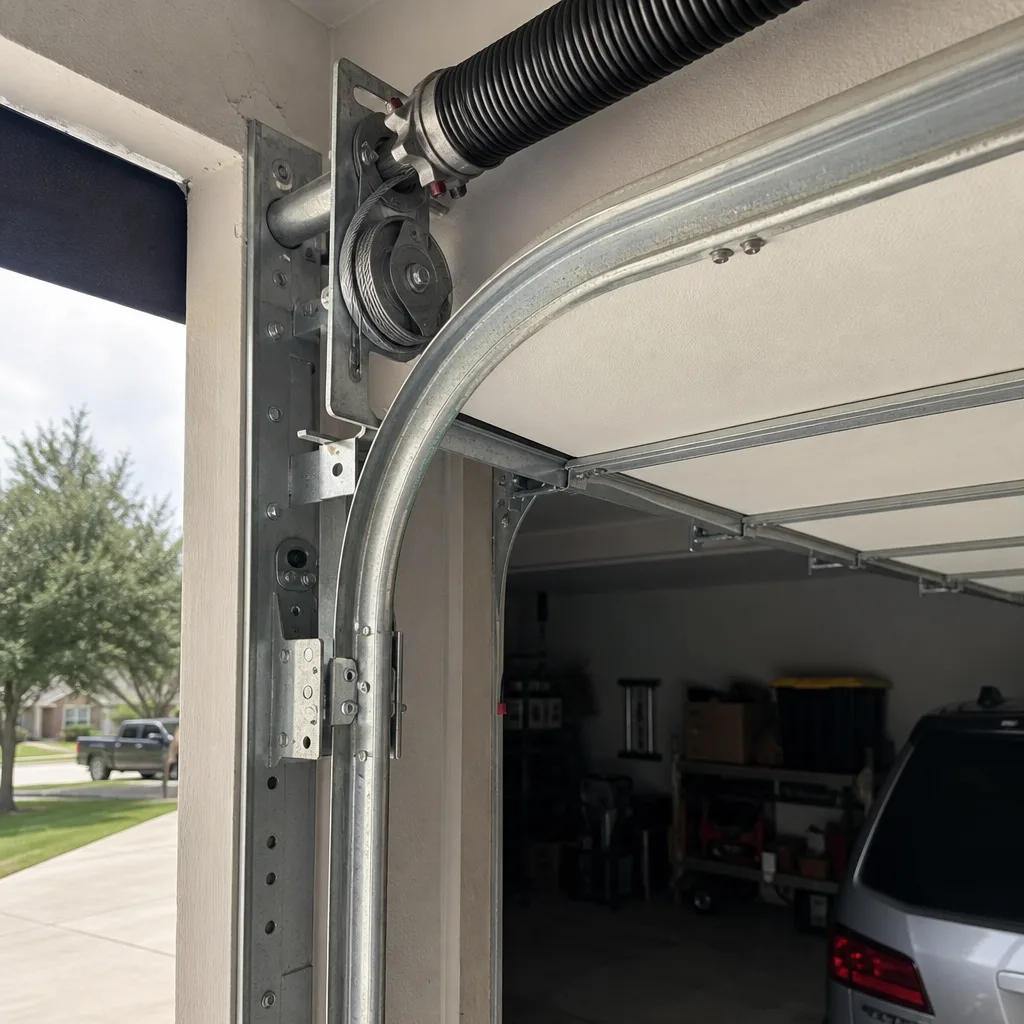
The torsion spring is the long coil, or in most Allen homes a pair of coils, mounted horizontally above the door opening. It stores mechanical energy by winding up when the door closes, then releases that energy to help lift the door when it opens. Most torsion springs in this market are rated for 10,000 cycles, which in a two-car household in Allen translates to 8 to 12 years before metal fatigue sets in. The failure mode is almost always a clean break at the coil, and it sounds like a gunshot from inside the house.
Here is what the spring tells you before it fails:
- A visible gap in the coil: If you stand on a stepladder and look at the spring, a healthy torsion spring has coils butted tight against each other. A gap of even 1/8 inch between two coils means internal fatigue and impending failure. This is a stop-use condition.
- Rust bloom on the lower third: Allen’s humidity from May through September accelerates surface corrosion. Surface rust alone is cosmetic. Rust that flakes or pits the coil is structural, and the spring has lost load capacity.
- The door feels heavy when you disengage the opener: Pull the red emergency release cord (with the door closed). Lift the door manually. It should take roughly 10 to 15 pounds of effort at chest height. If it takes noticeably more, the spring has lost tension or is near failure.
- The opener struggles or stalls halfway up: Openers are not designed to dead-lift a door. If the spring has weakened, the opener’s motor works double duty. The motor burns out before the spring does, which is why a $180 spring replacement becomes a $400 motor and a $180 spring.
In our experience in Allen, spring failures spike in late November and December, when the first cold front drops the garage temperature 30 degrees in 48 hours. Cold makes the steel more brittle. If your spring is 10 or more years old and you hear a slight creak when the door reaches the open position, that is the spring unwinding one coil at a time. Call before it fully releases.
Replacement cost for a pair of torsion springs in Allen runs $190 to $340 installed, including the springs, labor, and a written warranty. We quote the exact number in writing before touching the door, per Garage Door Repair in Allen procedures under The Haven Standard.
Lift Cables: How to Count Frayed Strands Before They Snap
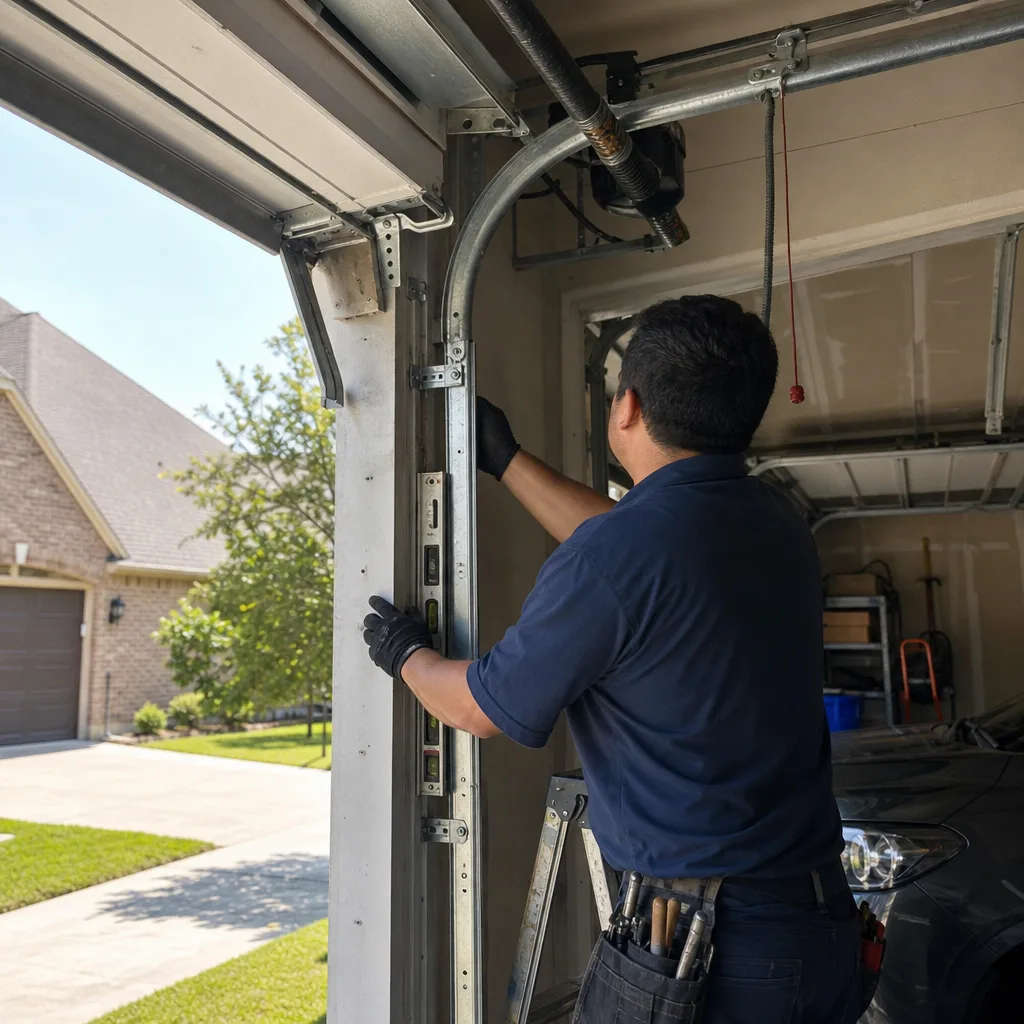
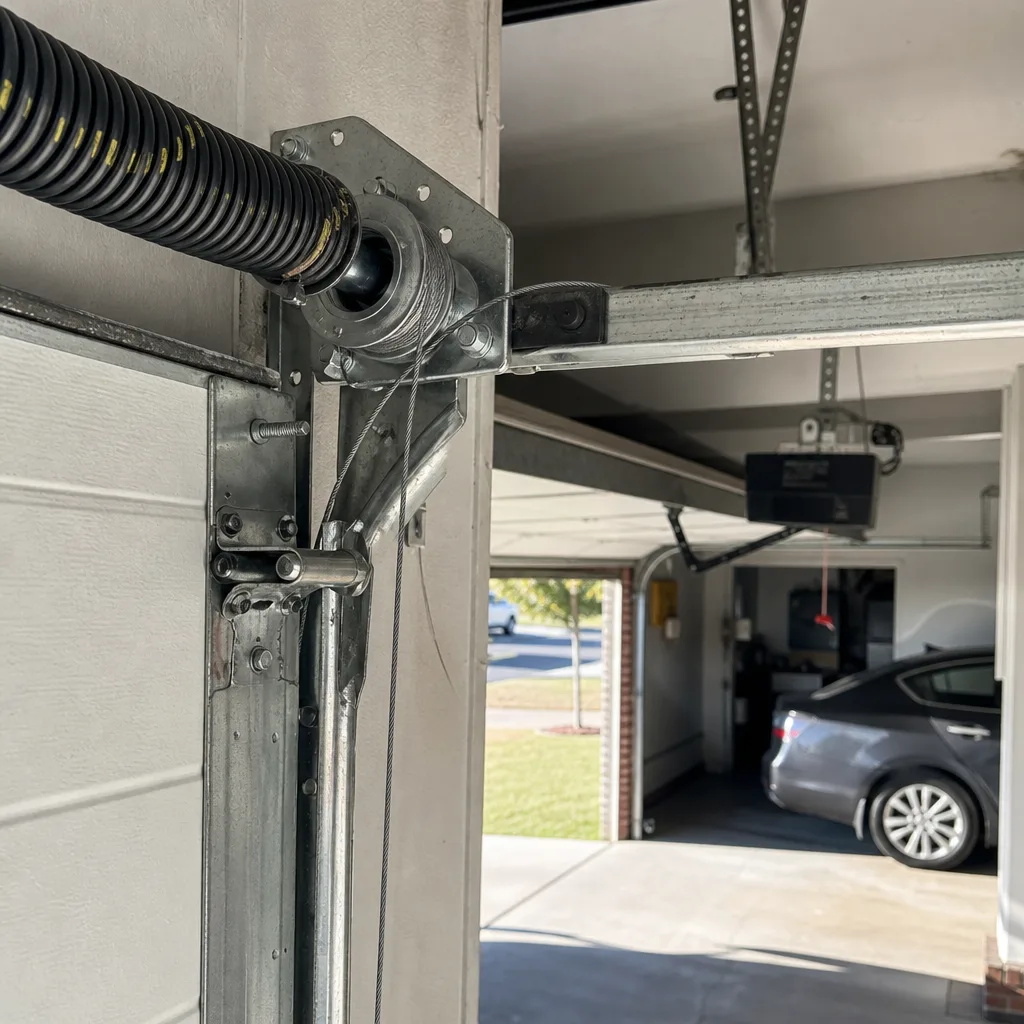
Lift cables are the braided steel wires running from the bottom brackets of the door up around the cable drums at each end of the torsion tube. They carry the door’s full weight whenever the spring is not engaged. A snap is the most violent failure a garage door can produce: the door drops diagonally, often bending the track and shattering panels. In a home built between 2015 and 2025, the original cables are often the cheapest component the builder could specify, and they show wear predictably.
The strand-count rule we teach Allen homeowners:
- 1 to 3 broken strands: Normal wear. Note the cable, photograph it, and plan to replace both cables within the next 6 to 12 months. Cost: $90 to $140 for the pair, and this is standard preventive maintenance.
- 4 to 6 broken strands: Schedule a replacement within 30 days. The remaining strands are redistributing the same load across less steel, accelerating further breakage.
- 7 or more broken strands, or any strand that has unraveled into a “birdcage”: Stop using the door immediately. Stop-use condition. The cable has lost at least one third of its load capacity and can snap on the next cycle.
One subtlety most guides miss: the difference between wear and corrosion. Allen’s clay soil holds moisture, and garages without a vapor barrier under the slab push humidity upward. You’ll see a green or brown patina on cables in older Allen homes. Patina is cosmetic. What matters is the metallic sheen of fresh broken strands against the dull gray of the intact cable. That contrast is your early-warning indicator.
During a repair, a technician should replace both cables, not just the damaged one. Matching cable lengths and tension is critical; a pair with 1/8 inch difference in effective length will lift the door unevenly and damage the bottom brackets within a year. This is also why we photograph the cables before quoting: the photo shows whether the fraying is isolated to a single point or distributed along the length, which determines whether the drum and bearings need inspection too. See Garage Door Installation in Allen for what a full-cable replacement involves.
Rollers and Track: Loud vs. Loud and Slower
Every garage door makes some noise. The diagnostic distinction that matters is whether the door is loud and slower than it used to be. A door that squeals or grinds but completes its cycle in the same time it always has is usually a lubrication issue. A door that is loud and takes three to five seconds longer to open than it did a month ago is mechanically binding. That binding force is acting on the rollers, the hinge plates, and the opener’s drive gear simultaneously, and every cycle the door completes is damaging all three.
Allen-specific note: garage door tracks expand and contract with temperature swings. A steel track installed in a west-facing garage in Allen can shift up to 1/16 inch between August and January. If the track was installed without the correct clearance on the vertical section, the door will move freely in summer and bind in winter. The noise pattern is distinct: a rhythmic scrape that pulses once per roller pass rather than a constant grind.
Nylon rollers with sealed bearings (the white rollers on most doors made after 2010) are quiet by design. When one fails, you hear a sharp intermittent squeak, not a continuous rumble. Steel rollers, found on older doors in the established neighborhoods of Allen like Twin Creeks and Lost Creek, rumble continuously and wear the track down over time. Replacement of all rollers runs $110 to $180 including parts and labor, and is a 45-minute job.
Do not lubricate the track itself. This is the most common homeowner error we see. Grease on the track collects Allen dust and clay and turns into an abrasive paste. Lubricate only the roller bearings, the hinge pivot points, and the torsion spring with a white lithium or silicone spray. If you’ve already greased the track, the fix is to wipe it clean with a degreaser before the paste scores the roller surfaces.
Opener Logic Board: The Hesitation, the Click, the Ghost
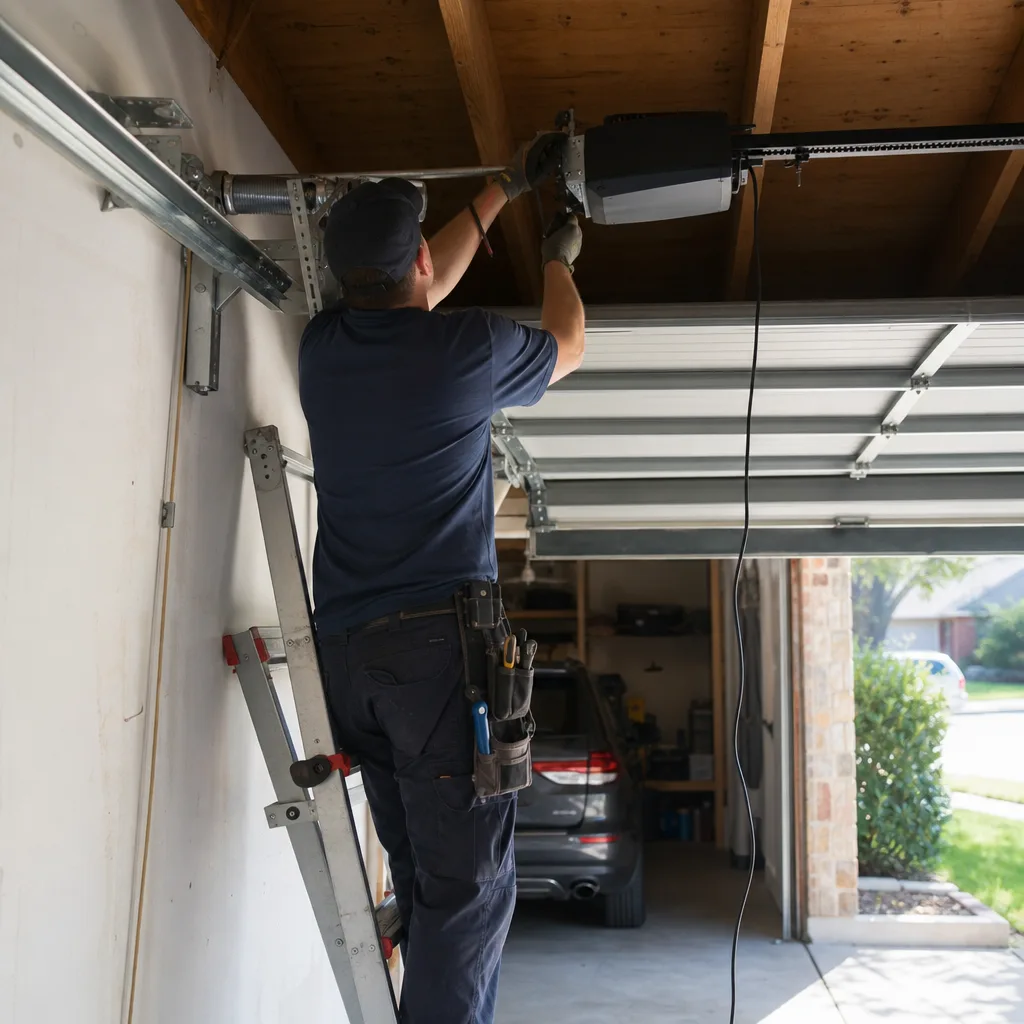
The opener’s logic board is the printed circuit board inside the motor housing. It interprets inputs from the wall button, remote controls, and safety sensors, and it tells the motor when to run, in which direction, and for how long. On LiftMaster, Chamberlain, and Genie openers - the three most common brands in Allen homes built after 2015 - the logic board is a $90 to $150 replacement part. The symptom that predicts its failure more reliably than any other is the two-second hesitation.
Here is the component-level breakdown of what you observe from the driveway:
- Two-second hesitation on command: You press the wall button. Nothing happens. Then the motor starts. On a LiftMaster, this is the logic board’s start capacitor taking longer to charge than the board expects. The board tolerates the delay for a few hundred cycles, then fails the capacitor outright. If you act now, it’s a capacitor replacement ($25 part, $80 labor in Allen). If you wait, the board fails and the motor follows. Cost differential: $105 now versus $400 in six months.
- Single click, no movement: The board is sending power to the motor, but the motor is not turning. On a Genie, this is often the start capacitor. On a Chamberlain, it can also be a stripped drive gear, which is a different repair. The distinguishing test: if the motor housing feels warm after several attempts, the motor is receiving power and stalling against a mechanical bind. If it stays cold, the capacitor or relay on the board is the failure point.
- The ghost door: The door opens or closes without anyone pressing a button. On openers with a learn button (the small button near the antenna wire), a neighbor’s remote on a close frequency, or a failing wall control with a shorted wire, can send false signals. Reset the opener codes and clear all remotes, then re-pair only the ones you own. If it recurs with no remotes paired, the logic board is the culprit.
- Intermittent reversal: The door starts to close, then reverses without the safety sensors being blocked. A failing logic board interprets normal sensor signal jitter as an obstruction. This is not a sensor alignment issue; it is a board-level signal processing failure.
For opener-level diagnosis and repair, see Garage Door Opener Repair & Installation in Allen. The board on most models is a 20-minute replacement once diagnosed, but misdiagnosing a board when the issue is a $30 travel module costs you $150 in unnecessary parts. That’s why we test with a multimeter before quoting.
Bottom Seal and Weatherstripping: The Allen Climate Factor
The bottom seal is the rubber or vinyl strip running along the bottom edge of the door. It compresses against the concrete when the door closes and blocks water, dust, insects, and unconditioned air from entering the garage. In Allen, where summer temperatures hit triple digits and thunderstorms drop two inches of rain in an hour, a failing bottom seal is not a cosmetic issue. It is a cooling-loss and water-intrusion problem.
The seal fails in three predictable ways:
- Flattening: The rubber loses its compressibility and no longer conforms to the slab. Allen clay soil causes slab movement, and a flattened seal cannot bridge the gap between the door and a slab that has shifted 1/4 inch since the home was built. You’ll see daylight under the door at one corner.
- Cracking: Ozone and heat break down the rubber over 5 to 7 years. Cracks form first at the corners where the seal bends sharply. A cracked seal leaks at exactly the point where runoff from a sloped Allen driveway pools against the door.
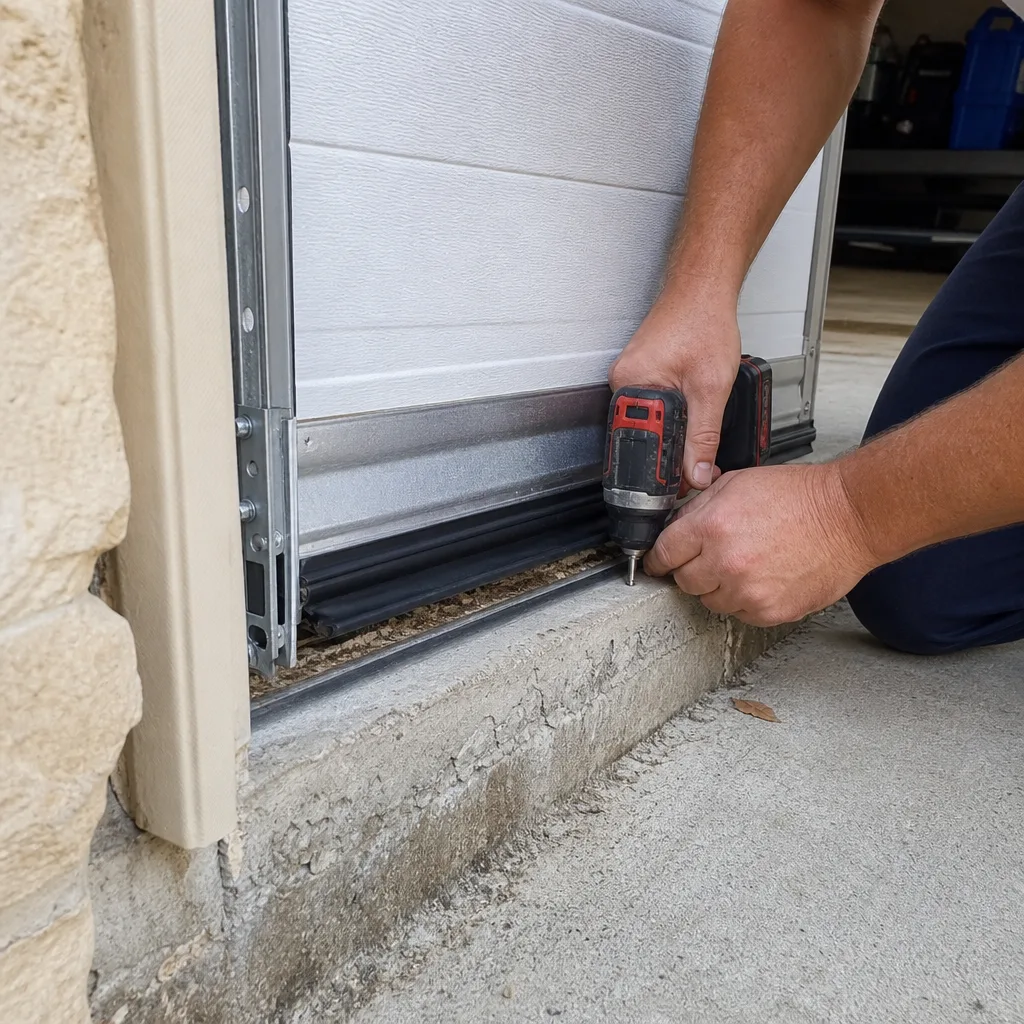
- Pulling out of the retainer: The seal slides in a retainer channel. If any 12-inch section has pulled out, the seal sags and creates a permanent gap. This is a 5-minute fix for a technician, $40 to $70 in parts for the seal and labor.
Test your seal: close the door, then check from inside the garage on a sunny afternoon. Daylight visible anywhere along the bottom edge means the seal is no longer doing its job. A seal that lets an inch of water in during a spring thunderstorm in Allen will also let in roaches, field mice, and the occasional snake from the surrounding greenbelts. Replacement of a bottom seal runs $75 to $130 installed, depending on door width.
Brand note: Amarr and Wayne Dalton doors use proprietary retainer profiles on some models, and a universal seal will not fit securely. If your door is one of these, the technician needs to know the brand before arriving, or they’ll be making a second trip for the correct material. A photo of the retainer profile sent ahead of the visit eliminates the guesswork.
Photo Documentation: What to Photograph Before You Call
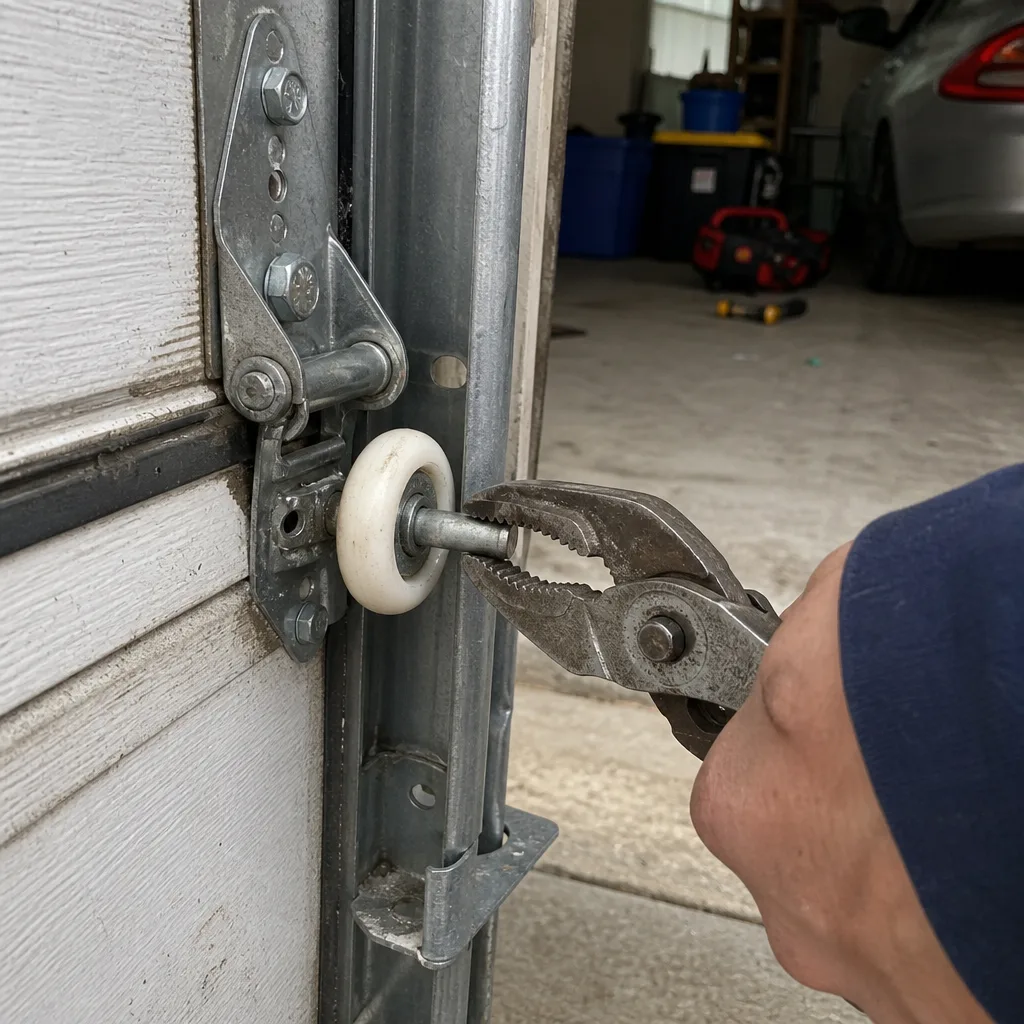
This is where Servo’s founding practice, now Clause 4 of The Haven Standard, becomes practical. The customer photographs the failed component before anyone quotes a replacement. That means the diagnosis starts with evidence you can capture from your driveway, not a walk-around inspection that may miss the detail that matters. Here is the photographic record that makes an Allen garage door service call clearer and faster:
- The torsion spring, dead center: Stand on a step ladder and photograph the entire spring, not a close-up. A full-length shot shows whether one side has a gap while the other looks normal. The thing that looks normal is the context the photo needs.
- Both lift cables, at the bottom bracket: Bottom bracket photographs reveal fraying at the attachment point, which is where 80% of cable failures begin. If you see individual strands, photograph the strand bundle as close as your phone will focus.
- The bottom seal, from inside the garage at floor level: A photo at floor level with daylight behind the seal shows gaps that are invisible from a standing position.
- The opener motor housing, with the model number visible: The model number tells the technician which logic board, capacitor, and travel module your opener uses before they arrive, which means they can bring the correct parts on the first trip.
- Video of the door cycling, with audio: A 15-second clip of the door opening and closing, recorded from inside the garage, captures the exact noise pattern and any hesitation. Sound is the single most diagnostic piece of evidence for opener issues.
When you send these to a technician, you’ve changed the dynamic of the service call. The diagnosis is no longer a discovery process; it’s a confirmation process. And at Servo Garage Doors Allen home, that means the price you receive before we arrive is the price you pay. We photograph the component during the visit, so the documented record matches what you captured. The paper trail belongs to you.
Risk Tiers: Monitor, Schedule, or Stop
Every warning sign falls into one of three tiers. This is how we train our technicians to categorize findings in Allen, and it’s how you should prioritize what you see:
Tier 1: Stop Using the Door
- Torsion spring with a visible gap or rust that flakes
- Lift cable with 7 or more broken strands or birdcaging
- Door that drops faster than a controlled descent when closing (weight imbalance)
- Any component under tension that makes a snapping or popping sound during a cycle
These are the failures that drop doors on cars, pets, or people. In our 10 years of serving Allen, we’ve seen a cable snap on a door that was “a little noisy” and destroy the entire bottom panel of a $3,000 Clopay door. The repair was 10 times the cost of the cable replacement it could have been.
Tier 2: Schedule Within 30 Days
- Lift cable with 4 to 6 broken strands
- Rollers with flat spots or visible bearing wear
- Door that is louder and slower than it was a month ago
- Bottom seal that shows daylight along more than a 12-inch section
- Opener that hesitates for two seconds or more on most commands
These will not fail imminently, but every week of operation compounds the damage. A dragging opener motor costs you $80 in electricity per year and cuts the motor’s remaining life in half.
Tier 3: Monitor and Note
- 1 to 3 broken cable strands
- Surface rust without pitting on the spring
- Intermittent squeak from one roller
- Door that shudders once as it passes a particular point in the track
- Cosmetic dents or panel scratches with no functional impact
Photograph each of these on the day you notice it. A dated photo is the only reliable way to know whether a condition is stable or progressing. When you have three dated photos 90 days apart, you have a trend line. That is more diagnostic value than a 30-minute inspection.
Common Mistakes to Avoid
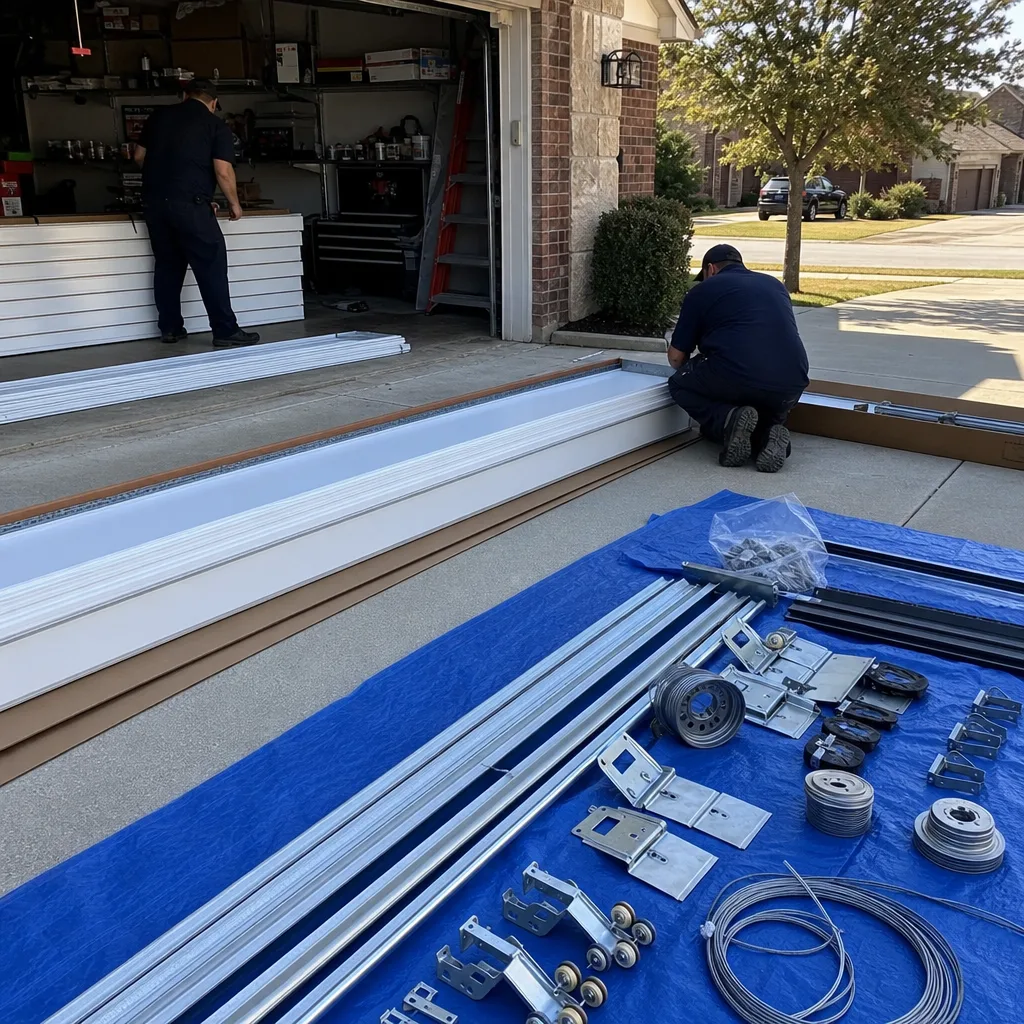
- Greasing the track to quiet a noisy door. Track lubrication does not reduce roller noise, and it turns Allen dust into abrasive slurry. Lubricate the bearings and hinges, never the rail.
- Replacing the batteries in the remote when the door hesitates. A two-second hesitation with fresh batteries is a capacitor or logic board issue, not a signal issue. Replacing batteries costs $6 and changes nothing.
- Pulling the emergency release cord while the door is open. On a door with a failing spring, this releases the door to gravity. The door drops, and the cable drums freewheel. This is how you turn a spring replacement into a panel replacement.
- Ignoring a door that shudders because “it still works.” Shuddering means the door is not tracking true. Every cycle it shudders, it is wearing the same roller bearing down another fraction of a millimeter. The repair is $110 when caught early and $400 when the roller seizes and drags the track out of alignment.
- Hiring the cheapest internet estimate without asking for a written scope. The lowest quote in Allen often excludes the parts that are about to fail. A flat, written price and a written scope, per Clause 1 of The Haven Standard, is the only way to compare two bids side by side. If a company won’t put it in writing before the work starts, that is a decision, not an oversight.
- Waiting until a weeknight emergency to find a garage door company. Allen homeowners who call at 8:00 PM with a door stuck open need a technician with a live dispatcher, not a voicemail. Companies that answer with a live person 24/7 and send a named technician with an on-the-way text are rare. You do not want to be researching that at 8:00 PM with a garage full of tools and a storm coming.
When to Call a Professional
Call if you see any Tier 1 sign, if a cable has more than 3 broken strands, if the spring has any visible gap, or if the door is on a steeper decline than it was two weeks ago. Torsion springs operate under 200+ pounds of stored torque. Losing a finger or a face to a spring you tried to adjust yourself costs more than the $190 to $340 a professional replacement costs in Allen. Lift cables, too: do not attempt to re-seat a cable that has jumped off the drum. The spring tension that holds a cable in place is lethal if released incorrectly. Servo Garage Doors Allen offers free estimates in Allen - call (469) 613-4703 and a real person answers, 24/7, even at 2:00 AM when the spring lets go and the door is stuck open with your car inside.
Frequently Asked Questions
Expect to pay $190 to $340 for a pair of torsion springs installed in Allen, including parts, labor, and a written warranty. The range depends on spring wire diameter and cycle rating. Before any work begins, you receive a flat, written price with the exact spring specification. Call (469) 613-4703 for a precise quote - estimates are free.
No. Lift cables provide visible warning in the form of broken strands, rust pitting, or birdcaging days or weeks before failure. The problem is that most homeowners never look at the cables. Inspect the cable at the bottom bracket - if you see 7 or more broken strands, stop using the door and call a technician.
A two-second hesitation before the motor engages is almost always a failing start capacitor or logic board on the opener, not a mechanical issue with the door. On most openers if you address it early, it’s a $25 to $80 fix. If you wait, the motor burns out and the repair is $400.
Not with Servo. The flat, written price and written scope, per Clause 1 of The Haven Standard, is delivered before any work starts. You photograph the component first, we confirm the diagnosis, and the price is the price. If we find something additional, you receive a new written price for the additional work before it is done.
Yes. Our trucks in Allen carry torsion springs in the most common wire sizes, both cable lengths, universal and brand-specific bottom seals, rollers, hinges, and opener capacitors and logic boards for LiftMaster, Chamberlain, and Genie. If you send photos of your specific component before the visit, we can confirm the part is on the truck before we arrive.
Clause 4 of The Haven Standard requires that the customer receives photographic evidence of what was found and what was done on every visit. You see the failed torsion spring before anyone quotes a replacement. You see the new spring installed before you sign off. The photos are yours. This practice started with our founding in 2015 and is written into the standard every Servo job is held to.
Standard torsion springs are rated for 10,000 cycles, which in a typical Allen household means 8 to 12 years. Allen’s temperature swings and summer humidity shorten the window slightly compared to drier climates. If your springs are over 10 years old and you’ve never replaced them, have them inspected now rather than waiting for the break.
The Bottom Line
A garage door is the largest moving object in your home, and every component that is about to fail announces itself in advance. The task is learning to read the signals: the gap in the spring coil, the third broken strand on the cable, the two-second delay before the motor turns. In Allen, where summer heat and clay soil stress every part of the system, these signs are consistent and predictable. Photograph them, date the photos, and act on the risk tier. When you call a professional, insist on a written price before work starts. A company that will not put a number on paper is telling you something. Servo Garage Doors Allen has never started a job without one, and we never will.
Ready for a free estimate? Call (469) 613-4703 - we answer live, 24/7, and the price you receive is the price you pay.
Written by Marcus Deller, Owner at Servo Garage Doors Allen, serving Allen since 2015.