
Last updated September 20, 2026
Full 25-point door and opener safety check with every visit - springs, cables, rollers, tracks, and your LiftMaster or Chamberlain opener included
You get a price before we start. It does not change when the truck arrives.
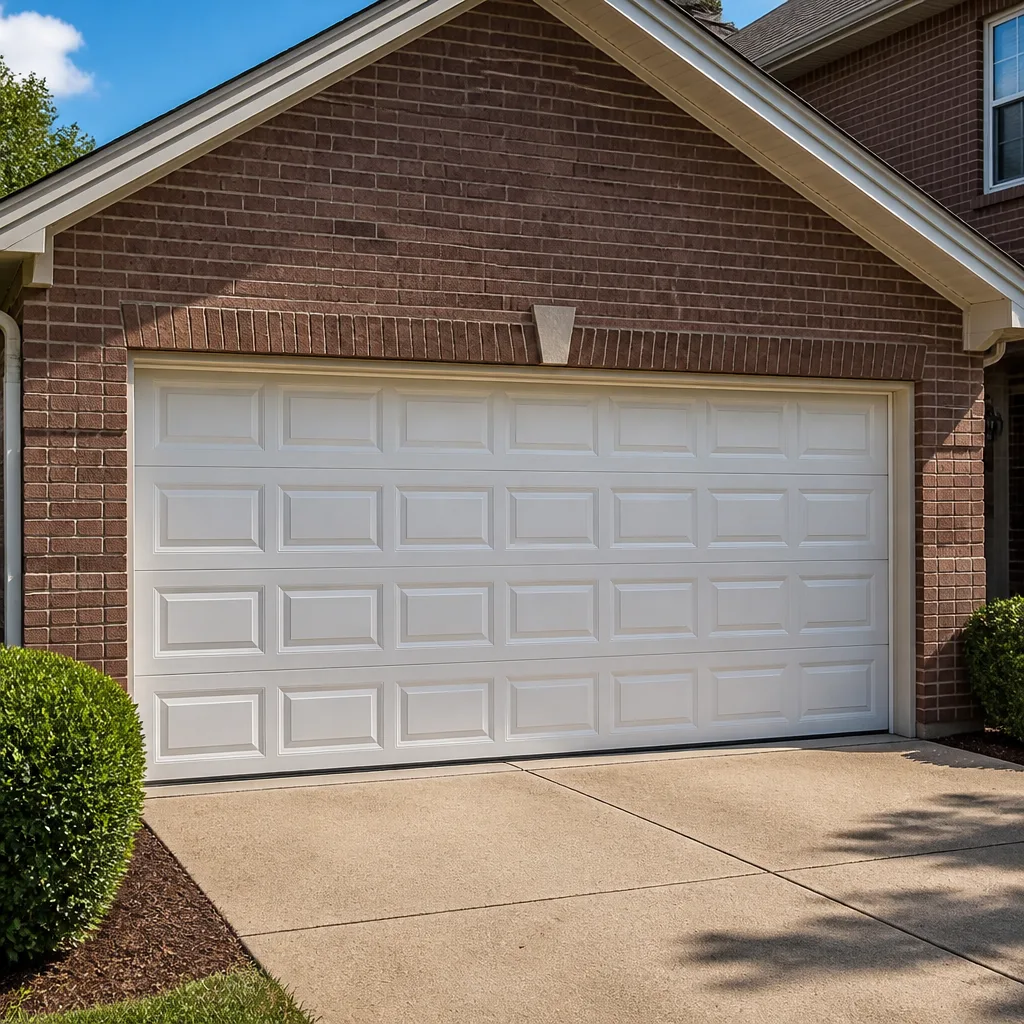
Carriage house
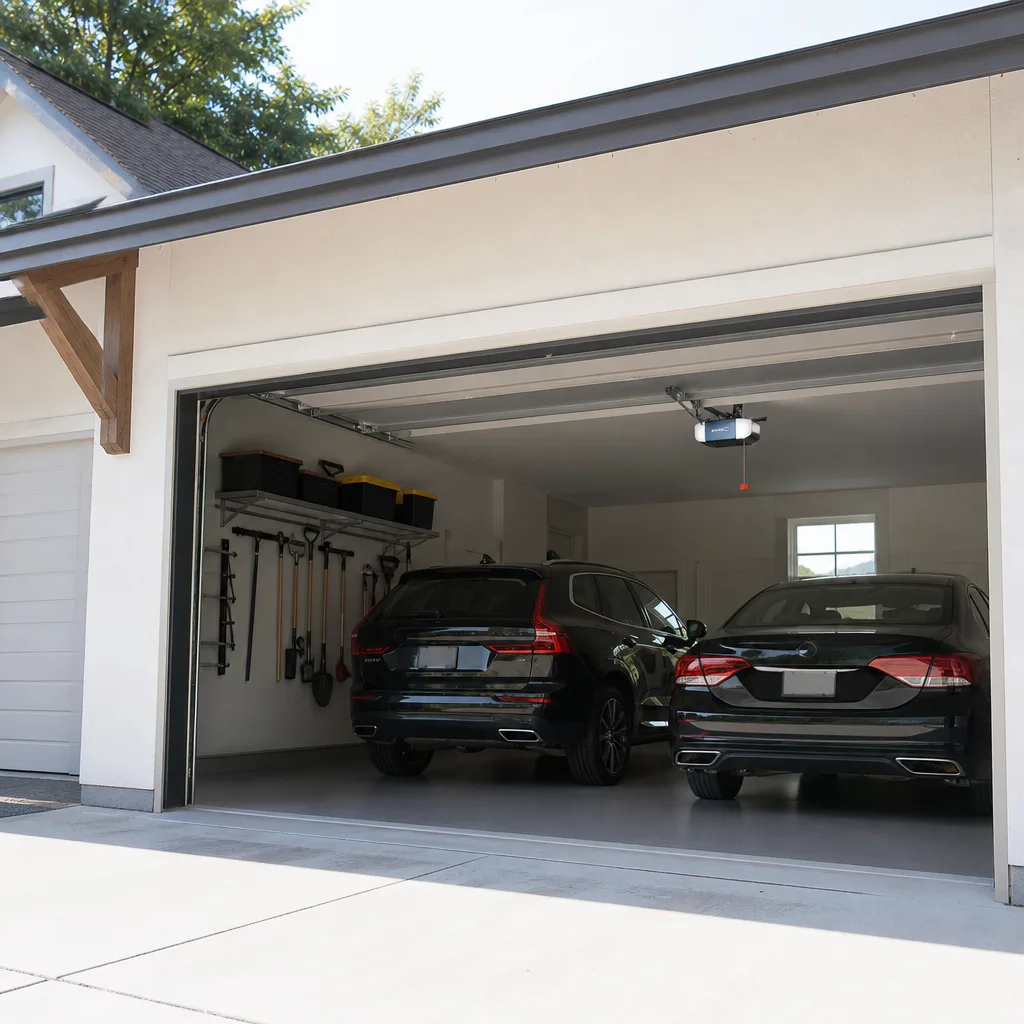
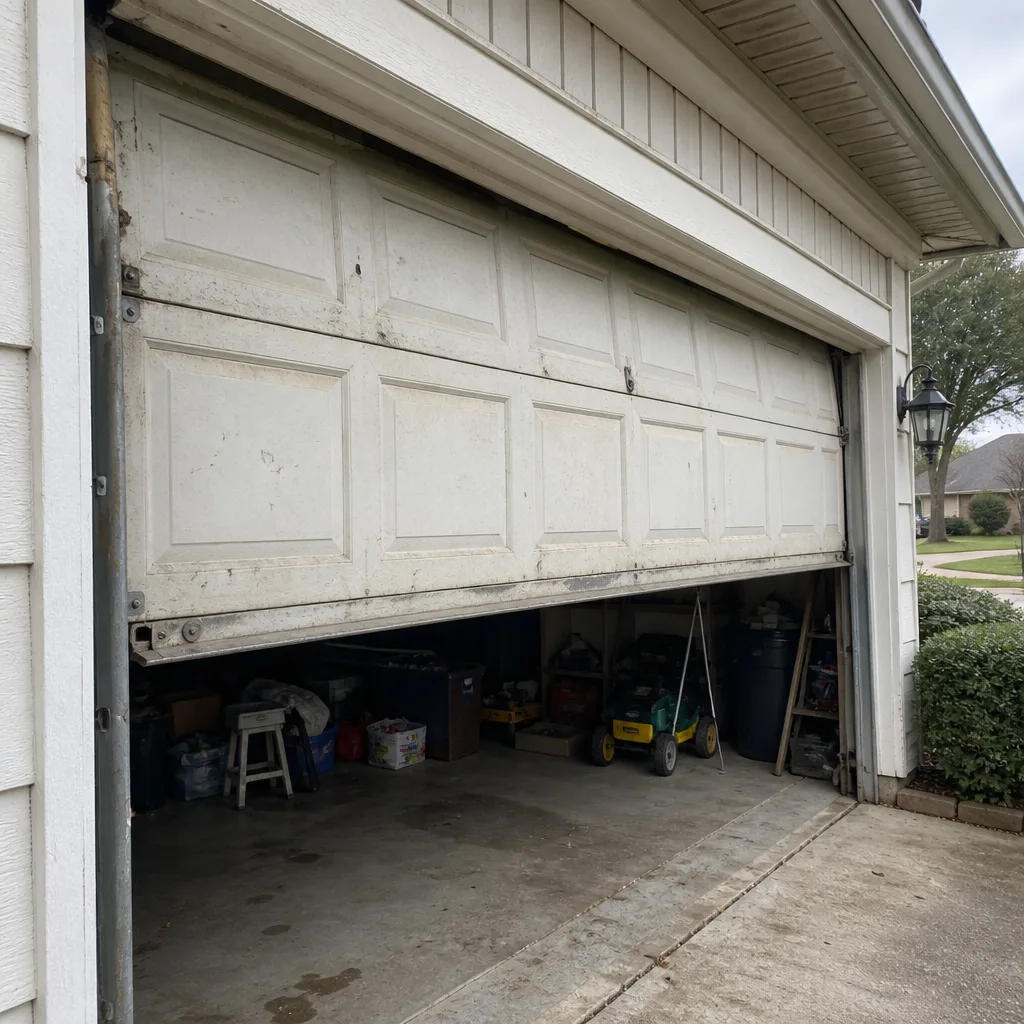 Before
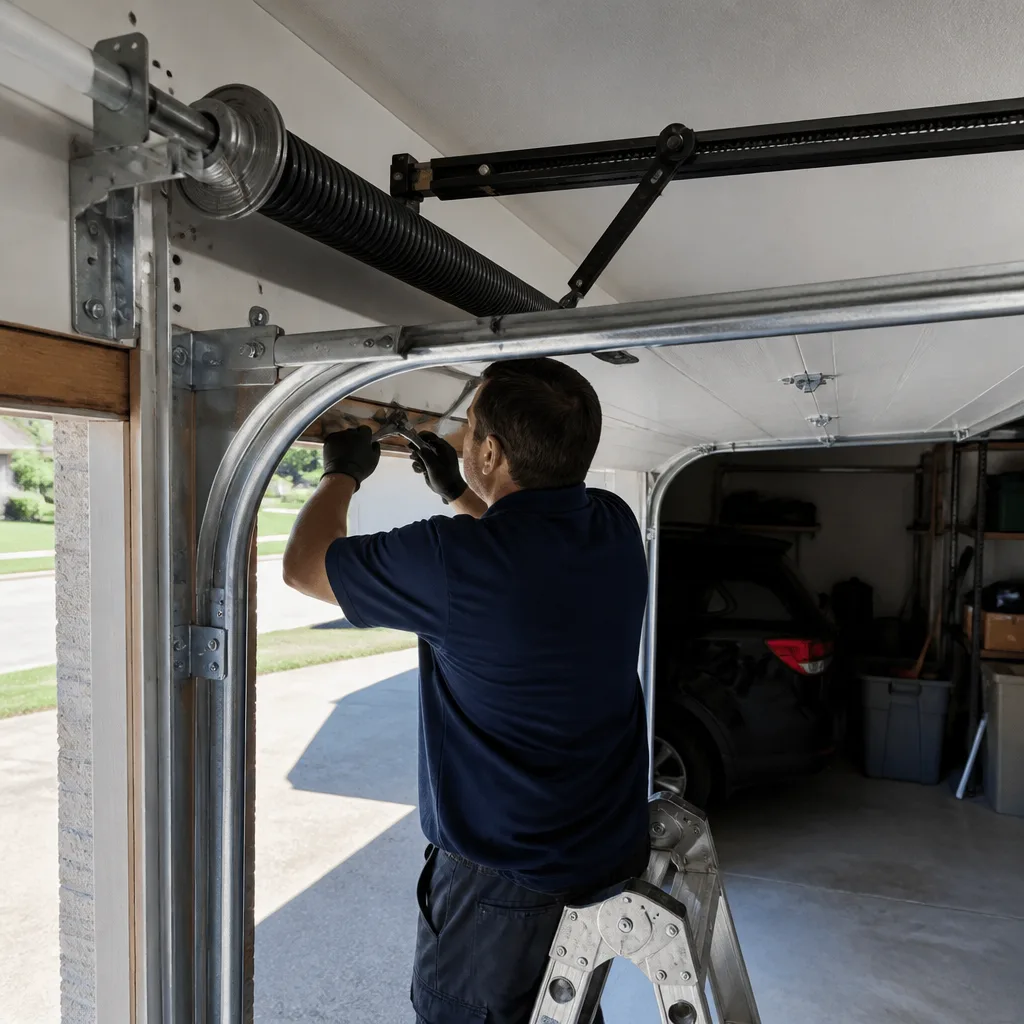 After
After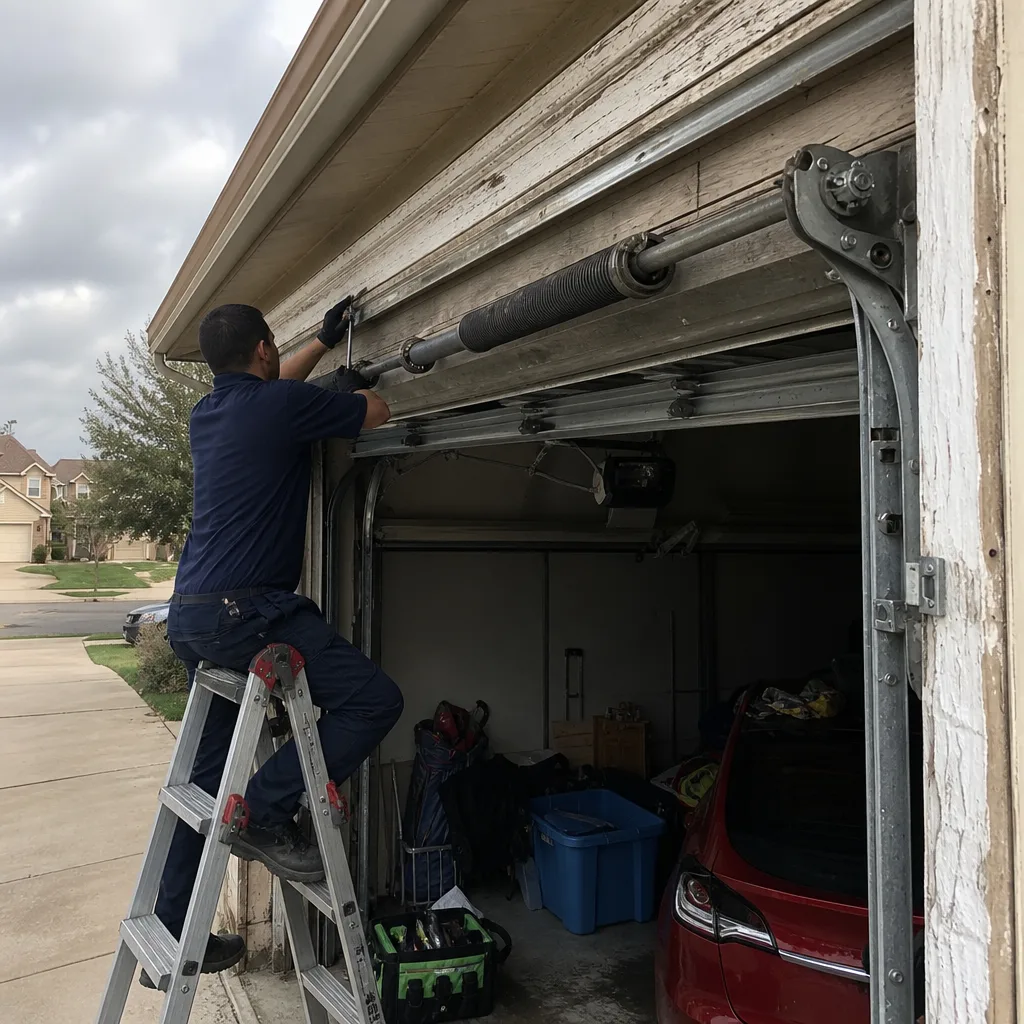 Before
 After
After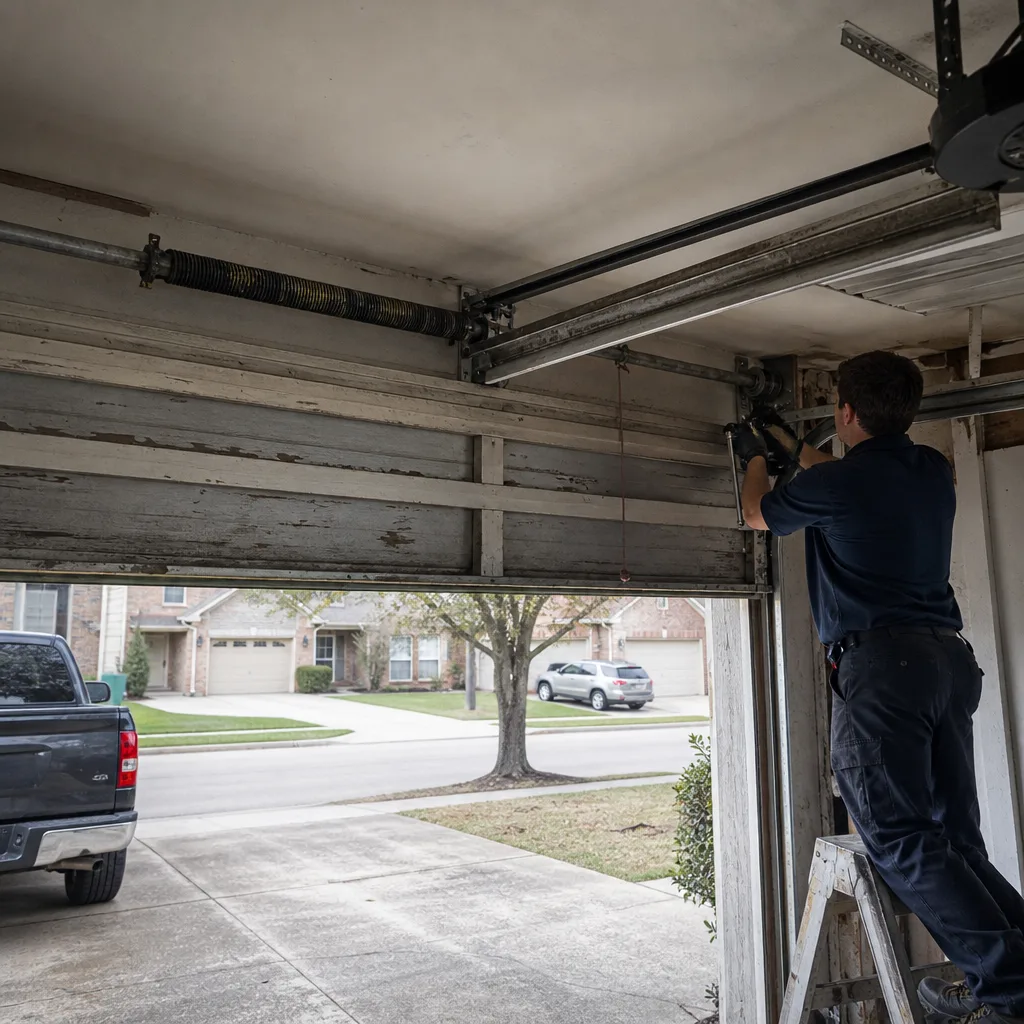 Before
 After
AfterGarage Door Repair Maintenance Checklist for Allen Homeowners
Most printed maintenance checklists tell Allen homeowners to “lubricate moving parts” without specifying that the wrong lubricant, WD-40 on a torsion spring, accelerates corrosion rather than preventing it. For professional help with these issues, consider our Garage Door Repair services. That single misstep turns a $15 maintenance task into a $280 spring replacement. This guide fixes that problem. You’ll learn exactly what to inspect, what a failing component actually looks and sounds like, and the pass/monitor/replace call for each item on the list. If you live in Allen and your garage door cycles four or more times a day, this is the page that tells you what the generic checklists leave out.
Quick Answer
A garage door maintenance checklist for Allen homeowners should cover seven components: torsion springs, cables, rollers, tracks, hinges, opener force settings, and weatherstripping. Inspect every six months, with extra checks after July and August heat cycles. Each item gets a pass, monitor, or replace decision. If a torsion spring shows a gap in the coil or a cable has more than three broken strands, stop using the door and call a professional. Learn to spot these issues early with our Garage Door Warning Signs: A Allen Homeowner’s Reference Guide.
Table of Contents
- Torsion Springs: The Component That Kills Generic Checklists
- Cables: The 10-Second Ground-Level Fray Test
- Rollers: What Worn Nylon Actually Looks Like
- Tracks and Hinges: Alignment, Wear, and the Bolt You Need to Check
- Opener Force Settings: The 2×4 Test and What It Actually Tells You
- Weatherstripping and the Allen Heat Cycle Problem
- Seasonal Timing: What to Inspect After July Versus After January
- Common Mistakes to Avoid
- When to Call a Professional
- Frequently Asked Questions
BeforeAfterTorsion Springs: The Component That Kills Generic Checklists
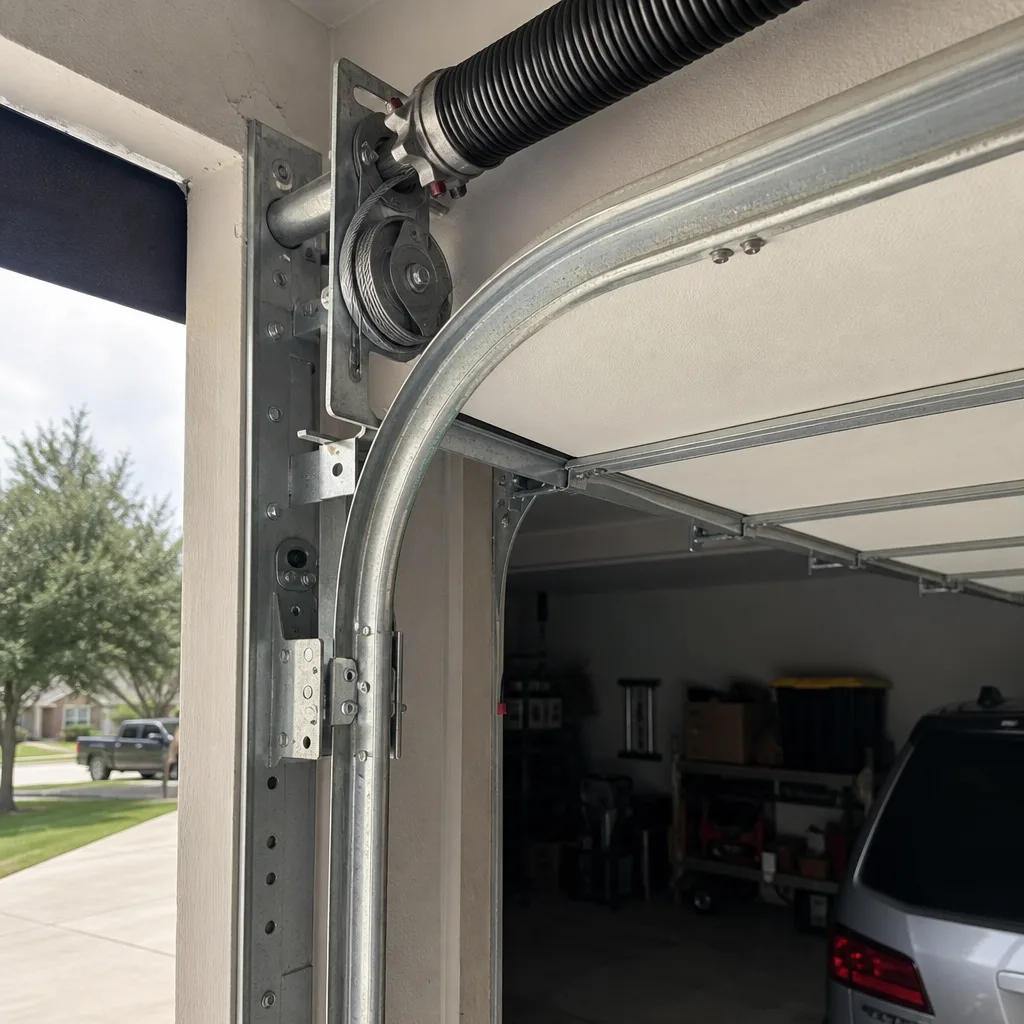
Torsion springs do the heavy lifting. They’re mounted horizontally above the door opening and store the mechanical energy that counterbalances the door’s weight. When you hear a garage door spring repair in Allen priced between $220 and $340, that’s almost always a torsion spring replacement, not a simple tune-up. The spring is under constant tension, and in Allen’s climate, the metal expands and contracts through every summer heat cycle. That thermal stress is why we see spring failures in Allen most often in late August and early September, after three solid months of 95-degree afternoons.
Here’s the checklist item, with the specific signal that matters:
- What to check: The gap between coils on each spring. On a healthy torsion spring, the coils sit tight against each other with no visible separation.
- Pass: Coils are tight, no rust beyond light surface oxidation, no visible gap.
- Monitor: Light surface rust is present, but coils remain tight. Plan to replace within 12 to 18 months. Rust weakens the wire diameter over time.
- Replace now: You see a visible gap in the coil, typically a half-inch separation about two-thirds of the way along the spring. That’s the break point. The spring has failed or is about to. Stop using the door immediately.
Springs have a finite cycle life. A standard 10,000-cycle spring lasts roughly seven to ten years in a typical Allen home with two cars and four open-close cycles per day. A 20,000-cycle spring roughly doubles that. When we replace a broken spring at Servo Garage Doors Allen, we show the homeowner the failed component before quoting the replacement. Clause 4 of The Haven Standard documents the failure, so you see the break, understand the repair, and approve a flat written price before any work starts. That’s how garage door repair in Allen should work.
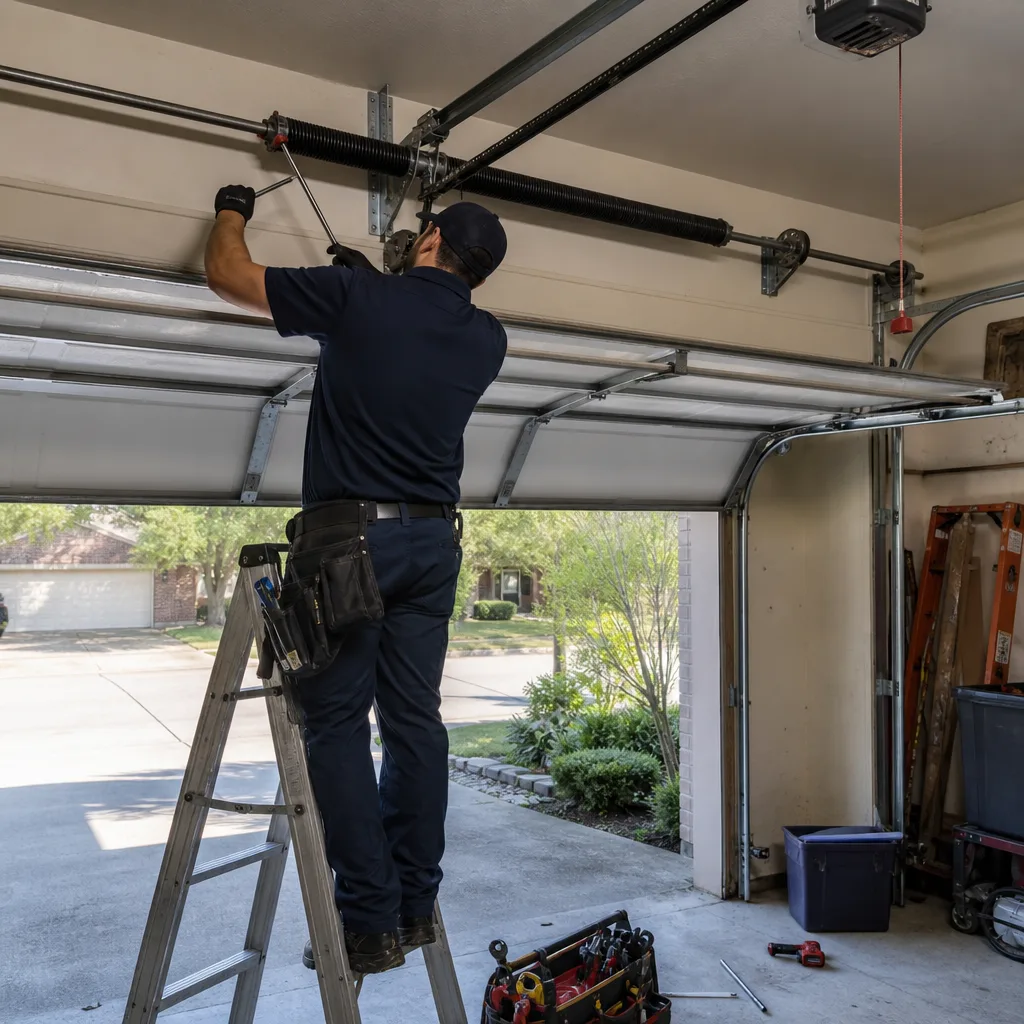
A word on safety: torsion springs are under enough tension to cause serious injury or death if mishandled. Never attempt to remove, adjust, or replace a torsion spring yourself. This is the one component on the checklist where “monitor” means watching, not touching.
Cables: The 10-Second Ground-Level Fray Test
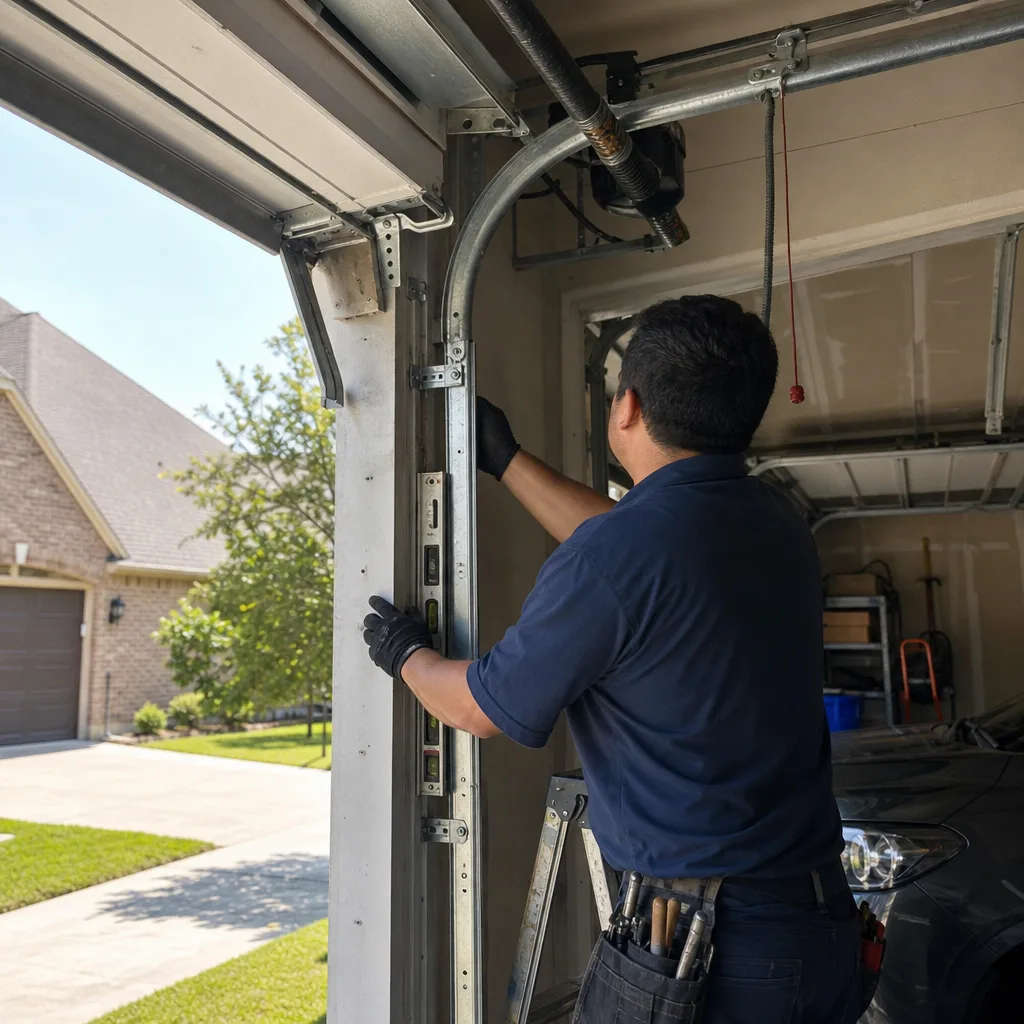
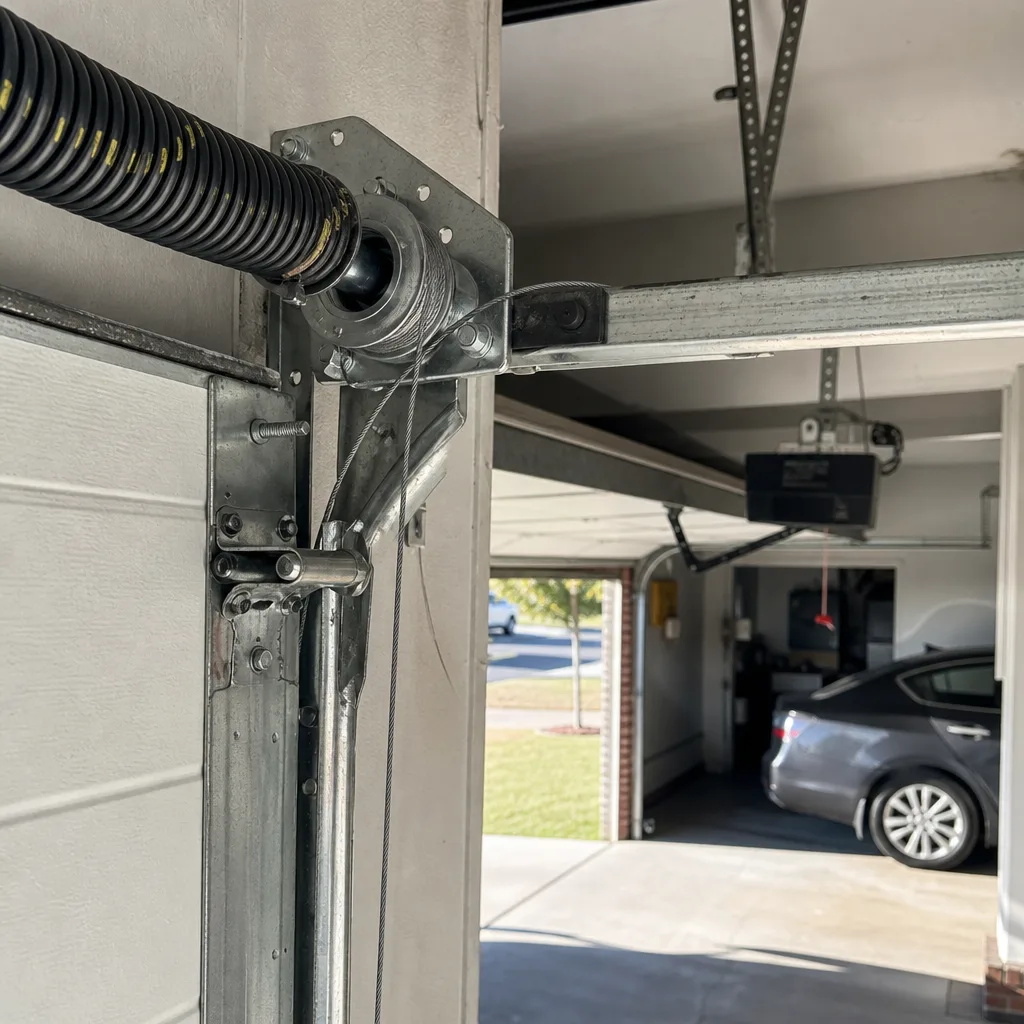
Lift cables are the braided steel wires that run along both sides of the door, winding around a drum at the top and anchoring to the bottom bracket. When a cable frays and snaps, the door can fall unevenly, which is dangerous and usually damages the panel or track on the way down. The good news: you can spot cable wear from the ground in about ten seconds, without touching anything.
Here’s the step-by-step visual inspection:
- Close the door completely.
- Stand about three feet back from either side of the door.
- Look at the cable where it enters the drum at the top of the track.
- Run your eyes down the cable to the bottom bracket. Look for individual wire strands poking out from the main braid, which looks like a fuzzy or whiskered spot.
- Repeat on the other side.
The decision column:
- Pass: Cable is smooth, no stray strands, no rust staining on the track or drum.
- Monitor: One or two broken strands near the bottom bracket, or light surface rust. The cable is degrading. Plan replacement within three to six months, and don’t operate the door more than necessary in the meantime.
- Replace now: Three or more broken strands anywhere on the cable, or any strand separation at the drum. A snapped cable is imminent. Stop using the door and call for service. Cable replacement in Allen typically runs $150 to $220 per side, including the cable and labor.
We’ve seen cables fail in Allen homes where the door was installed in the early 2000s and never re-tensioned. The cable doesn’t just age; it fatigues where it repeatedly flexes over the drum. That’s the failure point in the majority of cases, not the bottom bracket.
Rollers: What Worn Nylon Actually Looks Like
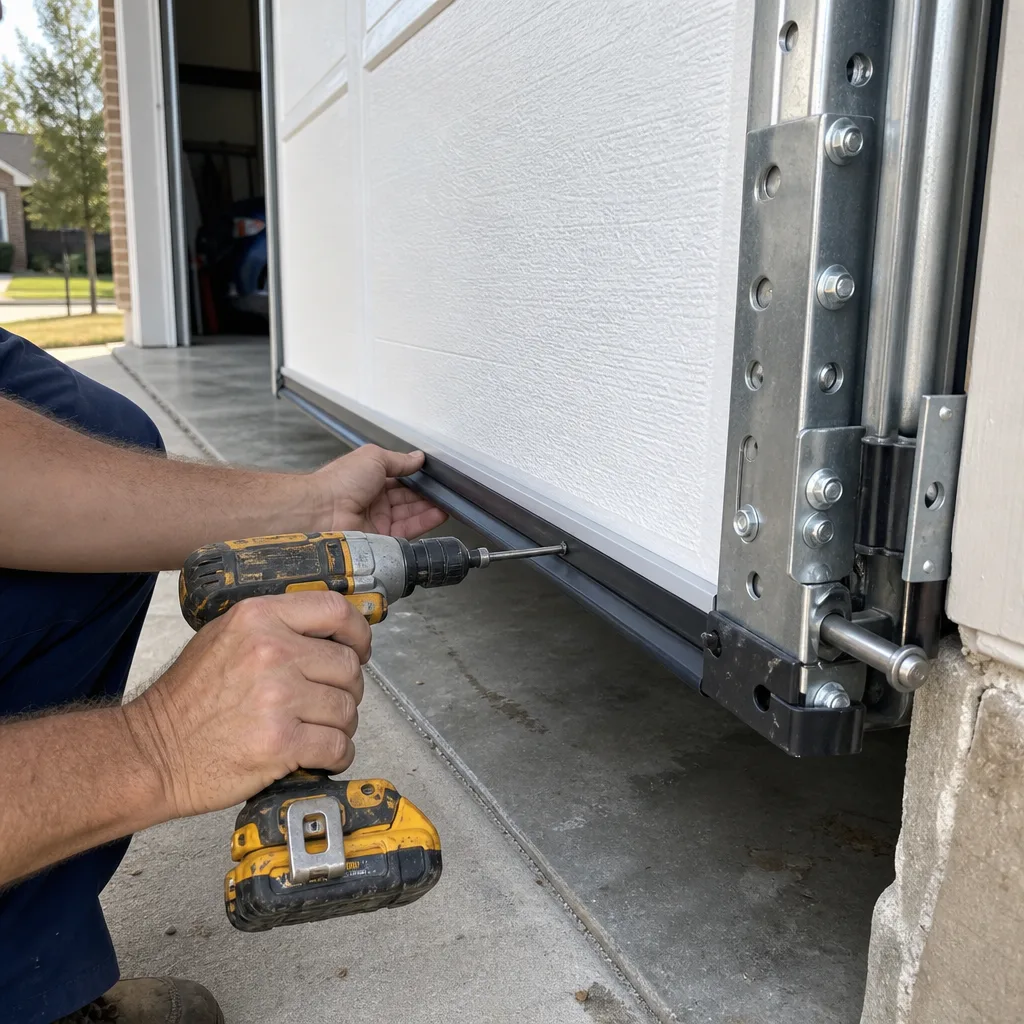
Rollers are the wheels that carry the door up and down the tracks. Allen homes built since 2010 almost always have nylon rollers with sealed bearings. Older homes may still have steel rollers. Nylon rollers are quieter and don’t require lubrication; steel rollers do. If you hear a grinding or squealing noise during operation, the rollers are the first thing to check.
What to look for:
- Nylon wheel condition: The nylon tire should be smooth and round. If it’s flattened on one side, chipped, or visibly worn down to the hub, it’s done.
- Bearing condition: With the door in the down position, reach up (if safely reachable) and spin a roller by hand. It should spin freely with minimal resistance. If it sticks, wobbles, or feels gritty, the sealed bearing has failed.
- Play in the stem: Grab the roller stem where it enters the hinge. If it wiggles side to side more than roughly a quarter inch, the roller is worn past tolerance.
The decision column:
- Pass: Smooth wheel, spins freely, no more than slight play.
- Monitor: Light scoring on the nylon, occasional squeak, minor play. Lubricate only if the roller has an exposed metal bearing, which most modern nylon rollers don’t. Plan replacement within a year.
- Replace now: Flat spot on the wheel, grinding noise during travel, visible wobble, or a wheel that doesn’t spin. Roller replacement runs $10 to $25 per roller in Allen, and a full set of ten takes about an hour of labor.
One specific note for Allen homeowners with LiftMaster or Chamberlain openers: a worn roller can trip the opener’s safety sensor logic, causing the door to reverse mid-travel. The opener isn’t broken; the roller is. We see this frequently enough to mention it. If you’re chasing an intermittent reversal problem and your rollers are original to a 2015-era home, check the rollers before you replace the opener.
Tracks and Hinges: Alignment, Wear, and the Bolt You Need to Check
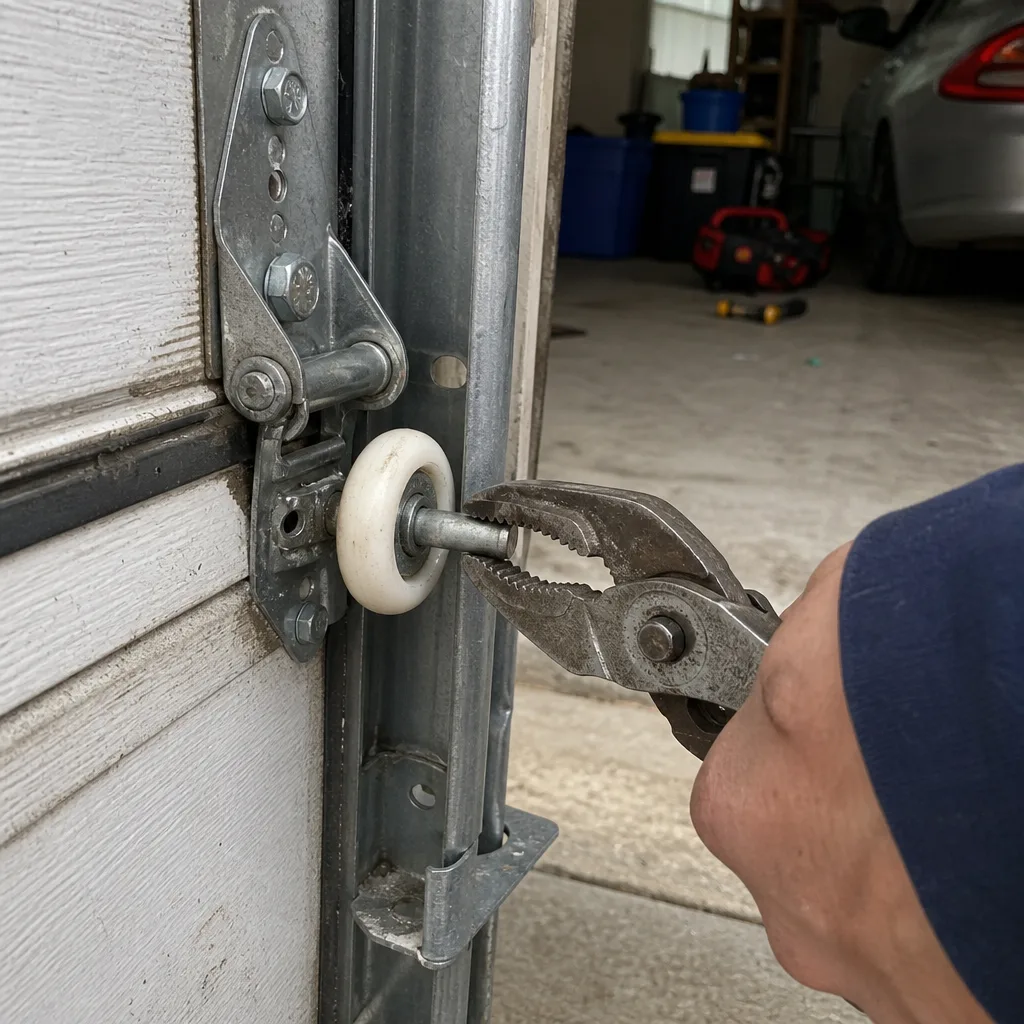
Tracks are the steel channels bolted to the wall and ceiling that guide the door. Hinges connect the door panels and attach the rollers to the panels. Both are simple mechanical components, but they take a beating in Allen’s climate: steel expands in the heat, fasteners work loose, and doors shift slightly out of plumb over thousands of cycles.
Checklist items:
- Track alignment: With the door closed, stand inside and look at the vertical track sections. They should be perfectly parallel to the wall, with no visible bow or bend. Run your eyes along the track where it curves from vertical to horizontal. Any kink, dent, or gap between the track and the mounting bracket is a flag.
- Fastener tightness: Check the lag bolts and bracket screws that hold the track to the framing. You should not be able to turn them by hand. In Allen, the expansion and contraction of the wood framing through summer heat and the occasional January freeze works these loose over time.
- Hinge wear: Look at the metal hinges between door panels. They should sit flat and flush. If you see an oval-shaped wear mark where the hinge pin rides, or if the hinge has visible play when the door is halfway open, it’s worn.
- Track gap: The gap between the roller and the track should be consistent all the way up. If the roller is tight against the track on one side and has a visible gap on the other, the track has shifted.
The decision column:
- Pass: Tracks parallel, fasteners tight, hinges flush, consistent roller gap.
- Monitor: One or two loose fasteners that can be snugged by hand, minor surface rust on tracks, slight hinge play. Tighten the fasteners yourself if you’re comfortable; otherwise note it for the next service call.
- Replace now: Visible track bend or kink, hinge with more than 1/8 inch of play, or a failed fastener that won’t tighten. A bent track can bind the door and damage the rollers. Track replacement in Allen typically runs $120 to $200 per section, depending on length and configuration.
If you’re in the middle of a garage door installation in Allen and the installer tells you the existing tracks are fine, ask them to check the fasteners anyway. A new door on loose tracks is a warranty claim waiting to happen.
Opener Force Settings: The 2×4 Test and What It Actually Tells You
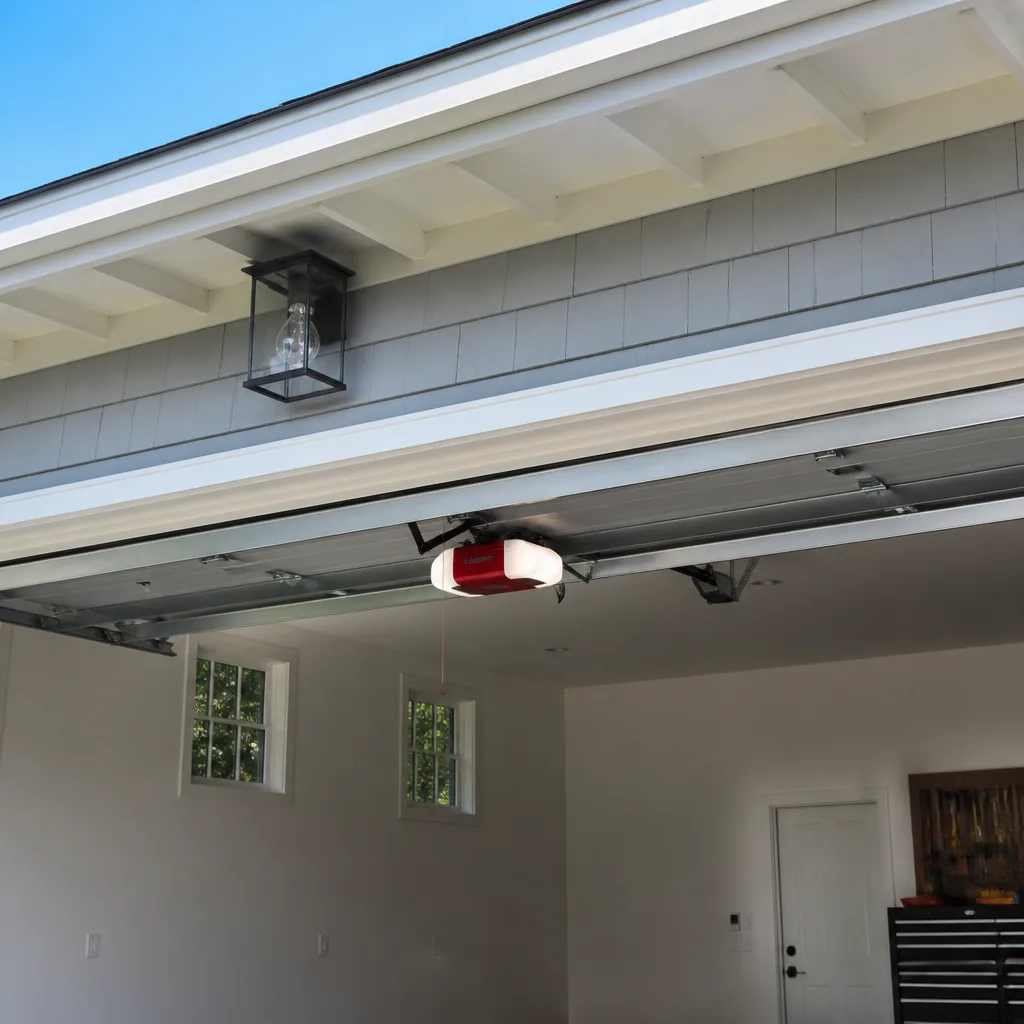
Every modern garage door opener has an auto-reverse mechanism that’s supposed to reverse the door if it encounters resistance while closing. The standard test, the one the federal safety standard references, is the 2×4 test: place a 2×4 flat on the floor directly under the door’s path, then close the door. The door should contact the wood and reverse within two seconds, before applying enough force to crush it.
Here’s what most checklists miss: the speed and character of the reversal tells you something about the opener’s internal logic board, not just the force setting.
- Immediate, clean reversal: The door touches the 2×4 and reverses without hesitation. The force sensor and logic board are both working correctly. Pass.
- Slow reversal with a pause: The door contacts the 2×4, pauses for a beat, then reverses. This usually means the down-force setting is too high or the travel limit is slightly off. The opener is still safe, but it needs a force adjustment. Monitor and adjust, or call for a tune-up.
- No reversal, or reversal only after significant pressure: The door presses down on the 2×4 and either doesn’t reverse or only reverses after an alarming amount of flex. This indicates a failed force sensor or a logic board problem on the opener. Replace now. Do not operate the door until it’s fixed. This is the exact scenario where a child or pet gets hurt.
In our experience with Genie and LiftMaster openers in Allen, the slow-reversal-with-pause pattern is the most common failure we find on units that are five to eight years old. The logic board’s force-sensing circuit degrades over time, especially in attached garages where summer temperatures can exceed 110 degrees. Heat accelerates capacitor aging on the board. If your opener is behaving this way, it’s not your imagination; the board is on its way out.
Force adjustment for a homeowner with a screwdriver is a five-minute task on most units, but if you’re not comfortable with the process, or if the adjustment doesn’t fix the reversal behavior, that’s a garage door opener repair in Allen call. Service typically runs $85 to $150 for a tune-up and force adjustment, and a full opener replacement starts around $350 installed.
Weatherstripping and the Allen Heat Cycle Problem
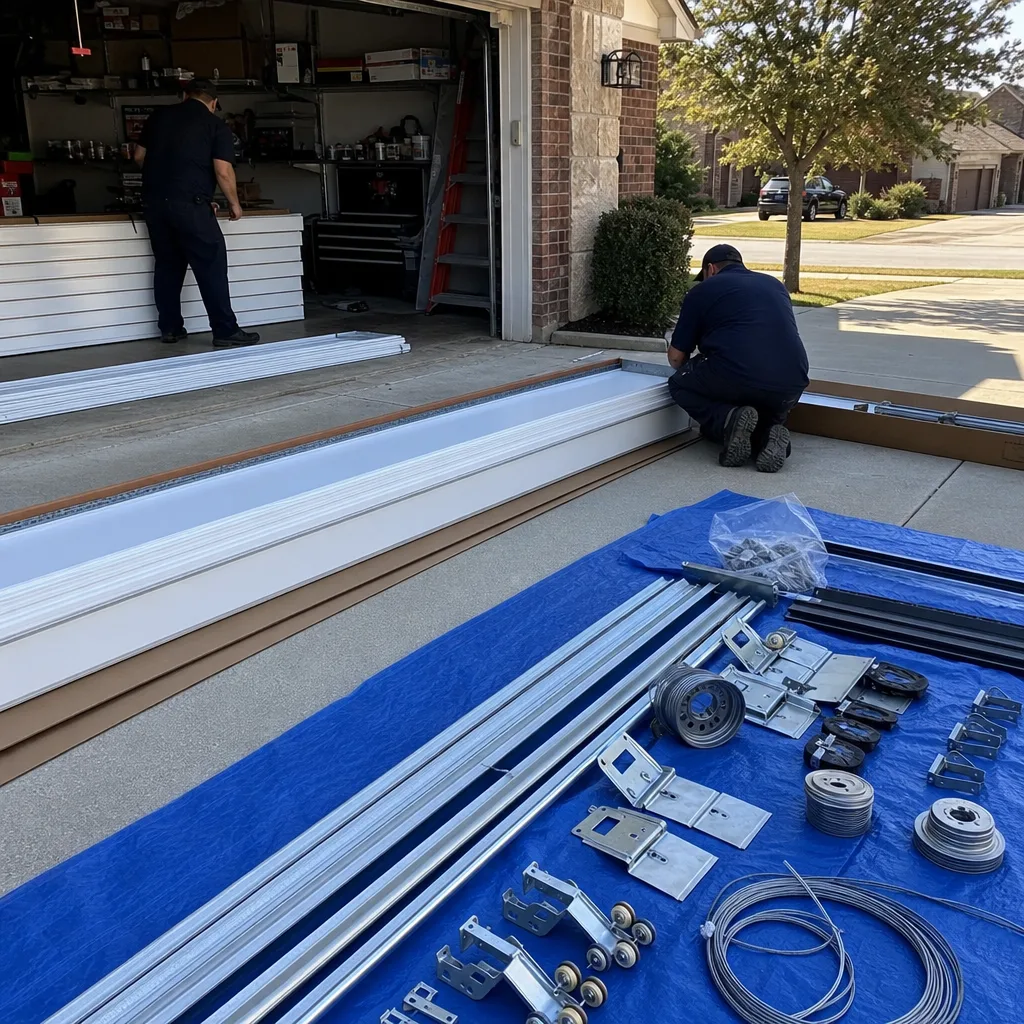
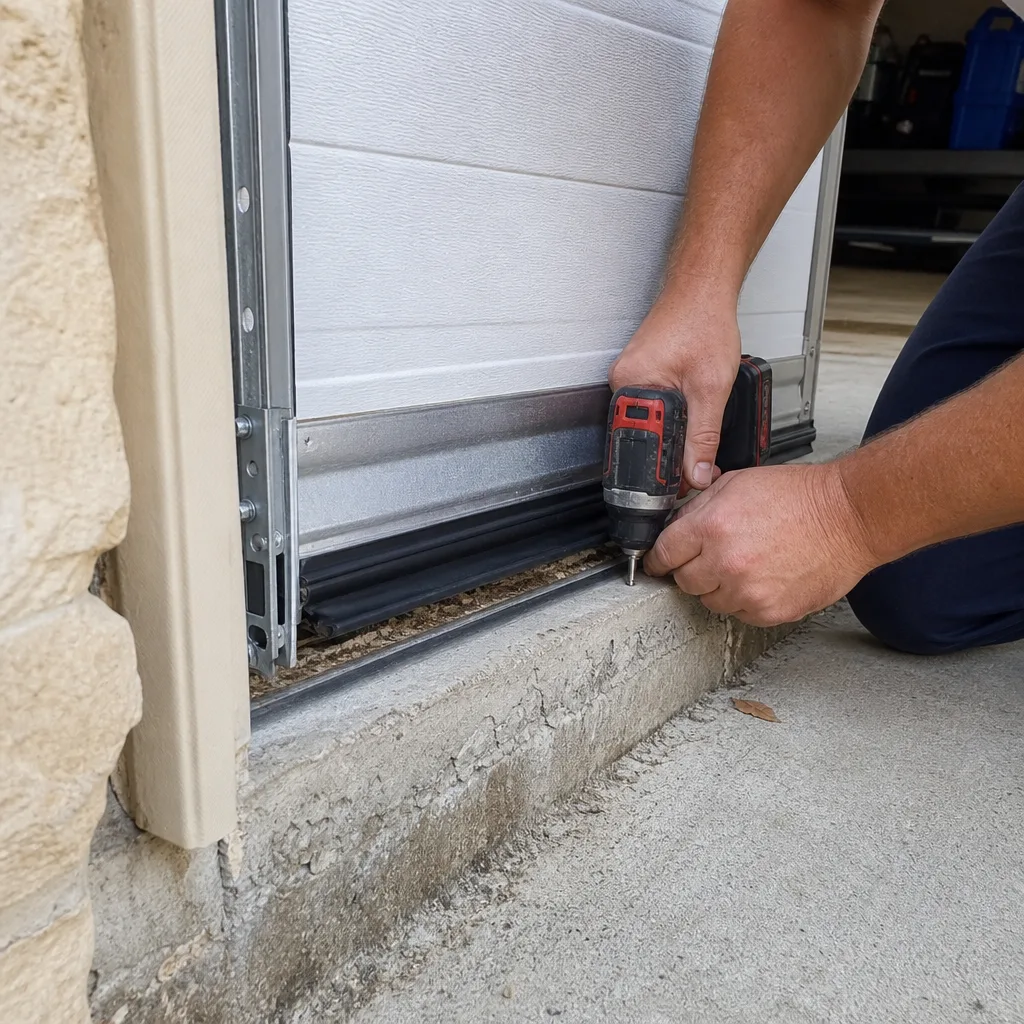
Weatherstripping is the rubber or vinyl seal along the bottom of the door and the perimeter of the opening. In Allen, it fails faster than in most of the country, because the July and August heat cycles bake the vinyl until it loses flexibility, then the rare January ice event freezes it while brittle. By the third or fourth summer, the bottom seal cracks and splits.
Checklist items:
- Bottom seal: With the door closed, look for visible light or a gap between the bottom of the door and the garage floor. On a bright afternoon, get down to floor level inside the garage and look toward the door. If you see daylight, the seal has failed.
- Side and top seals: Feel for drafts around the door perimeter on a cold morning. Run your hand along the jamb where the door meets the wall. Any air movement means the perimeter seal has compressed or split.
- Material condition: Press your thumbnail into the bottom seal. Fresh vinyl gives slightly and springs back. Aged vinyl feels hard, doesn’t give, or leaves a permanent mark.
The decision column:
- Pass: Seal is flexible, no visible gap, no drafts.
- Monitor: Slight hardening, minor compression at the corners, but no visible light. Plan replacement within a year.
- Replace now: Visible light under the door, cracked or split seal, or drafty perimeter. A failed bottom seal lets in dust, pests, and in an Allen July, a lot of heat. Replacement weatherstripping for a standard 16-foot door runs $60 to $120 installed.
One Allen-specific note: the red clay soil in Collin County is dusty, and if your garage has a side-facing door on the prevailing wind side, a failed bottom seal will leave a visible line of red dust on your garage floor after every storm. That’s an easy tell, and it’s worth fixing before the dust works its way into the opener’s chain or belt drive.
Seasonal Timing: What to Inspect After July Versus After January
Allen’s climate is specific: long, hot summers with sustained temperatures above 95 degrees, and short, mild winters with occasional freezing precipitation. Each season stresses different components. Here’s the seasonal schedule that actually matches what we see in service calls.
After July and August heat cycles (inspect in September):
- Torsion springs: Look carefully for surface rust and coil separation. Thermal expansion through 90 days of peak heat is the primary cause of late-summer spring failures in Allen.
- Opener logic board: If the auto-reverse test showed a slow reversal or the door intermittently reverses mid-travel, the board is heat-stressed. Heat accelerates capacitor failure.
- Bottom weatherstripping: Check for cracking and splitting. The summer bake is the primary cause of seal failure.
- Track fasteners: Expansion and contraction works lag bolts loose. Check tightness.
After the rare January ice event (inspect in February):
- Weatherstripping: Freeze-thaw cycles make brittle vinyl split. Look for new cracks in the bottom seal.
- Cables: Ice on the cable can accelerate rust, especially if the cable was already scored. Check for new fraying.
- Hinges and brackets: Cold metal contracts. Fasteners that were marginally tight in September can be loose in February.
- Rollers: If any moisture got into a roller with a compromised seal, the freeze can crack the nylon tire.
Between seasons, stick to a simple six-month rhythm: once in the spring and once in the fall. The September inspection matters more in Allen than the February one, because the summer is harder on the equipment than the winter.
Common Mistakes to Avoid
- Using WD-40 on torsion springs. WD-40 is a solvent, not a lubricant. It strips existing lubricant and leaves the spring more vulnerable to corrosion. Use a lithium-based grease instead, applied lightly along the coil.
- Lubricating nylon rollers. Nylon rollers have sealed bearings and don’t take lubricant. Applying grease or silicone to the nylon tire just collects dust and creates a grinding paste. Leave them alone.
- Ignoring a slow auto-reverse. A door that pauses before reversing is not working correctly. The force setting is off, which means the door is applying more pressure than the safety standard allows, and the risk is a crushed finger or worse. Address it.
- Tightening a torsion spring bolt yourself. This is the most dangerous DIY mistake on this entire list. The spring is under enough tension to break bone or kill. Never touch the spring hardware.
- Replacing only one spring. If one torsion spring fails, the other is at the same cycle count and will fail soon. Replacing both at once costs more upfront but saves a second service call and keeps the door balanced. Any reputable garage door company in Allen will recommend replacing both.
- Ignoring a noisy door. A door that squeals, grinds, or pops is telling you something specific. The noise is a diagnostic signal, not an annoyance. Find the source before the component fails completely.
- Skipping the photo documentation. When a technician shows up, ask what they found and what they did. If you’re working with Servo Garage Doors Allen, you’ll receive a documented photo record on every visit. That’s Clause 4 of The Haven Standard, and it’s the difference between a company that asks you to trust them and a company that shows you the evidence.
When to Call a Professional
If you find a broken torsion spring, a cable with three or more broken strands, a bent track, or an opener that doesn’t reverse on the 2×4 test, stop using the door and call for service. These are not adjustment items; they’re replacement items, and the safety risk of continued operation outweighs any money saved by delaying. A garage door with a failed spring weighs 150 to 200 pounds and can fall without warning when the cable lets go. Servo Garage Doors Allen offers free estimates in Allen, with a flat written price and written scope before any work starts, per Clause 1 of The Haven Standard. Call (469) 613-4703 and get the answer in dollars, not a callback window.
Frequently Asked Questions
A garage door tune-up in Allen typically runs $85 to $150, covering inspection, lubrication, force adjustment, and minor fastener tightening. If the tune-up catches a worn roller or a failed weatherstripping seal, that component adds $10 to $120 depending on what’s replaced. Servo Garage Doors Allen quotes every job as a flat written price before any work begins.
Inspect your garage door every six months, with a more thorough check in September after the summer heat and a quick check in February after any January ice event. Find more guides & resources on our blog. Allen’s climate ages torsion springs, cables, and weatherstripping faster than average, so the six-month cadence matters more here than in cooler parts of the country.
Yes, if you use the right lubricant. Silicone spray goes on tracks. Lithium-based grease goes on torsion springs. Nothing goes on nylon rollers. Never use WD-40 on any garage door component; it strips lubricant and accelerates corrosion. If you’re unsure, the lubrication is included in a standard tune-up.
An intermittent mid-travel reversal in Allen is most often a worn roller tripping the opener’s safety sensor logic, or a heat-stressed logic board on an older LiftMaster or Chamberlain unit. Check the rollers first; if they’re original to a 2015-era home and show flat spots or wobble, replace them before you replace the opener.
Yes, in almost every case. Both springs have the same cycle count, and if one has failed, the other is close behind. Replacing both at once keeps the door balanced and avoids a second service call within a few months. We replace both as standard practice and show you the failed spring before we quote the work.
Look for a visible gap in the coil, typically a half-inch separation about two-thirds of the way along the spring. Surface rust with tight coils is a monitor item; a gap means the spring has already started to fail. Stop using the door and call a professional. Call (469) 613-4703 for a free estimate.
The Bottom Line
A useful maintenance checklist names the failure signal, not just the inspection point. Torsion springs with a visible coil gap, cables with three broken strands, nylon rollers that don’t spin freely, and an auto-reverse that pauses before reversing are all replace-now items. Ignore them and the repair cost climbs from double digits to triple digits, or worse. Inspect every six months, lubricate with the right product, and call a professional for anything involving spring tension. If you’re in Allen and want a written price and a documented photo record before you decide, call Servo Garage Doors Allen at (469) 613-4703 or visit our Servo Garage Doors Allen home page to see how The Haven Standard works.
Written by Marcus Deller, Owner at Servo Garage Doors Allen, serving Allen since 2015.