
Last updated September 20, 2026
Full 25-point door and opener safety check with every visit - springs, cables, rollers, tracks, and your LiftMaster or Chamberlain opener included
You get a price before we start. It does not change when the truck arrives.
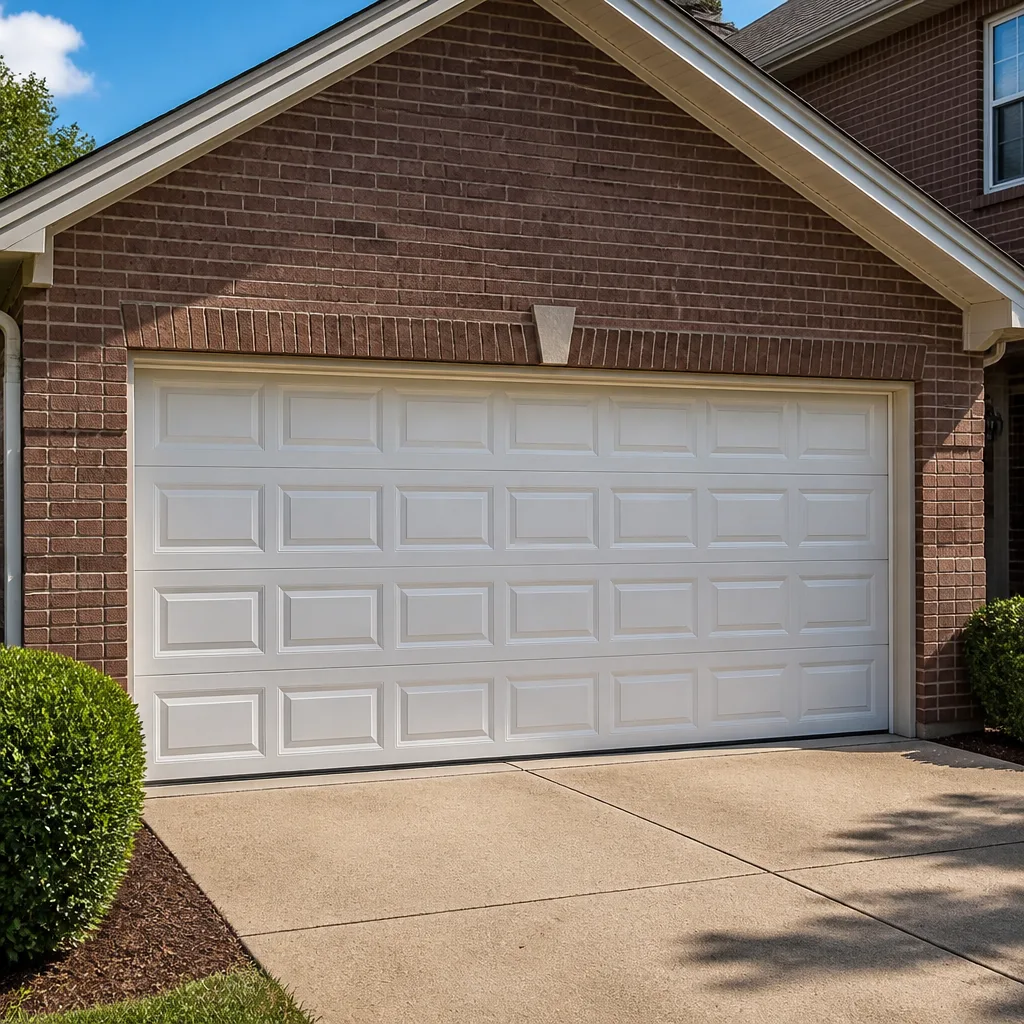
Carriage house
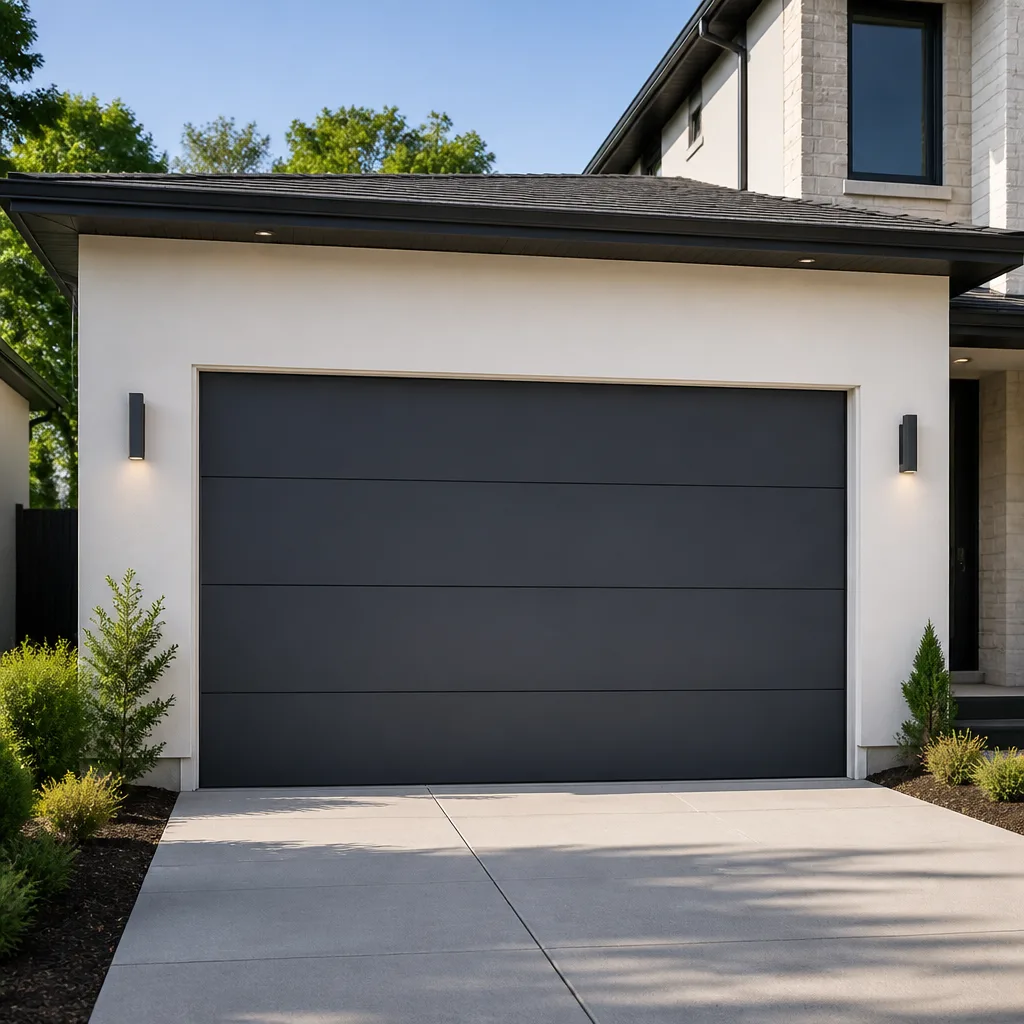
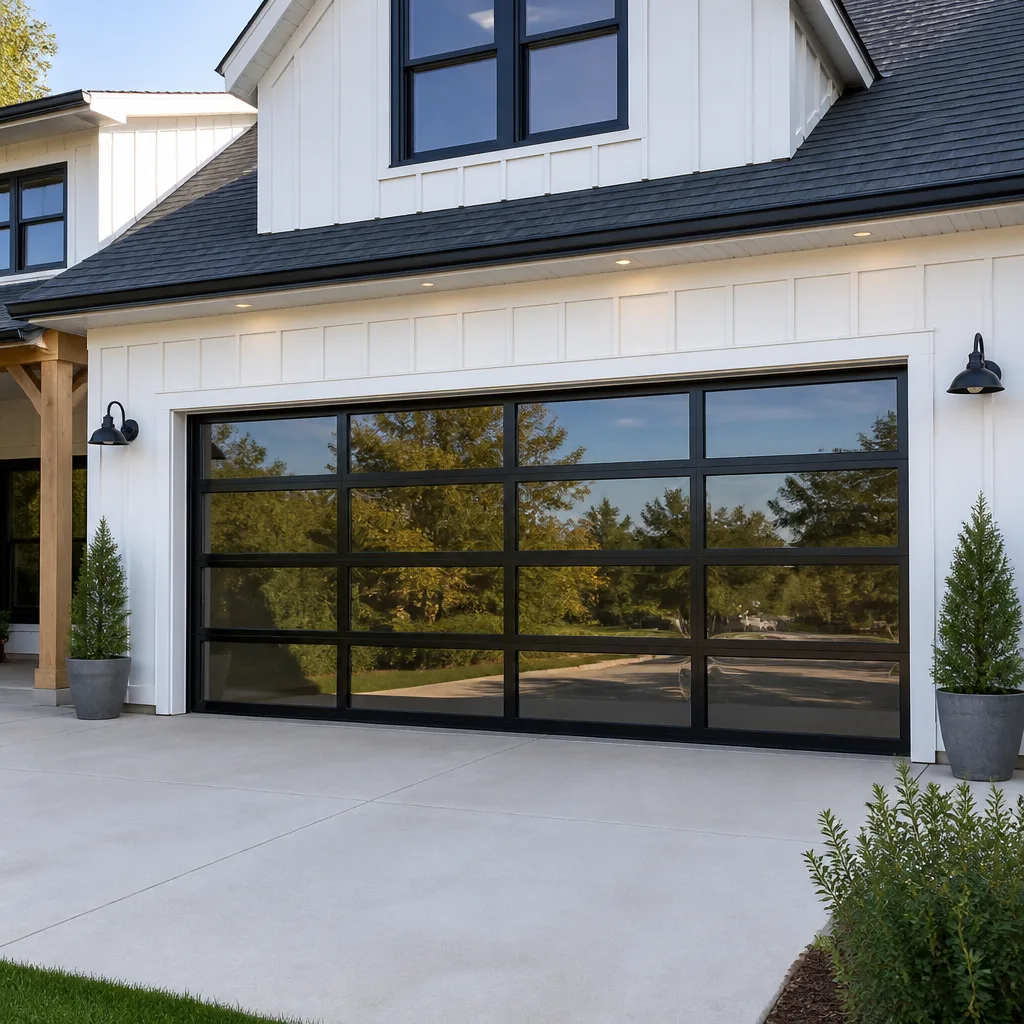
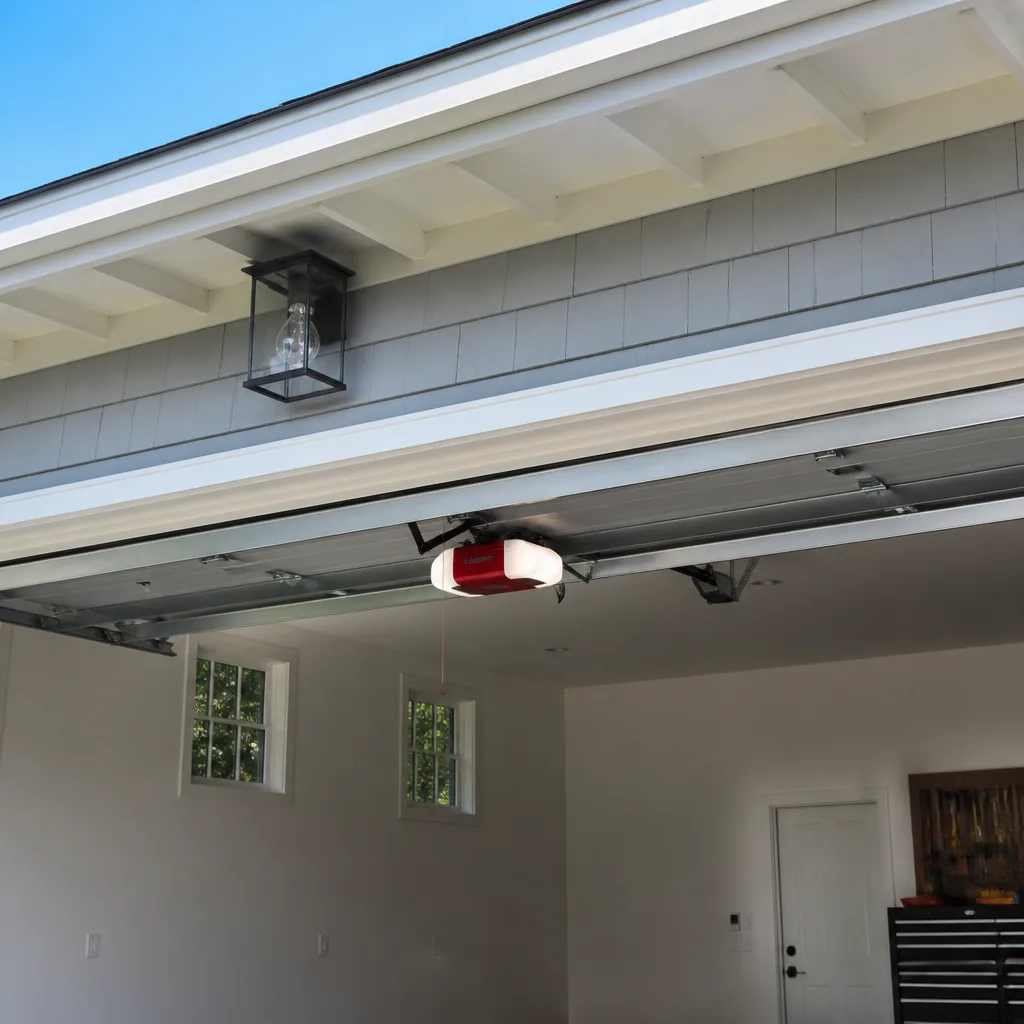
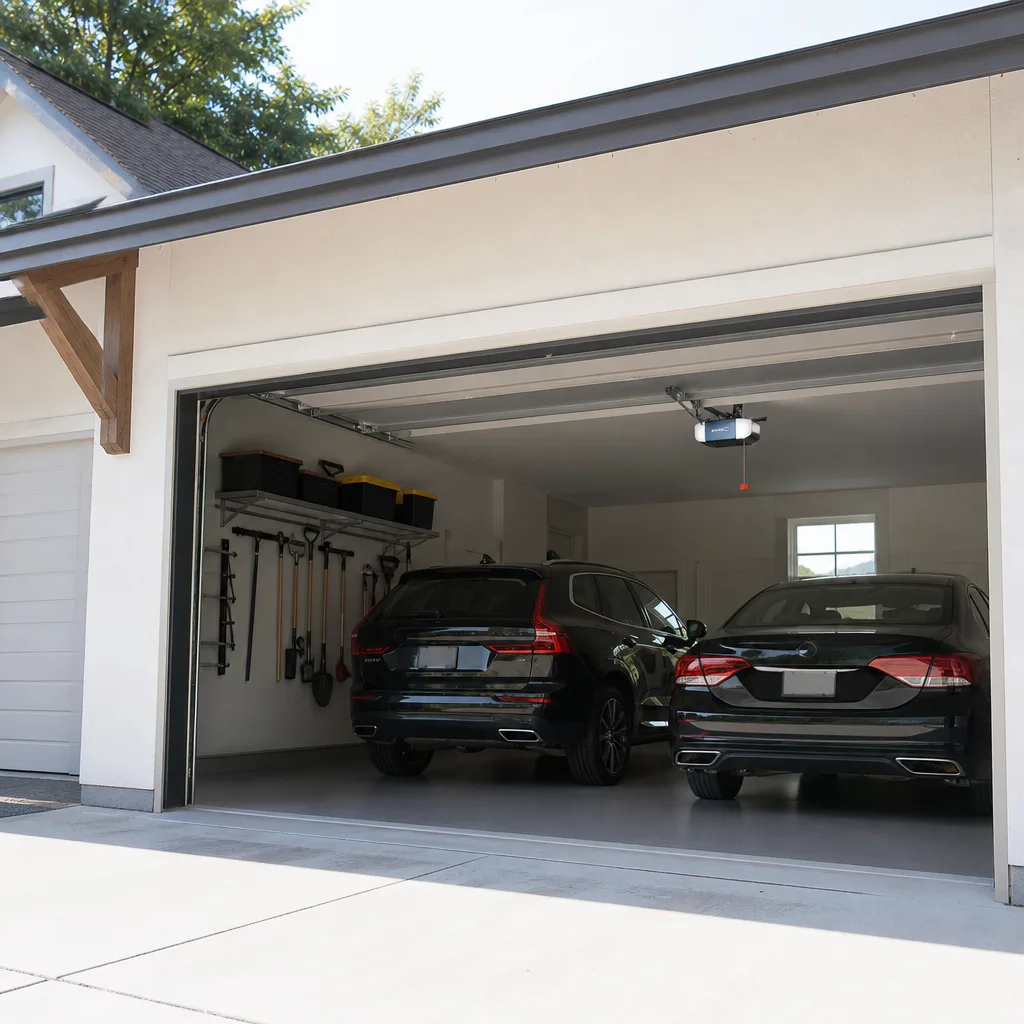
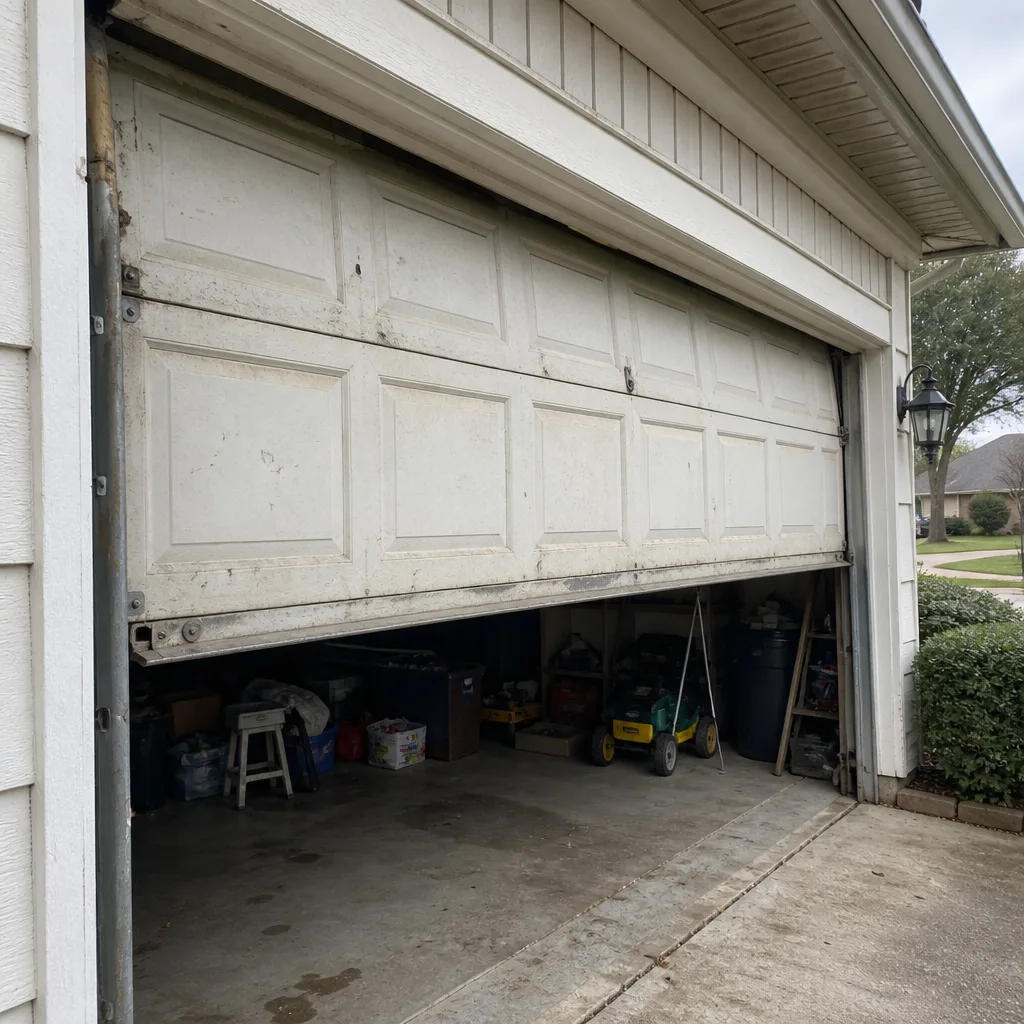 Before
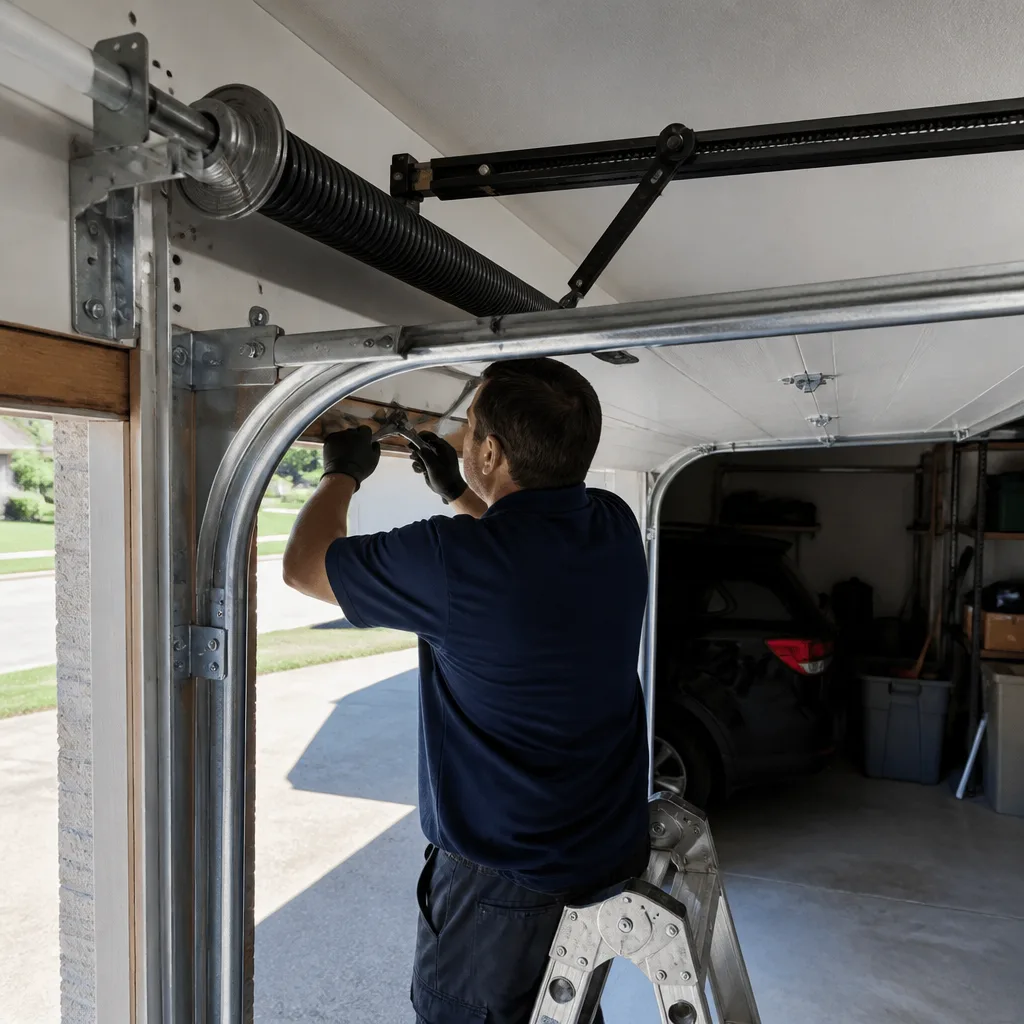 After
After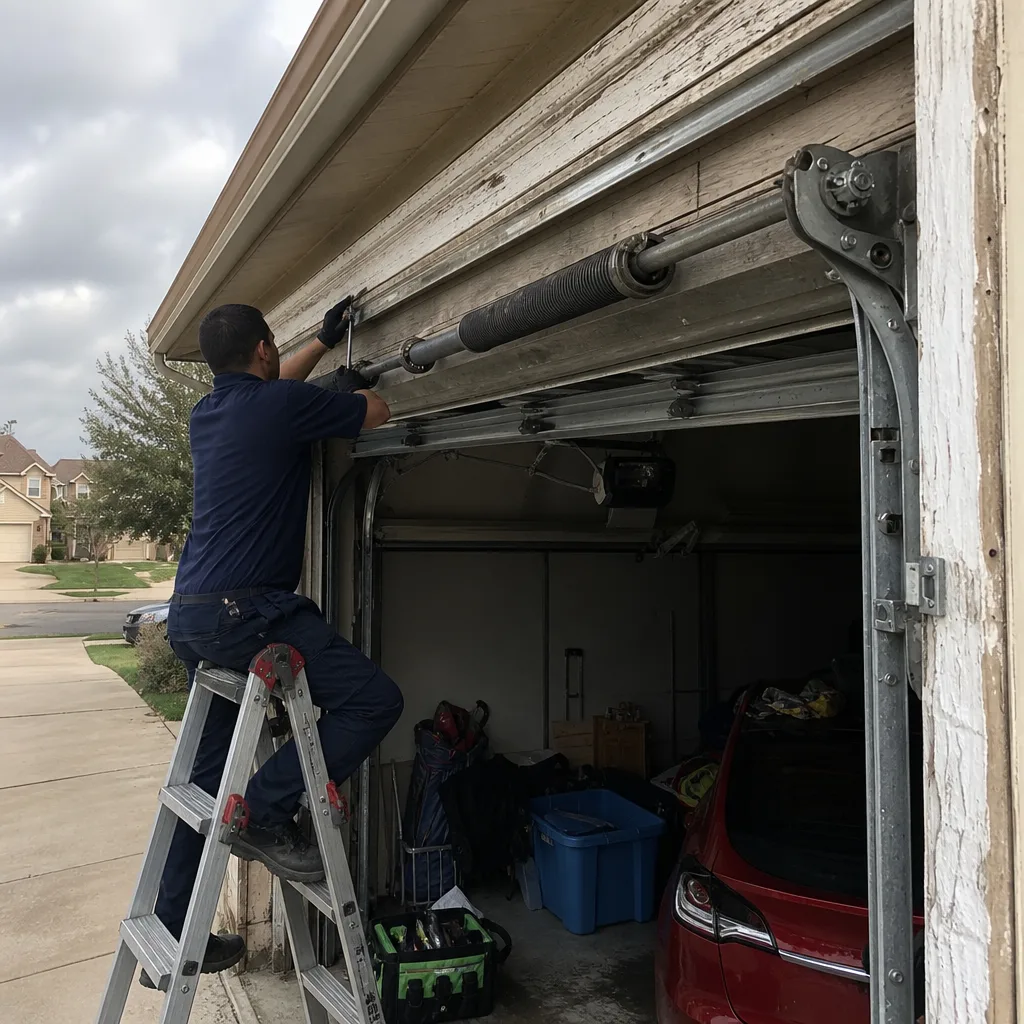 Before
 After
After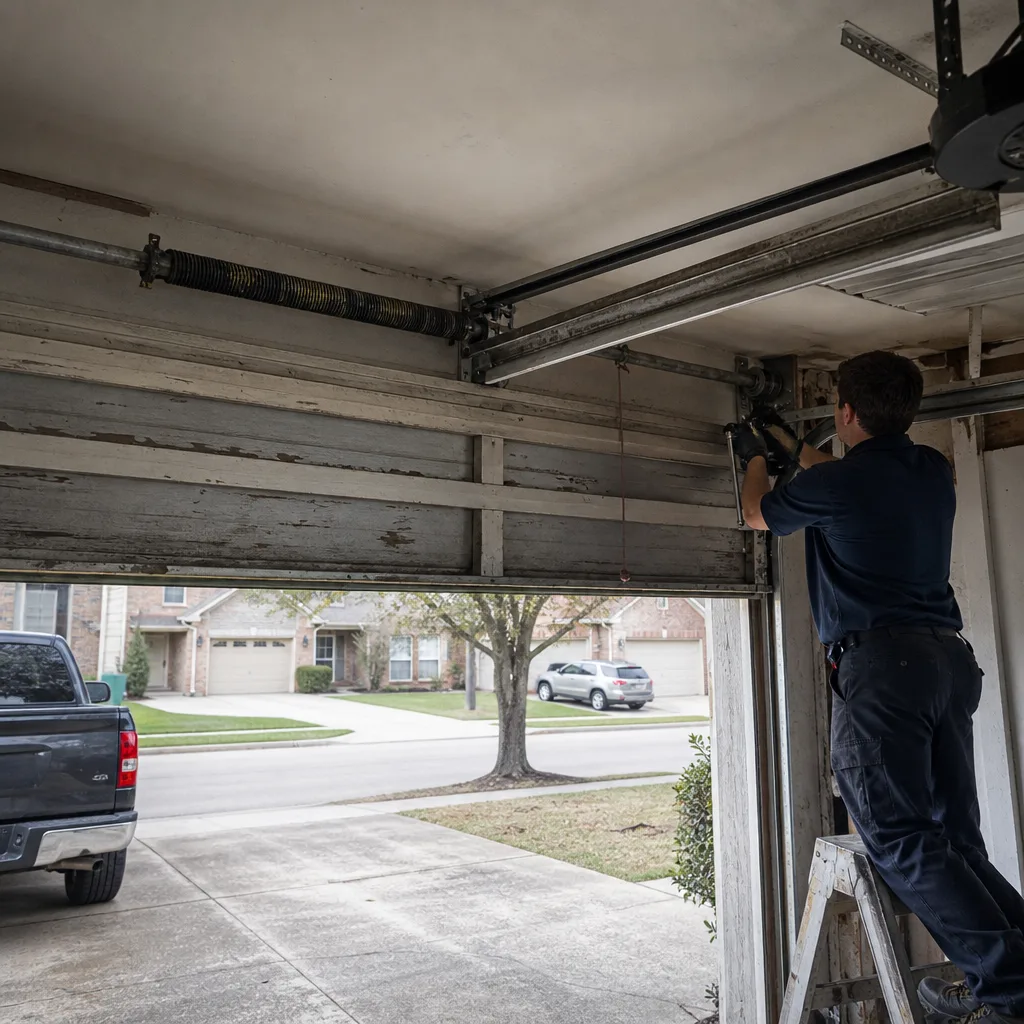 Before
 After
AfterSeasonal Garage Door Care for Allen: Year-Round Homeowner’s Guide
Most garage door advice treats the year as one long maintenance cycle: lube the hinges, check the springs, call it done. That advice fails in Allen, Texas, because our climate doesn’t wear a garage door down evenly. It attacks in two distinct waves. A spring calibrated in October is operating outside its design tension by July, and the door that worked flawlessly through a 104°F August afternoon will bind against its own bottom seal the first time the temperature drops below 28°F. This guide explains what actually fails during each Allen season, why it fails, and exactly which components to inspect before each stress period arrives. For a deeper dive, see The Complete Guide to Garage Door in Allen. We’ve repaired garage doors across Allen since 2015, and the patterns we see repeat on a predictable calendar.
Quick Answer
Allen homeowners should inspect their garage door twice a year, once in May before peak heat and once in October before the first freeze. The summer inspection targets heat-related failures: bottom seal warping, panel delamination on sun-facing doors, and torsion spring tension drift. The fall inspection targets cold-related failures: hardened lithium grease, seal-to-concrete bonding, and opener force settings that strain during cold starts. A single annual inspection misses roughly half of the failures Allen’s climate produces.
Table of Contents
- Why Allen’s Climate Breaks Garage Doors Differently
- The Two-Inspection Calendar: What to Check in May and October
- Heat-Specific Failures: What 95°F+ Days Do to a Garage Door
- Cold-Event Failures: What a Freeze Overnight Does Overnight
- The Lubrication Schedule That Actually Works in Allen
- Spring Tension and Temperature: Why Your Door Feels Different in August
- Common Mistakes to Avoid
- When to Call a Professional
- Frequently Asked Questions
- The Bottom Line
BeforeAfterWhy Allen’s Climate Breaks Garage Doors Differently
Allen sits in the humid subtropical zone of North Texas, which sounds mild until you look at the actual numbers. We average 230 days per year above 80°F and roughly 35 nights below freezing. The sustained heat from June through September is the more destructive force, though it gets less attention than the dramatic freeze events. Garage doors in Allen absorb heat differently depending on orientation. A door facing west or south in neighborhoods like Twin Creeks, Star Creek, or Watters Crossing receives direct afternoon sun from roughly 2 p.m. until sunset, and the steel panel surface can reach 140°F to 160°F even when the air temperature is only 98°F. That sustained radiant load is what warps bottom seals and causes painted steel to delaminate at the panel edges.
Cold events in Allen are brief but severe. The February 2021 freeze dropped temperatures into the single digits for days, and the December 2022 cold snap brought a rapid drop from 70°F to below 20°F in under 36 hours. Rapid temperature swings stress garage door components more than gradual seasonal change. A metal rail contracts quickly; a rubber seal loses elasticity; lithium grease thickens from a paste to a near-solid. These are the conditions that produce the freeze-bonding failures we’ll cover below.
The point is this: a maintenance schedule built for a milder climate, or one that treats the calendar as a single annual checkpoint, will systematically miss what actually breaks here. Allen’s failure pattern is bimodal. Heat failures cluster in late July through early September. Cold failures cluster in the 48 hours after each freeze event. A homeowner who checks their door only in spring will catch neither cluster reliably.
This pattern is why our team at Servo Garage Doors Allen home has always recommended a two-inspection calendar for local homeowners. It is not a sales tactic. It matches the mechanical reality of the equipment.
The Two-Inspection Calendar: What to Check in May and October
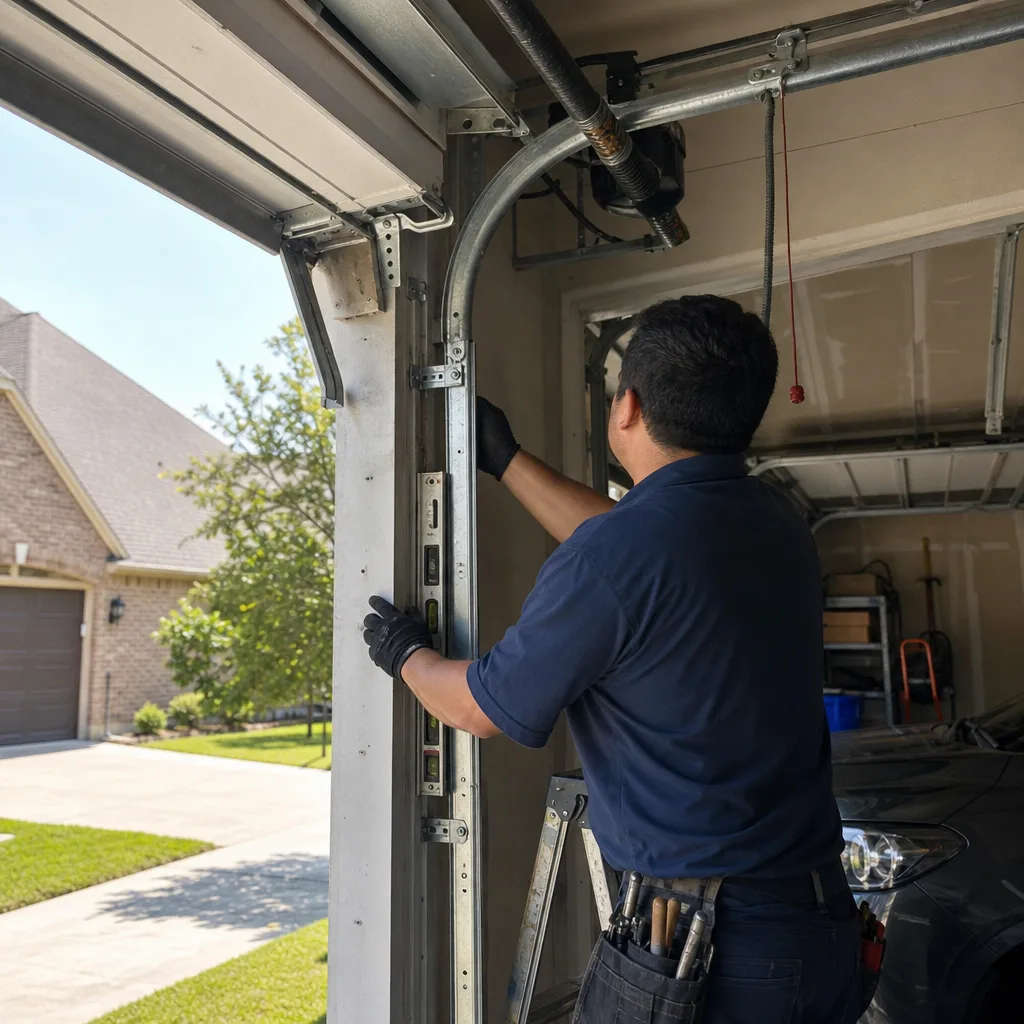
Here is the inspection schedule that aligns with Allen’s two mechanical stress periods. Each inspection targets the components most likely to fail in the season ahead.
May Inspection: Before Peak Heat
- Bottom seal (weatherstrip). Run your hand along the rubber strip at the bottom of the door. Look for flattening, brittleness, or gaps where the seal no longer contacts the concrete. If you can see daylight under the closed door in any spot, the seal has already warped and will get worse through summer.
- Panel surfaces on sun-facing doors. If your door faces west or south, inspect the paint surface at the panel edges and the top section. Early delamination shows as fine cracking or slight bubbling. Catching this in May means a repair; catching it in September often means a panel replacement.
- Spring tension and travel speed. Run the door manually once. It should feel balanced, meaning it holds position when open about three feet. If the door drifts down under its own weight, the spring has lost tension. Heat accelerates spring fatigue, especially on springs installed during cooler months.
- Opener force settings. If your opener is straining audibly or the door reverses unexpectedly, the force settings may be compensating for a tight track or a dry roller. Adjusting this in May prevents a mid-August opener failure.
- Roller and hinge wear. Nylon rollers in Allen heat degrade faster than in cooler climates. Look for flattened or chipped roller wheels. Metal rollers at the end of their life start to grind against the track.
October Inspection: Before the First Freeze
- Bottom seal condition and concrete contact. After a season of heat, the seal may have taken a permanent set. Check again for daylight gaps. A warped seal in October is the component most likely to freeze-bond to the concrete in December.
- Lubricant state on the torsion spring and hinges. Lithium grease applied in spring has now been through a full Texas summer. It will be dry or gummy in patches. Reapply before temperatures drop, because lithium grease thickens significantly below 40°F.
- Track alignment and bolt tightness. Check the vertical and horizontal track sections for loose bolts or visible misalignment. The first freeze causes metal contraction that will turn a slightly loose track into a binding track.
- Opener force and travel limits. Test the door’s full open and close cycle. If the door hesitates or reverses at the bottom of its travel, the limit switch may be set too tight for the colder dimensions of the door assembly.
- Weatherstripping on side and top jambs. Inspect the perimeter seals. Gaps let cold air in and let the door frame contract unevenly, which contributes to binding.
Heat-Specific Failures: What 95°F+ Days Do to a Garage Door
Allen’s sustained summer heat produces failure modes that are distinct from anything winter does. The primary mechanism is radiant heat absorption. A steel garage door panel is essentially a large, thin metal sheet painted a dark or mid-tone color. When the sun strikes it directly for six to eight hours daily, the panel surface temperature climbs far above ambient. That sustained thermal load does three things.
First, it warps bottom seals. The rubber or vinyl weatherstrip at the door’s bottom edge is the most exposed component on the entire door. It sits against a concrete slab that in Allen can reach 120°F+ on a sunny afternoon. The combination of radiated heat from above and conducted heat from below takes a seal that was pliable in spring and leaves it flattened, hardened, or curled by August. A seal that no longer contacts the concrete across its full width lets in dust, insects, and, in heavy rain, water. In west-facing garages in neighborhoods like Lost Creek Ranch or Montgomery Farm, we see seal failures by the first week of August almost every year.
Second, sustained heat delaminates painted steel panels. The paint system on a residential garage door is designed for a specific thermal expansion range. When panel surfaces repeatedly cycle between 80°F at night and 150°F by late afternoon, the steel and the paint expand and contract at slightly different rates. Over repeated cycles, the bond between the paint and the primed steel breaks down, starting at panel edges where stress concentrates. The first visible sign is fine cracking along the top edge of a panel. Left unaddressed, the paint begins to peel or bubble. Doors from Clopay and Amarr hold up well in Allen’s climate, but even the best factory finishes have a service life that our heat shortens.
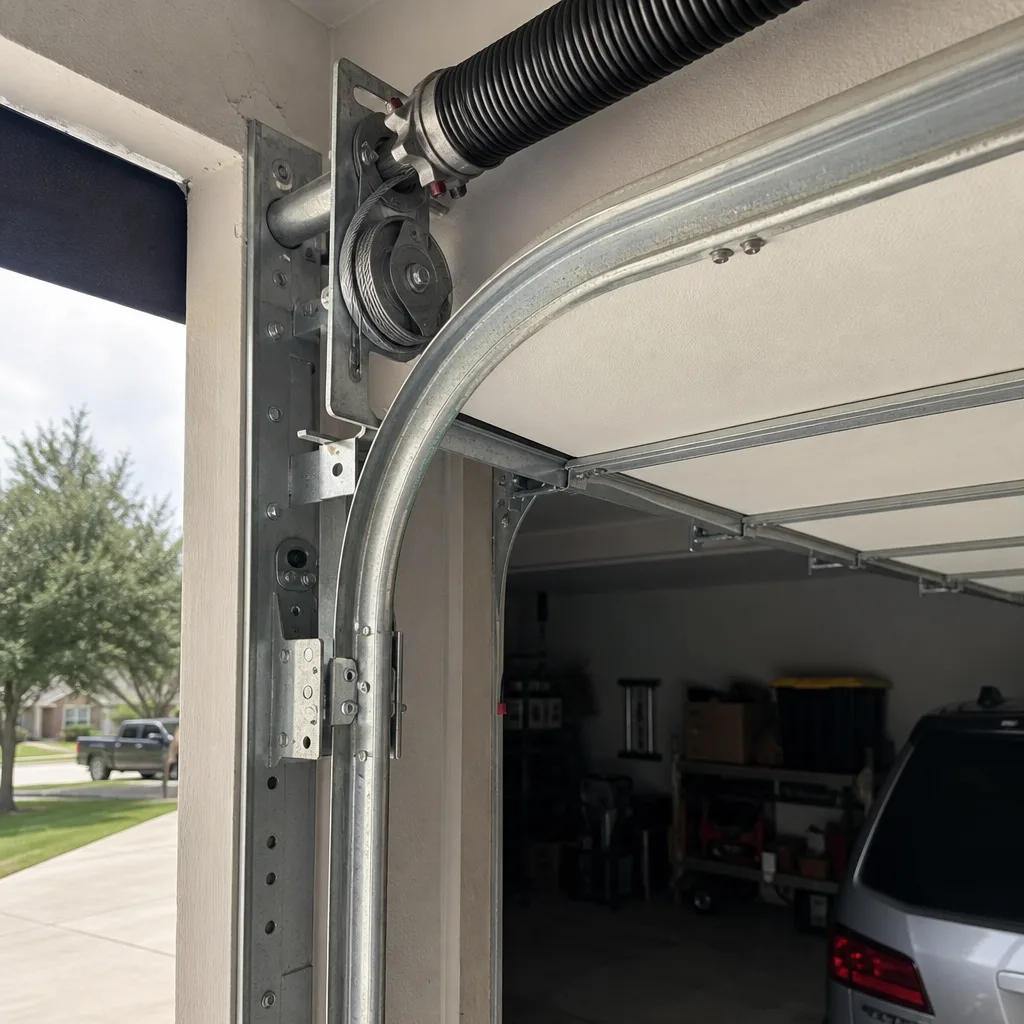
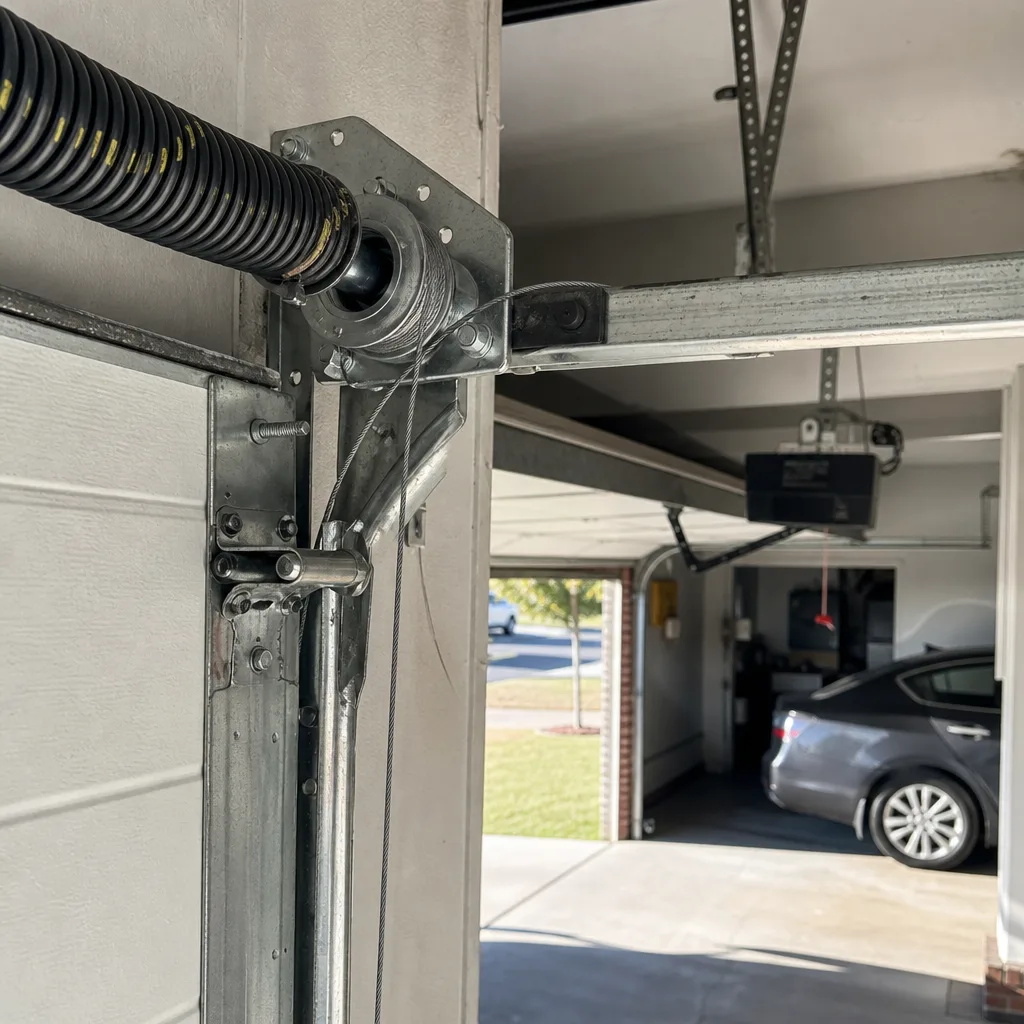
Third, heat accelerates torsion spring fatigue. Torsion springs are under constant tension, and that tension is set at installation to offset the door’s weight. When the ambient temperature rises, the spring’s metal expands and its effective tension drops slightly. When it cools at night, tension increases. This daily micro-cycling stresses the spring at the molecular level. Over a 90-day heat season, that is roughly 90 additional stress cycles on top of the normal open-close cycles. Springs that were installed in October and set to a precise tension are, by July, operating at a slightly different effective tension than what they were calibrated for. This is one reason August is a busy month for spring failures in Allen.
What should you do about heat failures? Inspect in May, as outlined above, and do not ignore a door that feels different in August. If the door closes faster than it did in spring, or the opener sounds strained, the spring tension has drifted. That is a simple adjustment on a torsion spring system, but it is also a high-tension component that can cause serious injury if mishandled. The spring is under hundreds of pounds of torque even when the door is closed. We recommend a trained professional handle any spring work, and that includes tension checks. For more detail on the full scope of repair work in Allen, see our Garage Door Repair in Allen page.
Cold-Event Failures: What a Freeze Overnight Does Overnight
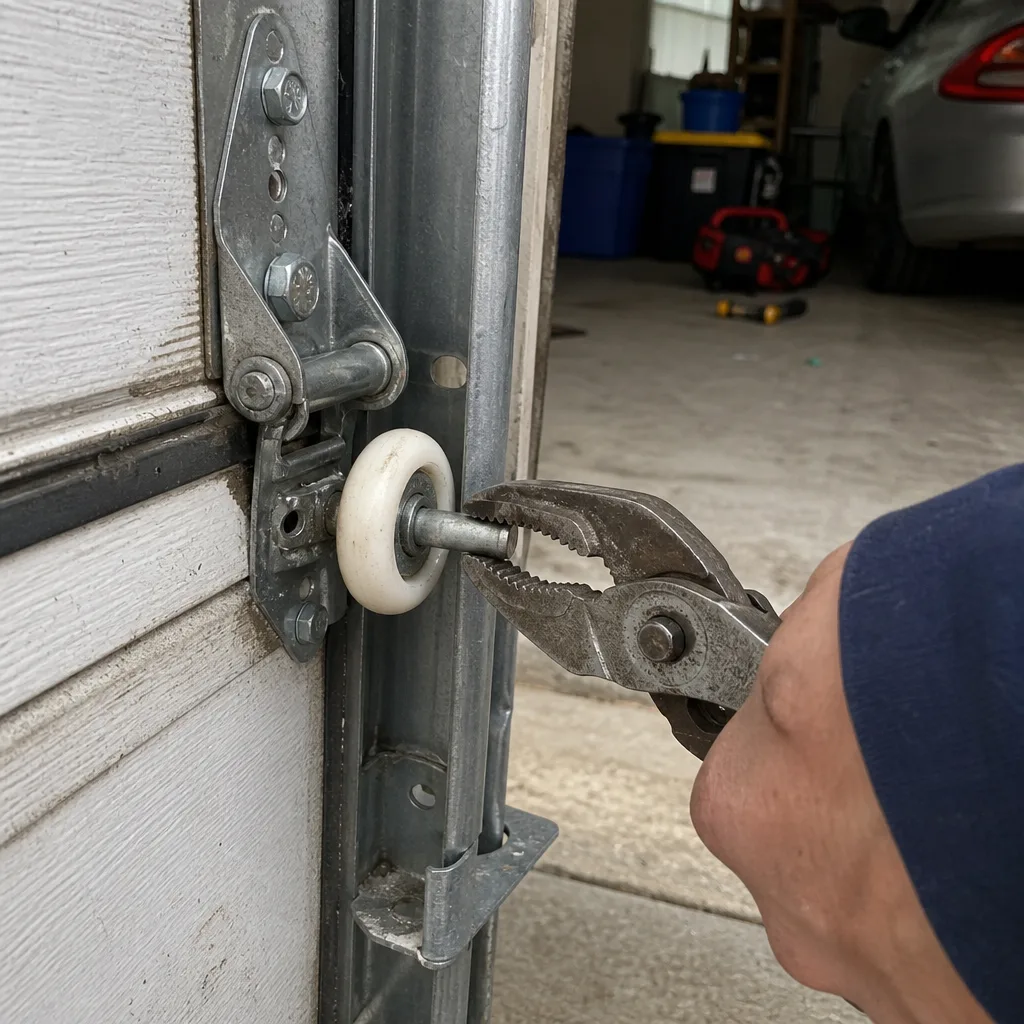
Cold failures in Allen are acute rather than chronic. A freeze event does not gradually degrade a component over months; it produces a specific failure in a 24-to-48-hour window. The most important cold failure to understand is seal bonding.
Here is what happens. During the day, the bottom seal rests against the concrete slab. A small amount of moisture, from rain, condensation, or simply humidity, sits in the microscopic gap between rubber and concrete. When the temperature drops below freezing overnight, that moisture freezes. Rubber and concrete now share a thin layer of ice. In the morning, when the homeowner presses the opener button, the opener motor begins pulling the door upward. If the seal is bonded to the concrete, the opener is now fighting the full weight of the door plus the tensile strength of the frozen bond. On a standard 1/2-horsepower opener, the motor may not be able to break the bond immediately. What happens next depends on the system.
Some openers will stall and reverse. Some will strain until the bond breaks with a sharp crack, which sends a shock through the door panels, the hinges, and the opener’s trolley carriage. Over repeated freeze events, that shock load loosens hinges, bends track brackets, and strips the gears in the opener’s drive train. We have seen openers in Allen fail the morning after a freeze because the gear assemblies had been repeatedly shock-loaded over two or three winters. The failure gets blamed on age. The actual cause is accumulated freeze-bond stress.
Prevention is straightforward. Before the first freeze, check that the bottom seal is making full contact and is still pliable. A worn seal is more likely to trap moisture. Applying a thin coat of silicone spray to the bottom of the seal in October creates a low-friction surface that resists ice bonding. Do not use petroleum-based lubricants on rubber; they will degrade it. If the door does freeze-bond, do not force the opener. Disconnect the opener using the emergency release cord and lift the door manually with a steady motion. If it will not release, wait for the temperature to rise or apply warm, not hot, water along the seal line. Forcing the door is how seals get torn and openers get damaged.
Beyond seal bonding, cold events cause lithium grease to thicken. This matters for the torsion spring, which needs to rotate freely during operation. Thickened grease increases friction at the spring’s mounting points and makes the opener work harder. It also affects the hinges and the opener rail. The fix is reapplication after the last freeze, which we cover next.
The Lubrication Schedule That Actually Works in Allen
Most manufacturer guidance says to lubricate a garage door every six months. That is a reasonable baseline, but it does not account for Allen’s specific thermal profile. Lithium grease, the standard lubricant for garage door components, changes viscosity with temperature. At 95°F it is thin and flows easily; at 35°F it is noticeably thicker; at 20°F it can become gummy enough to resist movement. This means a lubrication schedule that works in a temperate climate will leave Allen doors under-lubricated exactly when they need lubrication most.
Here is the schedule that works for Allen:
- Apply lithium grease in late October or early November. This coat protects the torsion spring, hinges, and opener rail through the cold season. Use a white lithium grease spray or a grease specifically formulated for garage doors. Apply to the spring coils, the hinge pivot points, the roller stems, and the top of the opener rail. Do not lubricate the roller wheels themselves if they are nylon; lubricating nylon rollers causes dust and grime to stick and accelerates wear.
- Do not touch the lubrication again until mid-March. The fall application will carry the door through winter. Adding more in January does nothing useful and just attracts grime.
- Reapply in mid-March, after the last freeze. The freeze season has thinned and redistributed the fall application. A fresh coat before the heat arrives protects the components that summer will stress most.
- Optional: light reapplication in late July. If your garage door is west- or south-facing, the heat will have dried out the March application faster than normal. A mid-summer touch-up on the spring and hinges is worthwhile for these doors.
This produces three applications per year for most Allen doors, and four for sun-facing doors. It costs about $15 in materials and takes 20 minutes. It is the single highest-value maintenance task for extending the life of the moving components.
Spring Tension and Temperature: Why Your Door Feels Different in August
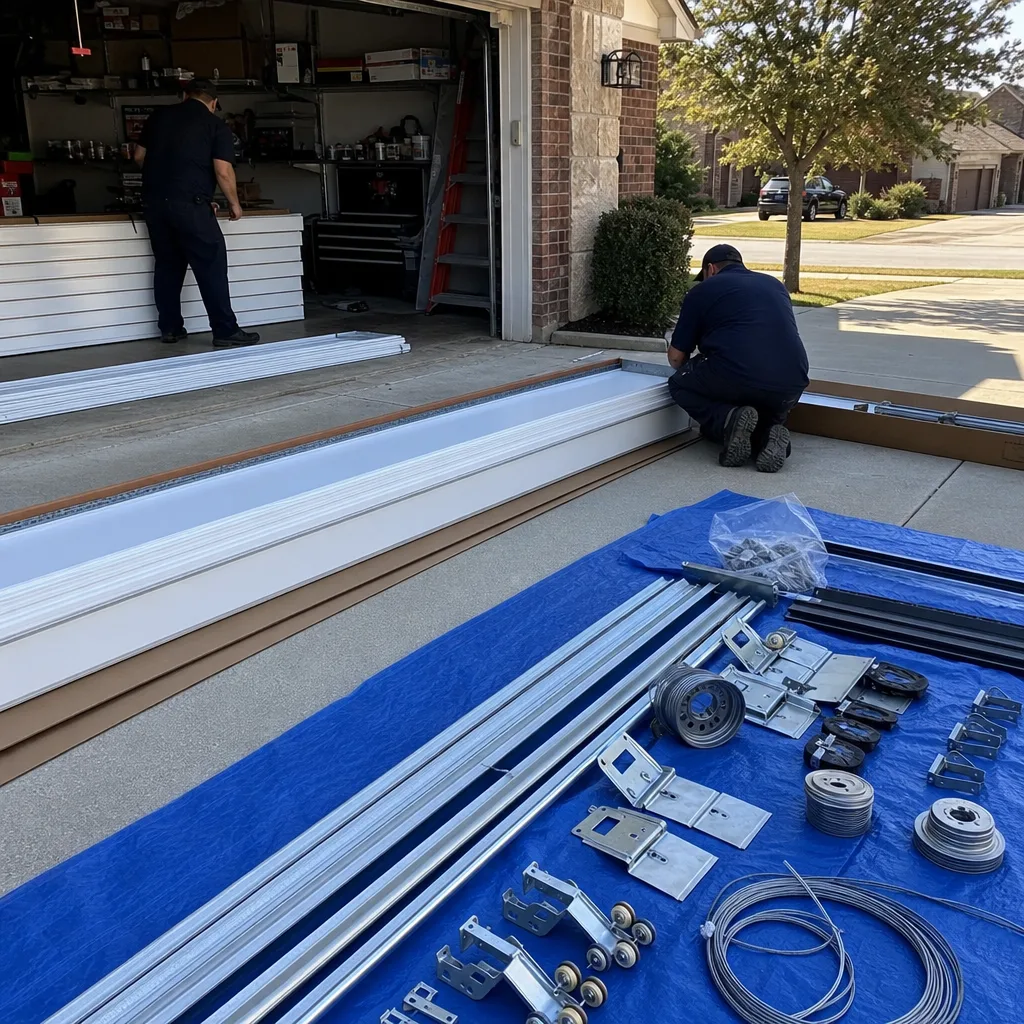
Torsion springs are calibrated at installation to balance the specific weight of your garage door. A properly tensioned spring means the door can be lifted manually with roughly 10 to 15 pounds of force, and the opener does not strain during operation. But spring tension is not a static property. It depends on the spring’s physical dimensions, which change with temperature. Steel expands when hot and contracts when cold. A spring set to correct tension at 70°F in October will be operating at a slightly lower effective tension at 100°F in July, because the spring’s coils have expanded and the metal’s modulus of elasticity has shifted.
In practical terms, here is what homeowners in Allen notice. In July and August, the door feels slightly heavier when operated manually. The opener runs a bit longer to complete a cycle, or sounds like it is working harder. The door may drift downward when opened halfway and released. These are all signs that the effective spring tension has dropped below the balance point. The reverse happens in winter: the spring contracts, effective tension increases, and the door feels slightly lighter. Most homeowners never notice the winter change because the door still operates normally. The summer change is what produces service calls.
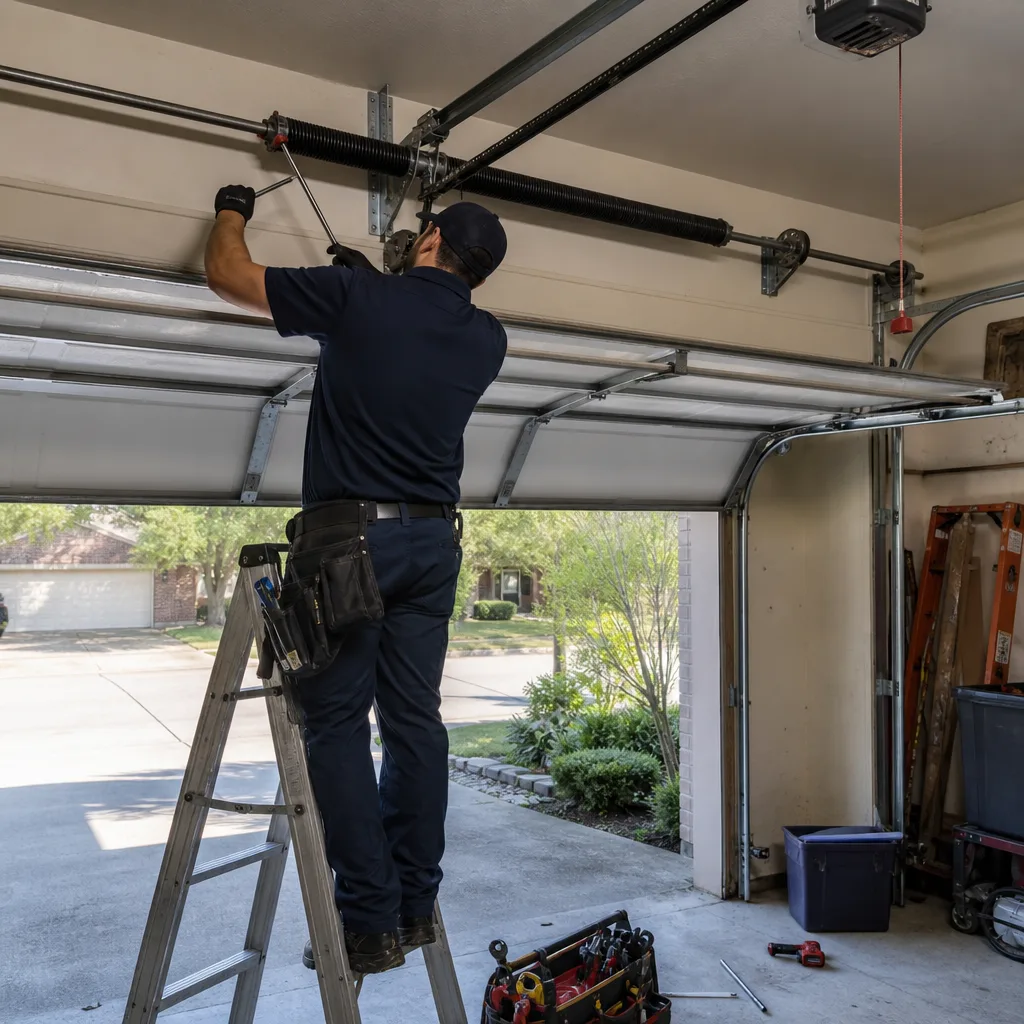
The correction is a spring tension adjustment, which involves winding or unwinding the spring by quarter-turn increments. This is precise work on a component under very high torque. A torsion spring stores enough energy to lift several hundred pounds, and a sudden release can break bones or worse. We do not recommend any homeowner attempt a tension adjustment without proper training and the correct winding bars. The risk is not worth the $75 to $125 that a professional adjustment typically costs in Allen.
What a homeowner should do is track the door’s behavior. In May, before the heat peaks, run the door manually and note how it feels. In August, do the same. If the difference is noticeable, call for a tension check. It is a quick visit, and the adjustment is made while you watch. Clause 1 of The Haven Standard means the price is written before the work starts, and Clause 4 means you will see photographic evidence of the spring’s condition before any repair is quoted. For homes with older openers, a tension check often pairs with an assessment of the opener itself, which you can read more about on our Garage Door Opener Repair & Installation in Allen page.
Common Mistakes to Avoid
- Using WD-40 on garage door components. WD-40 is a solvent, not a lubricant. It strips existing grease and leaves the metal with no lasting protection. In Allen’s heat, the stripped components will run dry within weeks. Use white lithium grease or a dedicated garage door lubricant.
- Lubricating nylon rollers. Nylon rollers are designed to run dry against steel tracks. Adding lubricant attracts dust and grit, which grinds into the nylon and shortens the roller’s life. Lubricate the metal roller stems only.
- Ignoring a door that feels different in August. A garage door that operates slightly slower or feels heavier in late summer is not “just the heat.” It is the spring losing effective tension, and the failure that follows will likely happen on the hottest afternoon of the year. Adjusting tension in July prevents an emergency call in August.
- Forcing a frozen door open with the opener. After an Allen freeze, a door that will not open may be bonded to the concrete. Forcing the opener shocks the entire system and damages the gearing, the trolley, and the hinges over repeated events. Disconnect the opener and lift manually, or wait for the thaw.
- Doing a single annual inspection in spring. A May inspection catches heat-related wear before summer. It tells you nothing about what the first freeze will do to the lubricant and the seals. The October inspection is not optional in Allen.
- Adjusting torsion spring tension without the right tools. Winding bars are not optional. Using screwdrivers or rods of unknown strength is how serious injuries happen. This is one component where a professional service call is always the right call.
- Replacing only one spring on a two-spring system. When one torsion spring breaks, the other is usually near the end of its life too. Replacing a single spring saves money today and guarantees a second service call within a year, often at an inconvenient time. Both springs should be replaced together so the door balances correctly.
When to Call a Professional
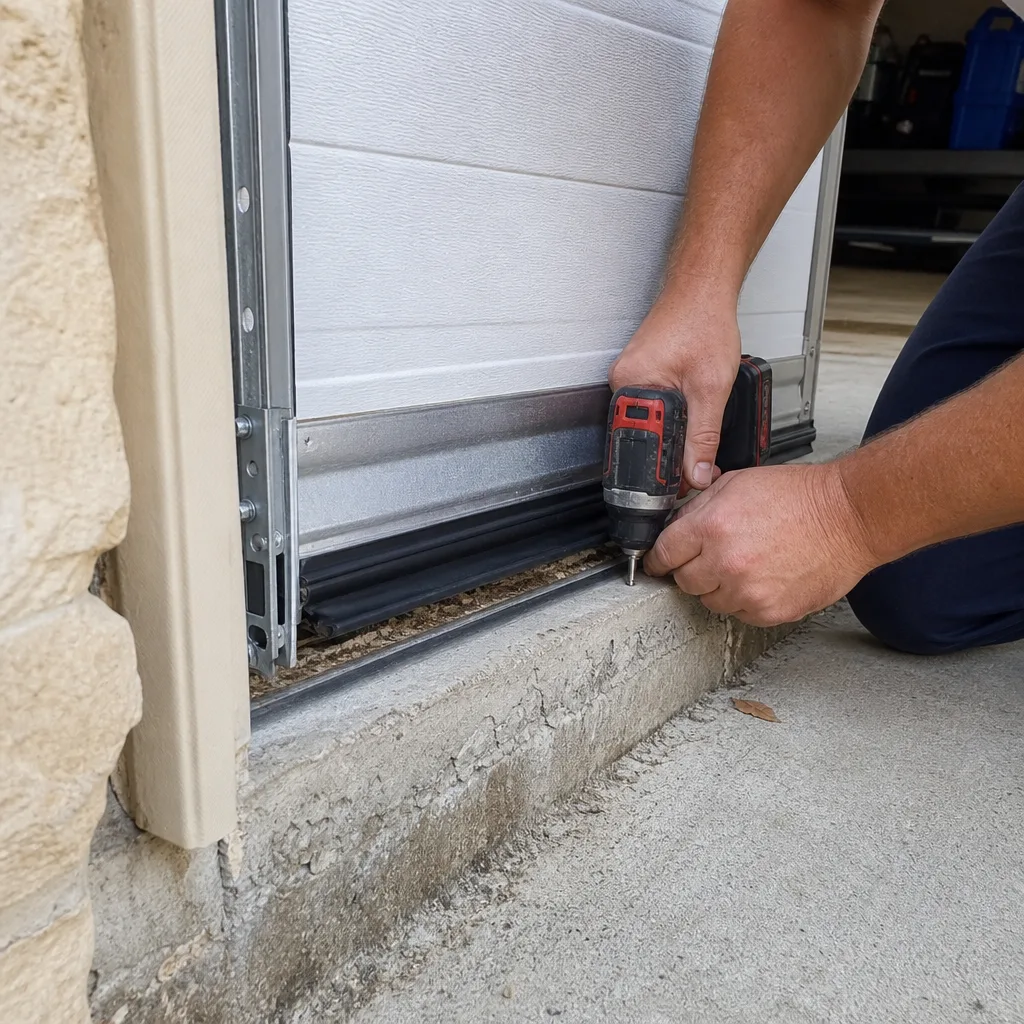
A homeowner can handle lubrication, visual inspections, and seal checks. Specific situations warrant a professional. Call when the torsion spring shows a visible gap or break in any coil. Call when the door will not stay balanced at the halfway-open position. Call when the opener strains or reverses for no apparent reason, or when the door binds on one side during travel. Call when freeze-bonding has occurred repeatedly across multiple winters, because the cumulative damage to hinges and the opener will not be visible on the surface. Servo Garage Doors Allen offers free estimates in Allen and the surrounding area. Call (469) 613-4703 and a live person answers, 24 hours a day, including holidays. Every job gets a written price and written scope before work starts, and a documented photo record when the technician leaves.
If you are considering replacement rather than continued repair, we cover the full process, including material selection and installation timelines, on our Garage Door Installation in Allen page.
Frequently Asked Questions
Three times per year for most Allen homes: once in late October or early November, once in mid-March after the last freeze, and optionally once in late July if your door faces west or south. Allen’s heat dries lithium grease faster than a temperate climate would, and the freeze season thickens it, so a twice-yearly schedule from garage door manuals leaves the door under-lubricated during both stress periods. Call (469) 613-4703 if you would rather have a technician handle the lubrication as part of a seasonal inspection.
Heat causes the torsion spring’s metal to expand, which lowers its effective tension below the point where it perfectly balances the door’s weight. The result is a door that feels heavier to lift manually and makes the opener work harder. A spring set in October in Allen will be operating outside its design tension by July. A professional tension adjustment corrects this. Call (469) 613-4703 for a tension check, and you will get a written price before any work begins.
Yes. When temperatures drop below freezing, moisture between the bottom seal and the concrete slab can freeze, bonding the rubber to the concrete. The opener then has to break that ice bond, which shock-loads the hinges, track brackets, and opener gears. Repeated freeze events cause cumulative damage that gets misdiagnosed as normal wear. Applying a thin silicone coating to the seal in October reduces bonding risk. If your door does freeze shut, disconnect the opener and lift manually rather than forcing the motor.
Bottom seal warping on west- and south-facing doors. Sustained radiant heat from the Allen sun raises panel surfaces to 140°F or higher, and the seal at the bottom edge sits against a concrete slab that also absorbs heat. The seal flattens, hardens, or curls within two to three seasons. A warped seal lets in water, insects, and dust, and it is also more likely to freeze-bond in winter. Replacement is inexpensive and takes under an hour. Call (469) 613-4703 for a free estimate.
Yes. Torsion springs are installed in matched pairs on most double-wide doors, and both springs have been through the same number of open-close cycles and the same Allen heat seasons. A new spring paired with an old one leaves the door unbalanced, which strains the opener and shortens the life of the new spring. Replacing both springs together restores correct balance and avoids a second emergency call within a year.
Two inspections per year is the minimum that matches Allen’s climate. The May inspection catches heat-related wear: seal warping, panel delamination, spring tension drift. The October inspection catches cold-related issues: deteriorated seals, thickened grease, track bolts loosened by a season of expansion and contraction. A single annual inspection in spring will miss cold-related failures entirely, and a single inspection in fall will miss the heat damage that has already occurred. The inspections cost far less than the emergency repairs they prevent.
The Bottom Line
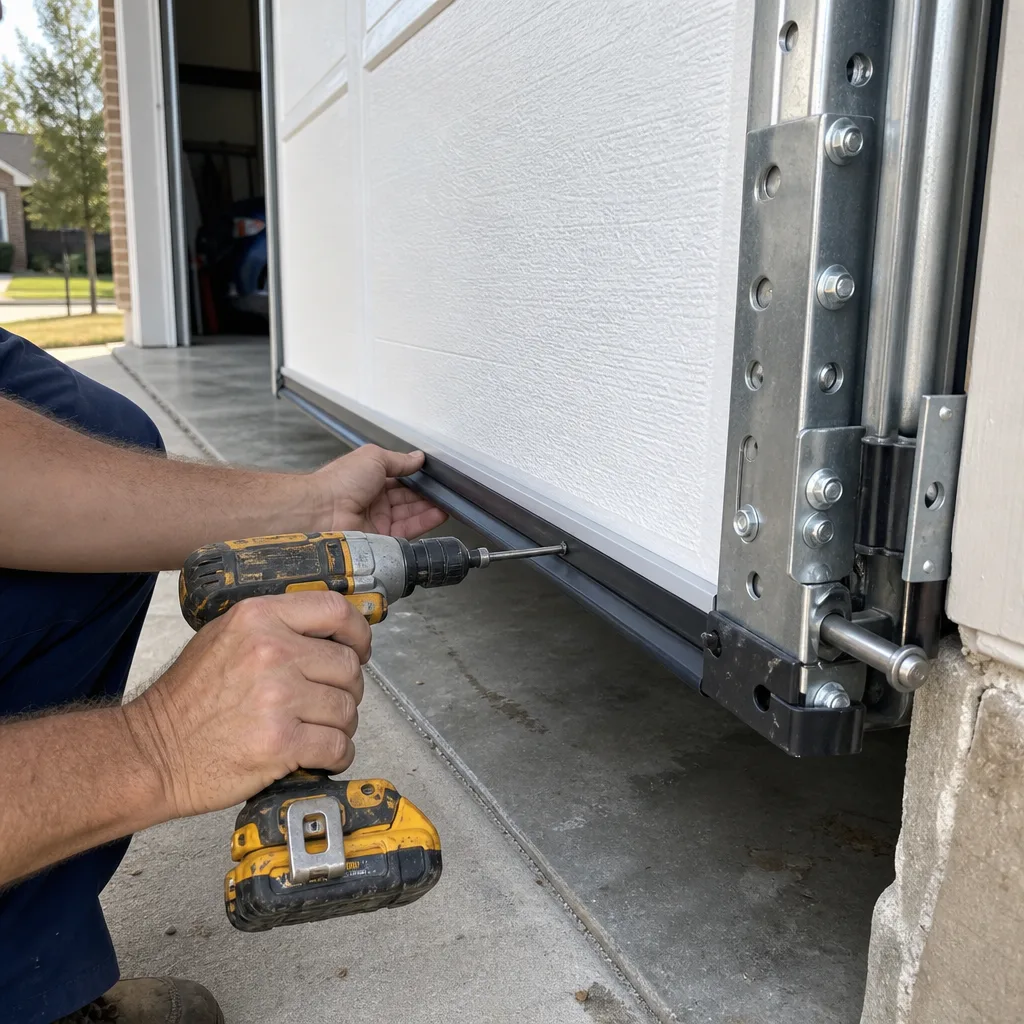
Allen’s garage doors fail on a predictable calendar: heat stress from June through September, freeze stress from December through February. A homeowner who inspects in May and October, lubricates on the three-application schedule, and does not force a frozen door will avoid most of the emergency calls we see. The components that fail are rarely mysterious. They are the bottom seal, the torsion spring, and the opener’s drive train, all of which give warning signs before they break. Read those signs, act before the stress peak, and your garage door will last years longer than the average in Allen. Written by Marcus Deller, Owner at Servo Garage Doors Allen, serving Allen since 2015.