
Last updated September 20, 2026
Full 25-point door and opener safety check with every visit - springs, cables, rollers, tracks, and your LiftMaster or Chamberlain opener included
You get a price before we start. It does not change when the truck arrives.
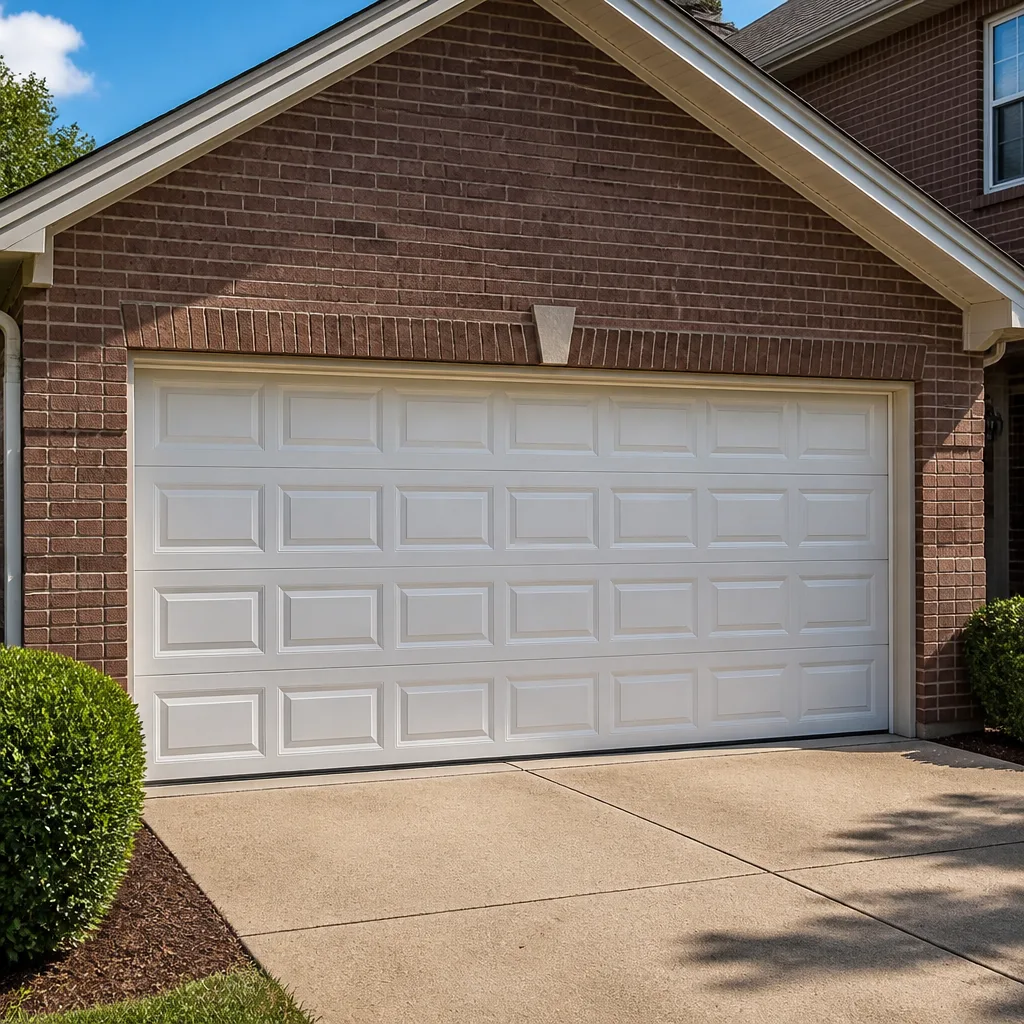
Carriage house
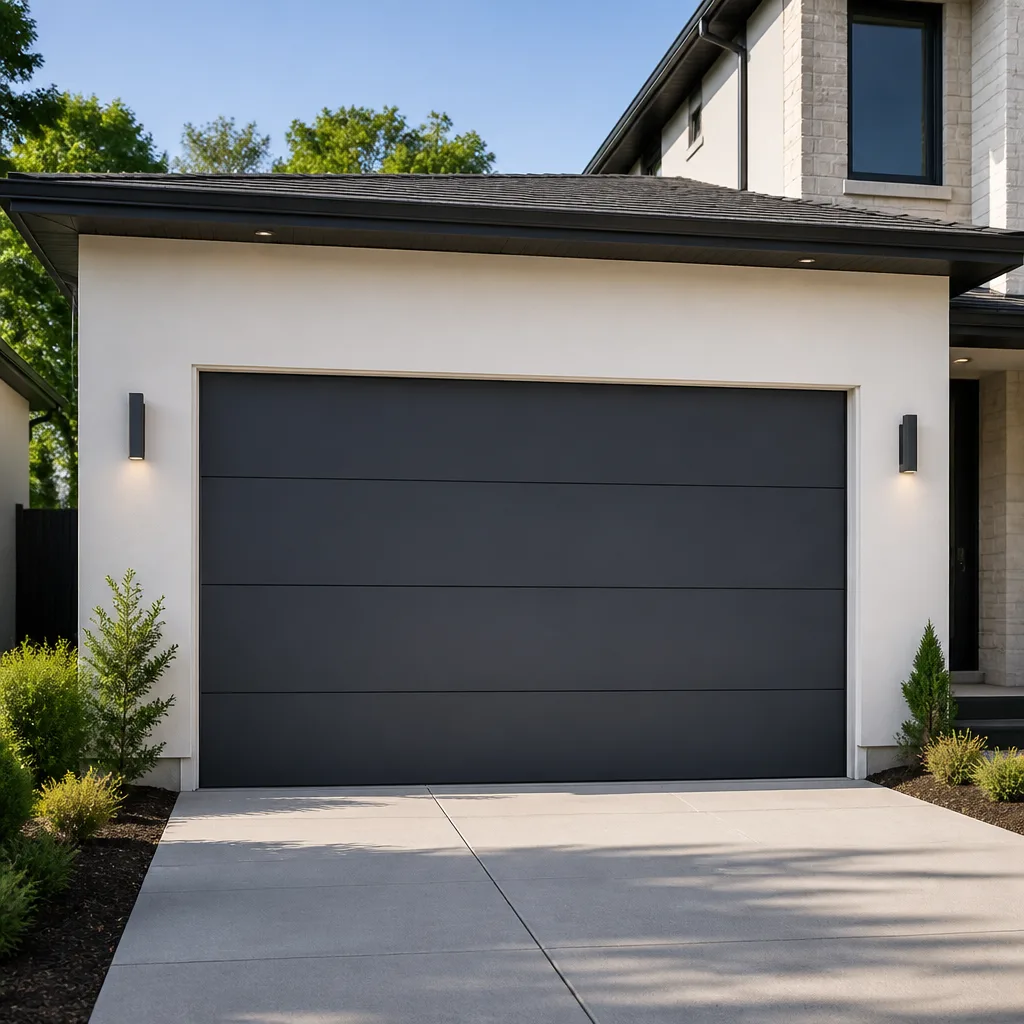
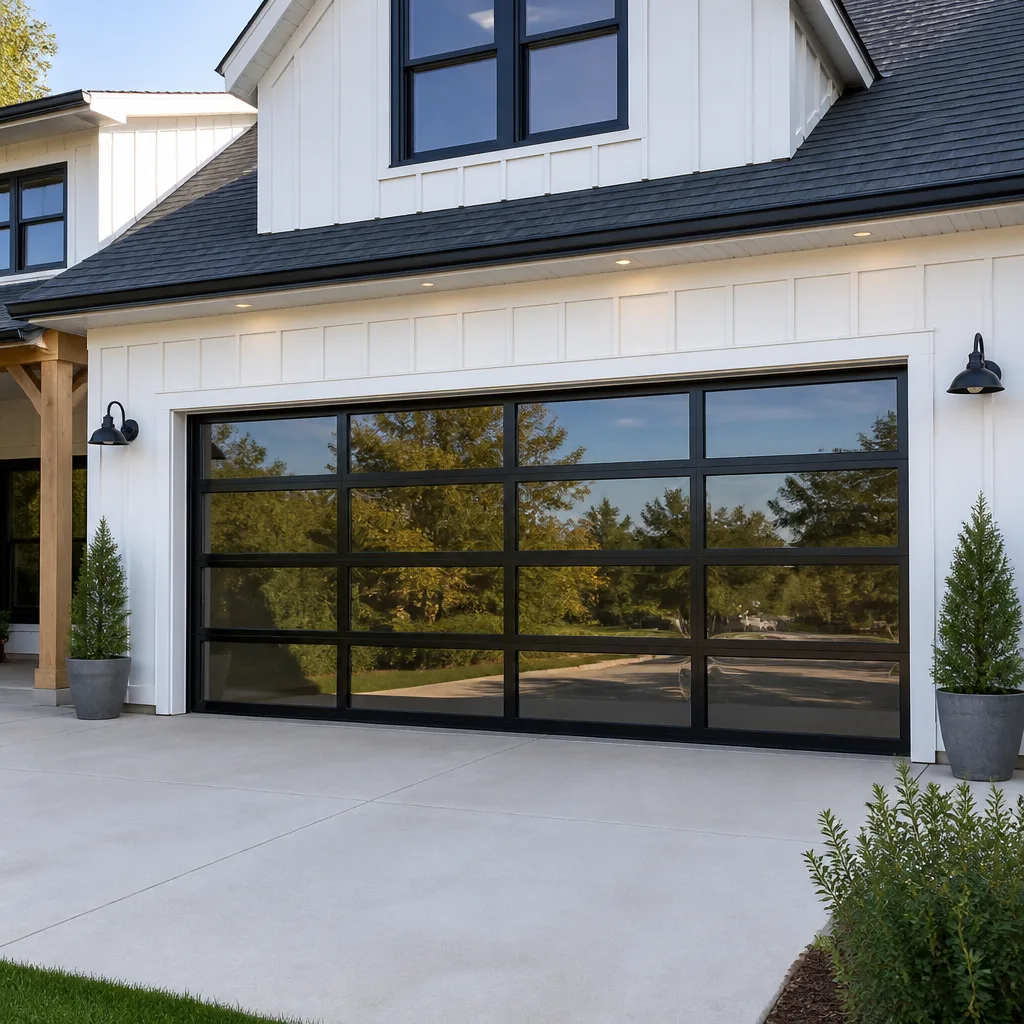
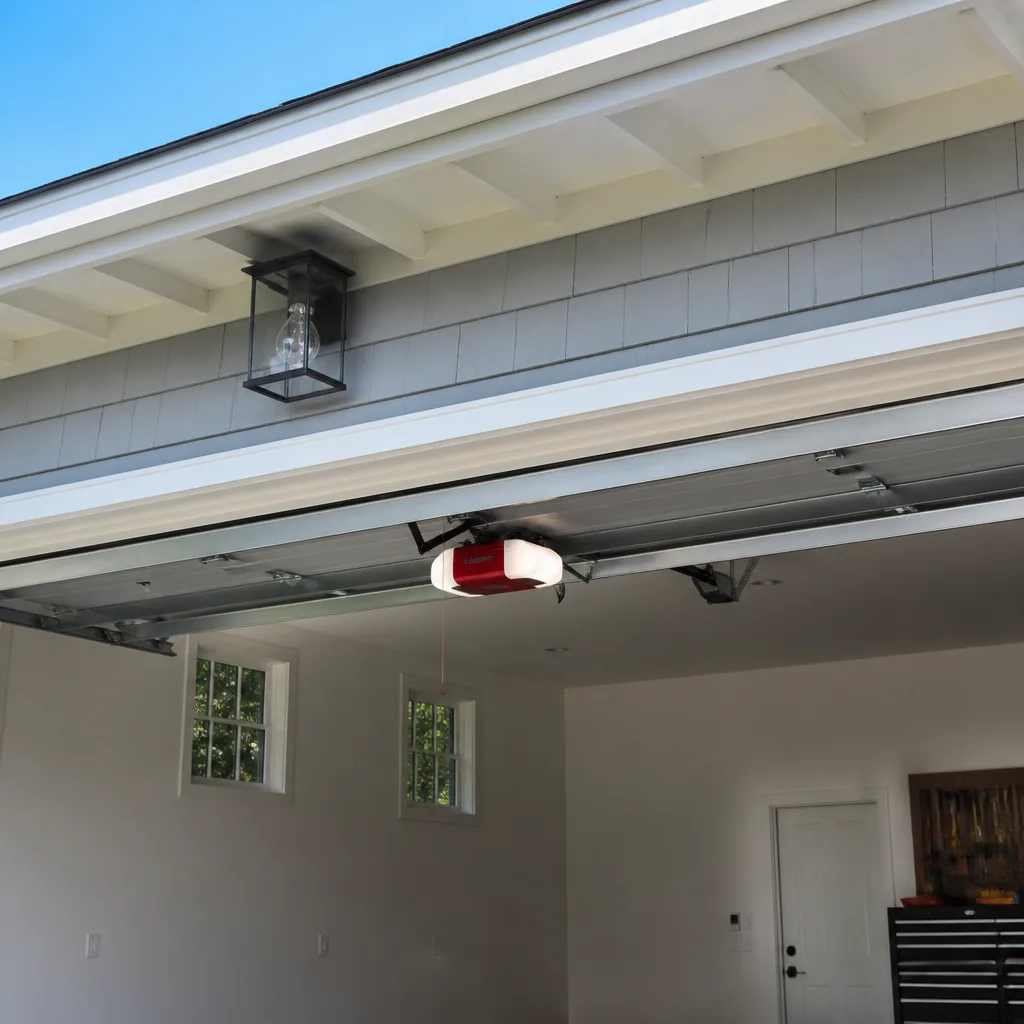
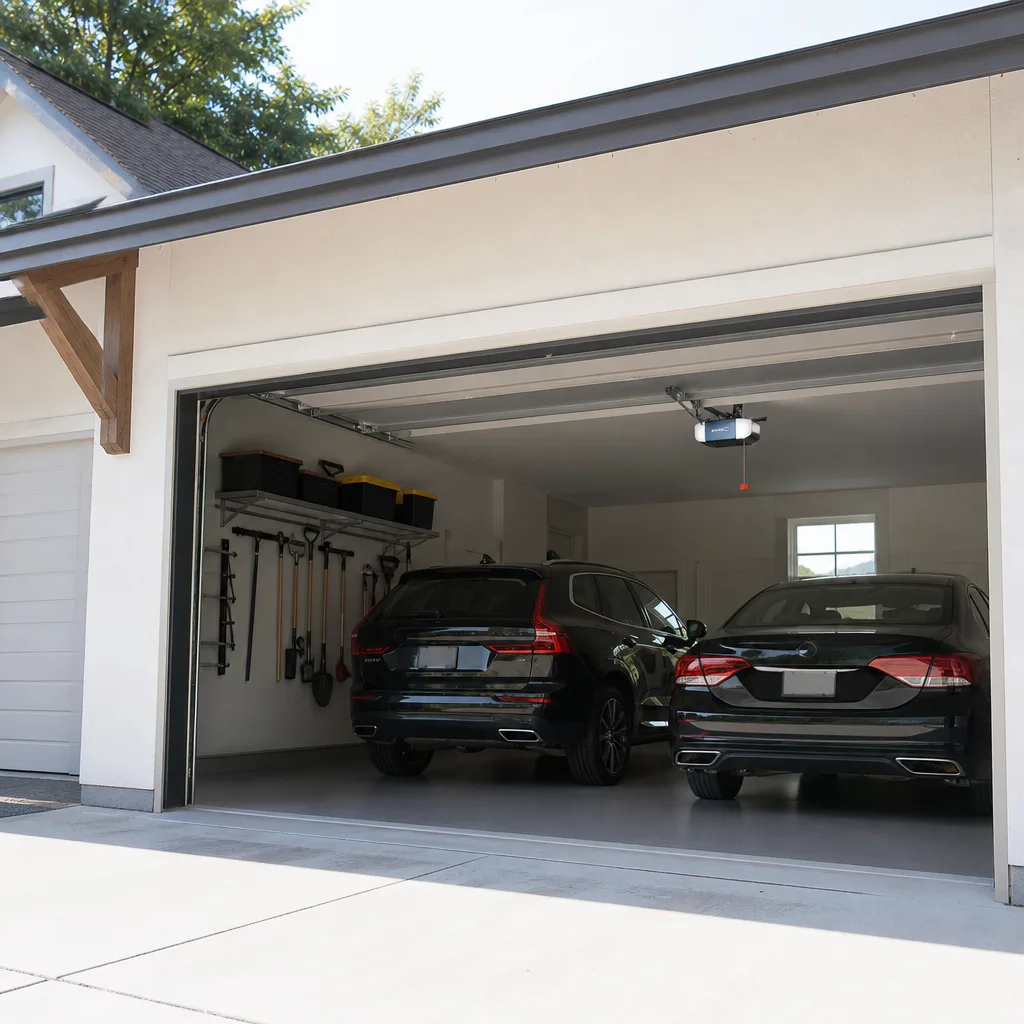
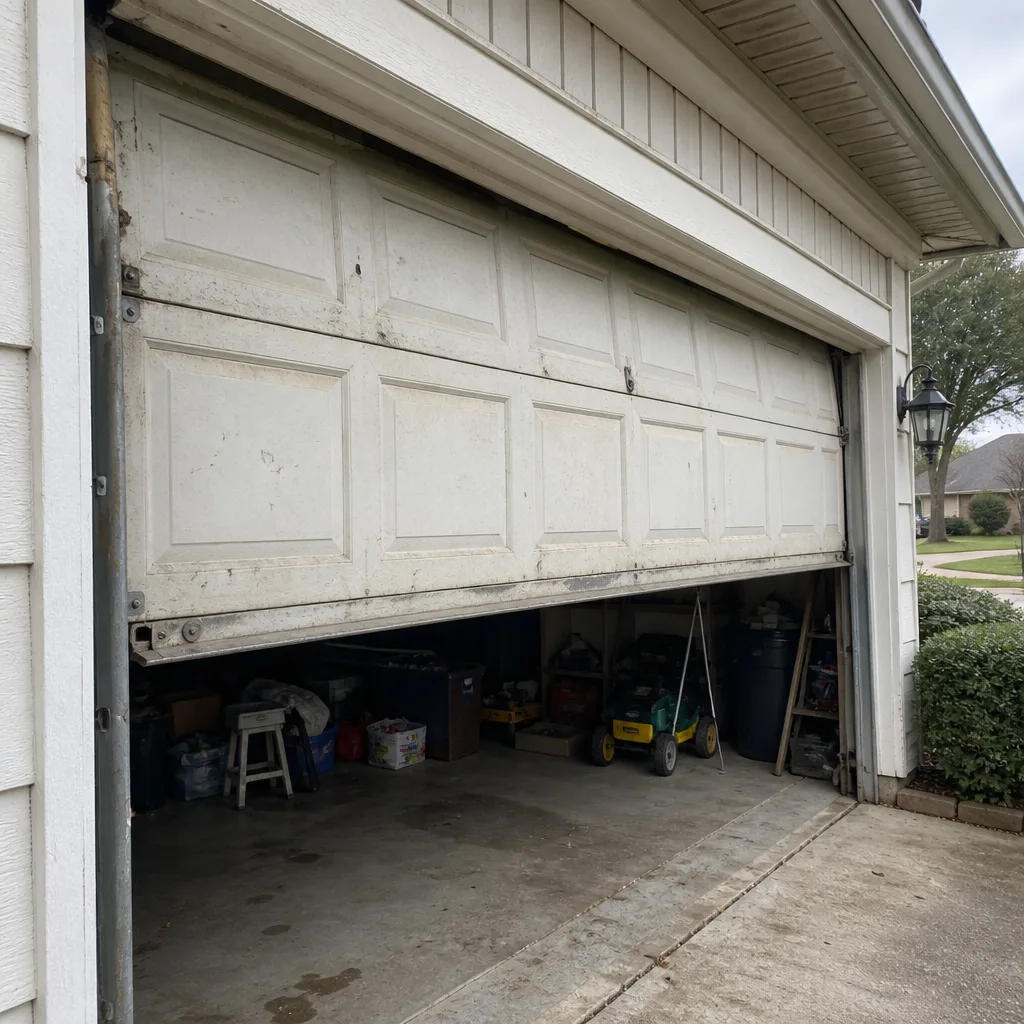 Before
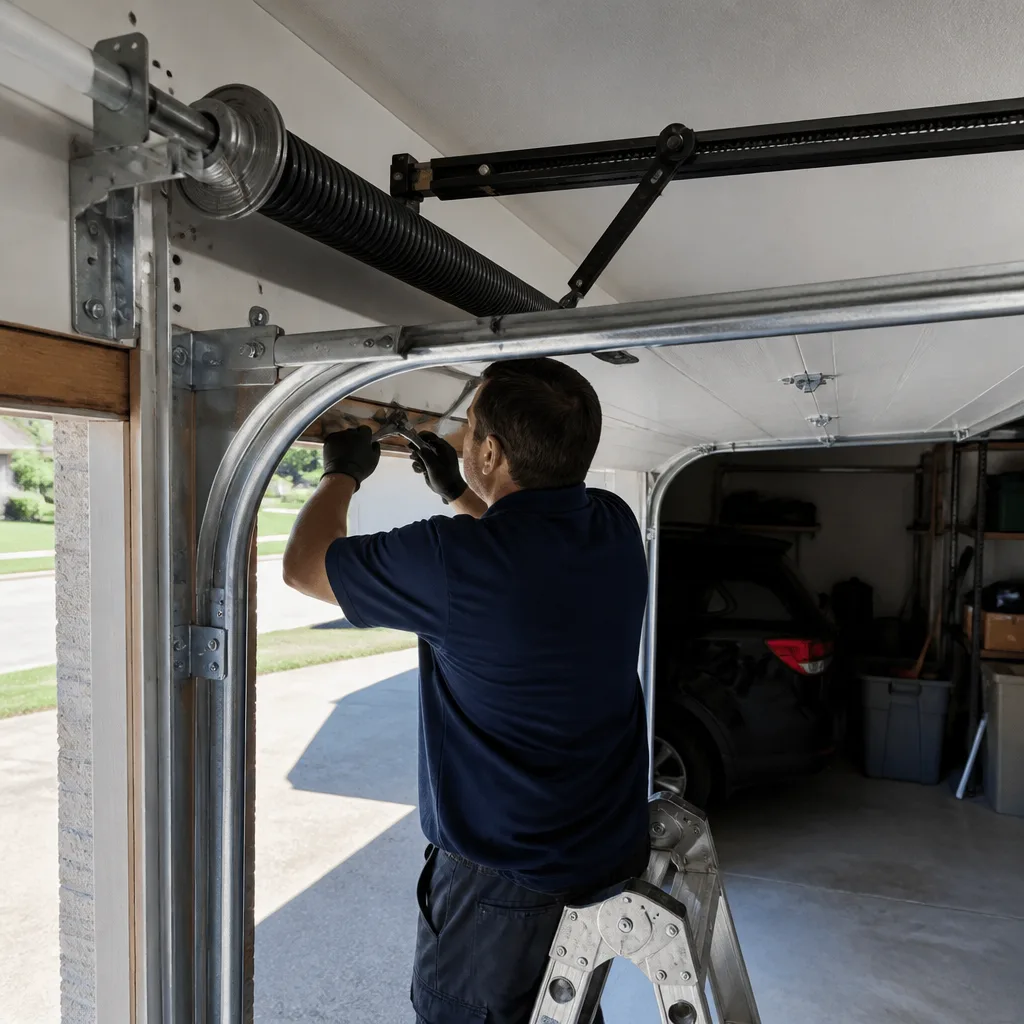 After
After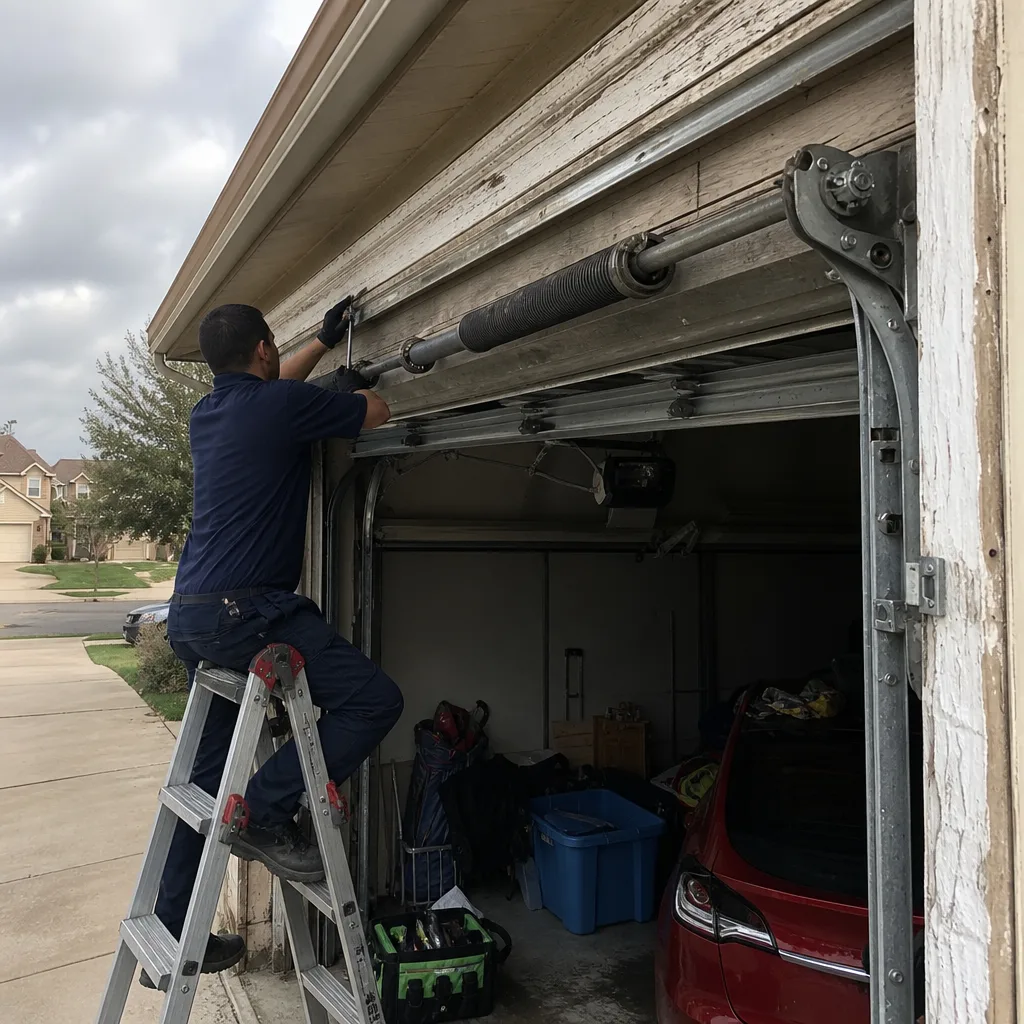 Before
 After
After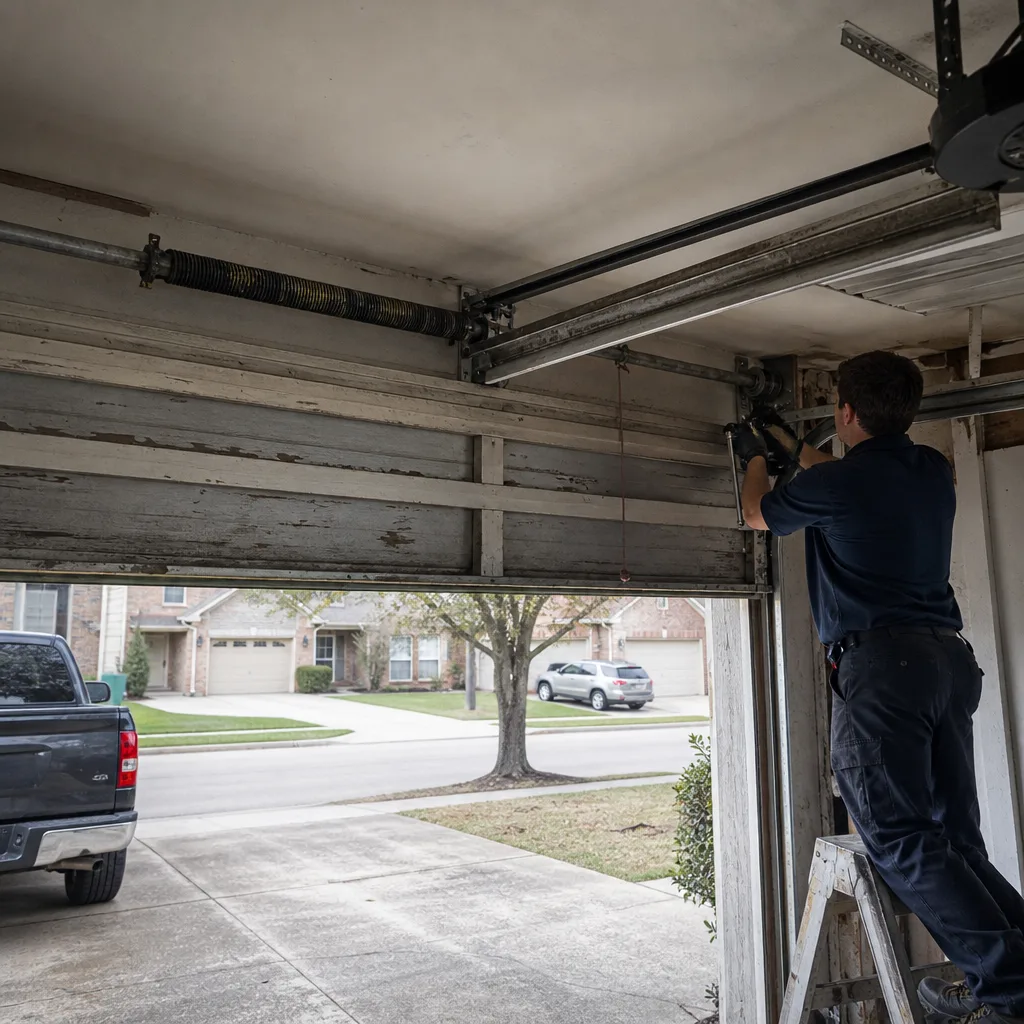 Before
 After
AfterDIY vs Professional Garage Door: The Allen Homeowner’s Decision Guide
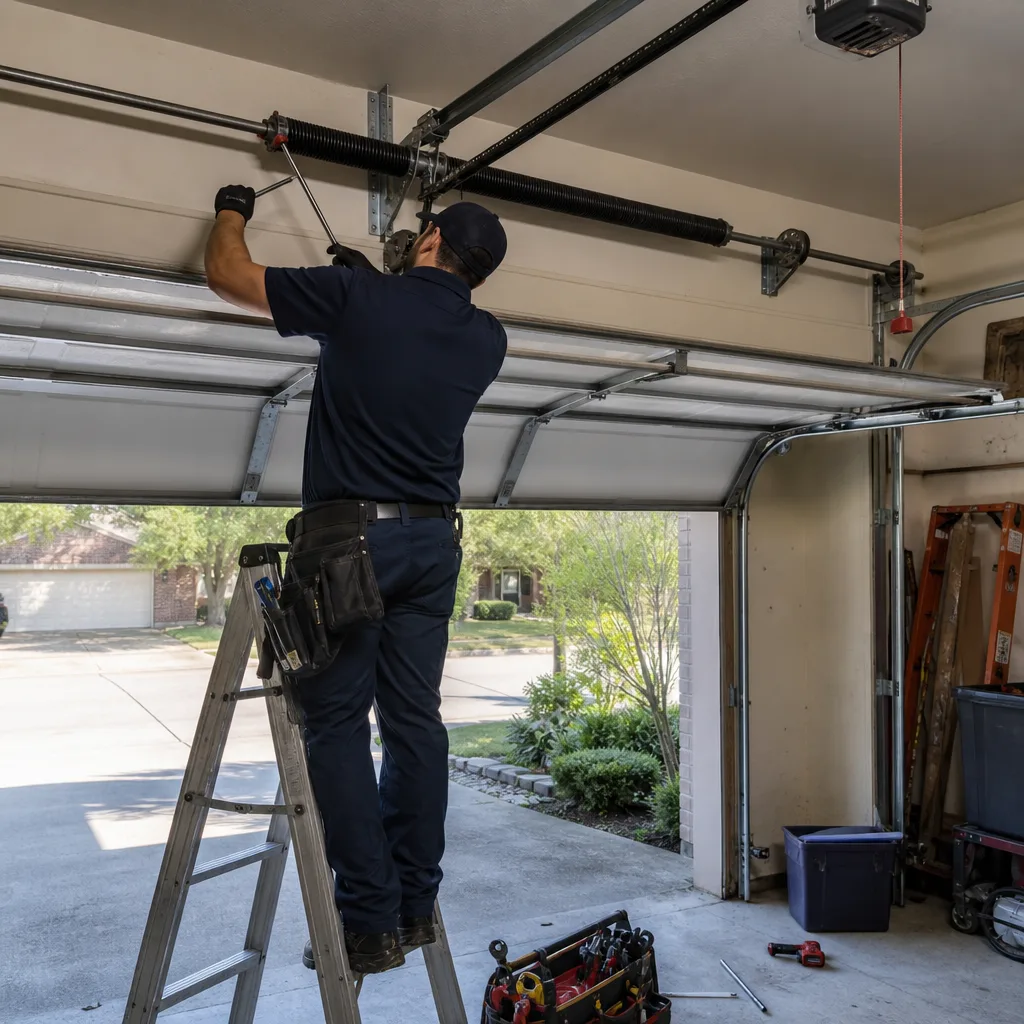
Here’s a number that rarely makes it into the DIY tutorials: a torsion spring on a standard two-car garage door stores roughly 100 foot-pounds of torque when fully wound. If a winding bar slips during adjustment, it releases that energy in a fraction of a second, directly into whatever is in its path. That’s not a scare tactic. It’s the specification. The question for Allen homeowners isn’t whether you’re handy enough to work on a garage door. It’s whether the specific task you’re considering has a failure mode you can recover from, or one that requires a hospital visit. This guide walks through the actual decision points, task by task, so you can sort the jobs you should do yourself from the ones that need a trained technician from a company like Servo Garage Doors Allen home.
Quick Answer
Most Allen homeowners can safely handle three garage door tasks without professional help: bottom seal replacement, opener programming, and routine lubrication. For a complete checklist of safe maintenance tasks, see our guide. Jobs involving torsion springs or lift cables should always go to a professional, because the stored energy in these components is high enough that a failed attempt carries risk of serious injury or a door that can’t be operated at all. The middle ground, like roller replacement or sensor alignment, depends on your tool access and whether you understand the mechanical sequence before you start.
Table of Contents
- Task-by-Task: What’s DIY, What’s Not, and Why
- Torsion Springs: The Hard Line
- The Hidden Cost of Failed DIY in Allen
- How to Reduce a Professional Service Call Cost
- Where Allen Homeowners Buy Parts vs. What Requires a Distributor
- How to Evaluate a Quote After a Failed DIY Attempt
- Safety Check: When the Risk Outweighs the Savings
- Common Mistakes to Avoid
- When to Call a Professional
- Frequently Asked Questions
BeforeAfterTask-by-Task: What’s DIY, What’s Not, and Why
Garage door work is not all the same level of risk. Some components are designed to be replaced by the homeowner, and manufacturers publish guides for them. Others are under load even when the door is closed, and the load doesn’t care whether you understood the guide. The classifications below are based on the mechanical reality of each component, not on a generic assumption that all garage door work is dangerous.
DIY-Appropriate Tasks
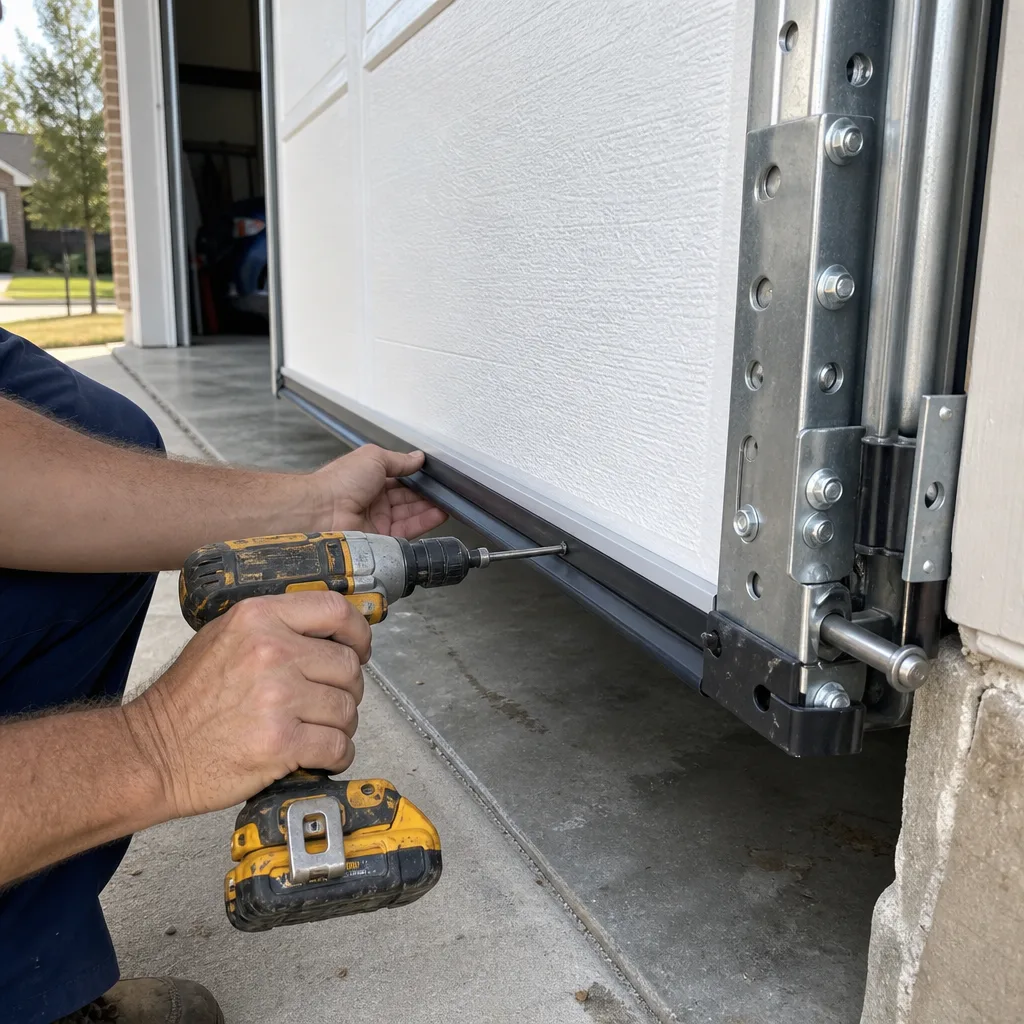
- Bottom seal replacement. The rubber strip at the bottom of the door wears flat in the Texas heat and stops sealing. Replacement is a slide-out, slide-in job on most doors. No stored energy. No special tools. Allen’s summers bake these seals hard within three to five years, so this is the most common DIY task in the city. You’ll find seals at any Allen home improvement store.
- Opener programming. Resetting a Chamberlain or Genie unit after a power outage, adding a keypad, or reprogramming a remote is a menu-driven task. The worst outcome of a failed attempt is that you try again. The opener’s manual has the exact key sequence. This is the second most common DIY task in Allen, and the one manufacturers explicitly designed for homeowner use.
- Routine lubrication. Applying white lithium grease to the torsion spring, hinges, and rollers every 6 to 12 months. The key is knowing what NOT to lubricate: the tracks should stay dry because rollers are designed to roll on clean metal, not slide through grease. A solvent wipe followed by a light lubricant on hinges and rollers is within most homeowners’ ability.
Professional-Required Tasks
- Torsion spring replacement or adjustment. Covered in detail below. This is the hard line. No exceptions for experience level, tool availability, or “watched a lot of videos.”
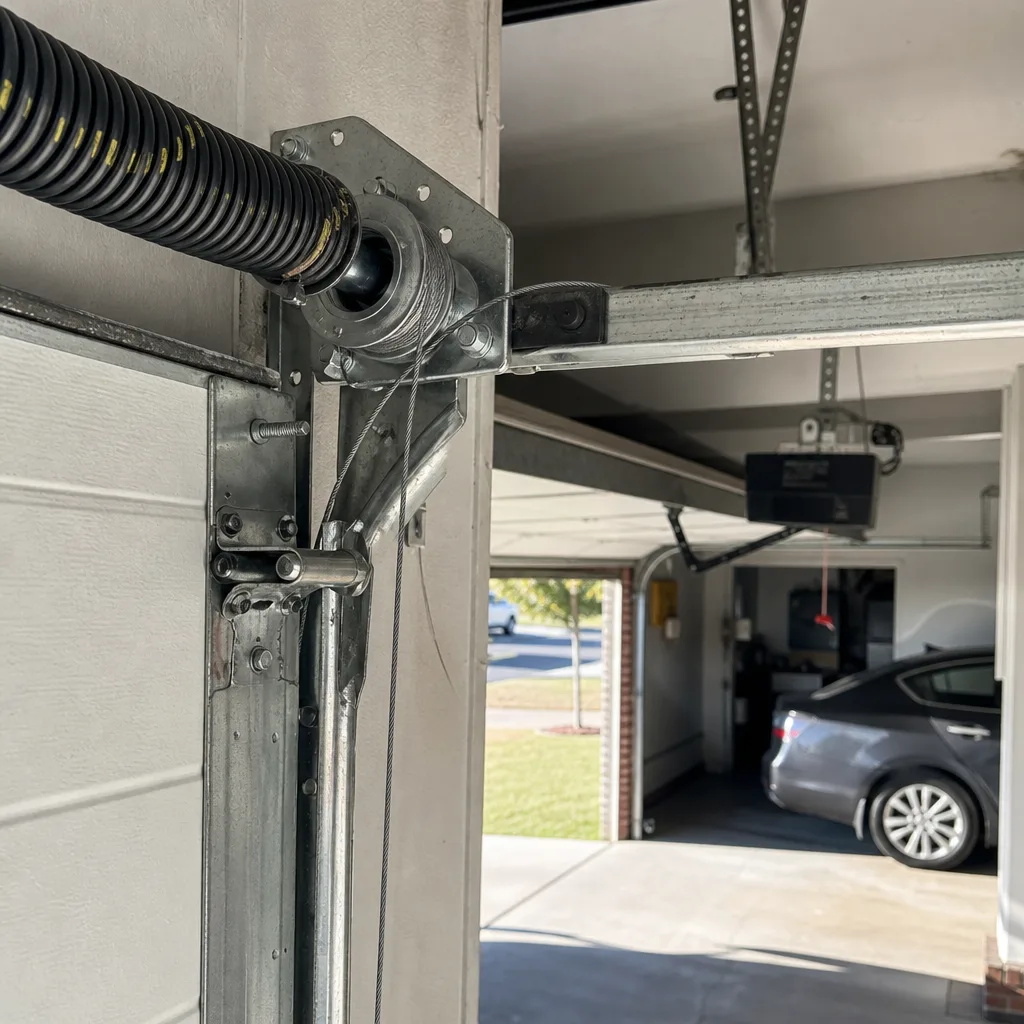
- Lift cable replacement. The cables route through pulleys and attach to the bottom bracket on each side of the door. They’re under tension equal to roughly half the door’s weight at all times. When a cable snaps, the door is unsupported on one side and will rack in the tracks. Replacement requires releasing the spring tension first, which is a professional operation. We’ve replaced cables in Allen neighborhoods from Twin Creeks to Watters Crossing where a DIY attempt had already bent the bottom bracket from the door’s uncontrolled drop.
- Opener logic board replacement. The logic board is the circuit board inside the opener motor housing. Replacing it means working with 120-volt wiring and the opener’s alignment sensors. The part cost is typically $80 to $180 for common Chamberlain and Genie models, but the labor requires probing the motor harness and recalibrating the open and close limits afterwards. For most Allen homeowners, this is over the line.
The Gray Zone
- Roller replacement. Steel rollers wear and flatten over time. Replacing them means unbolting the roller bracket from the track, but the bottom bracket is under spring tension and should not be unbolted by anyone who hasn’t released that tension first. Top and middle rollers are safer. Whether this is DIY depends on whether you know which bracket is which. The labor difference matters: a roller set costs $30 to $80, and a pro swap takes about an hour, but a garage door that falls off its tracks because you unbolted the wrong bracket becomes an emergency call.
- Photo-eye sensor alignment. The sensors at the bottom of the door tracks prevent the door from closing on a car or a person. When they’re misaligned, the door refuses to close, which is a safety feature working correctly. Realignment is often a matter of adjusting the sensor bracket and confirming the lights. DIY-accessible if you have a level and patience. But if the wiring itself is damaged or corroded at the splice inside the track, that’s professional territory.
Torsion Springs: The Hard Line
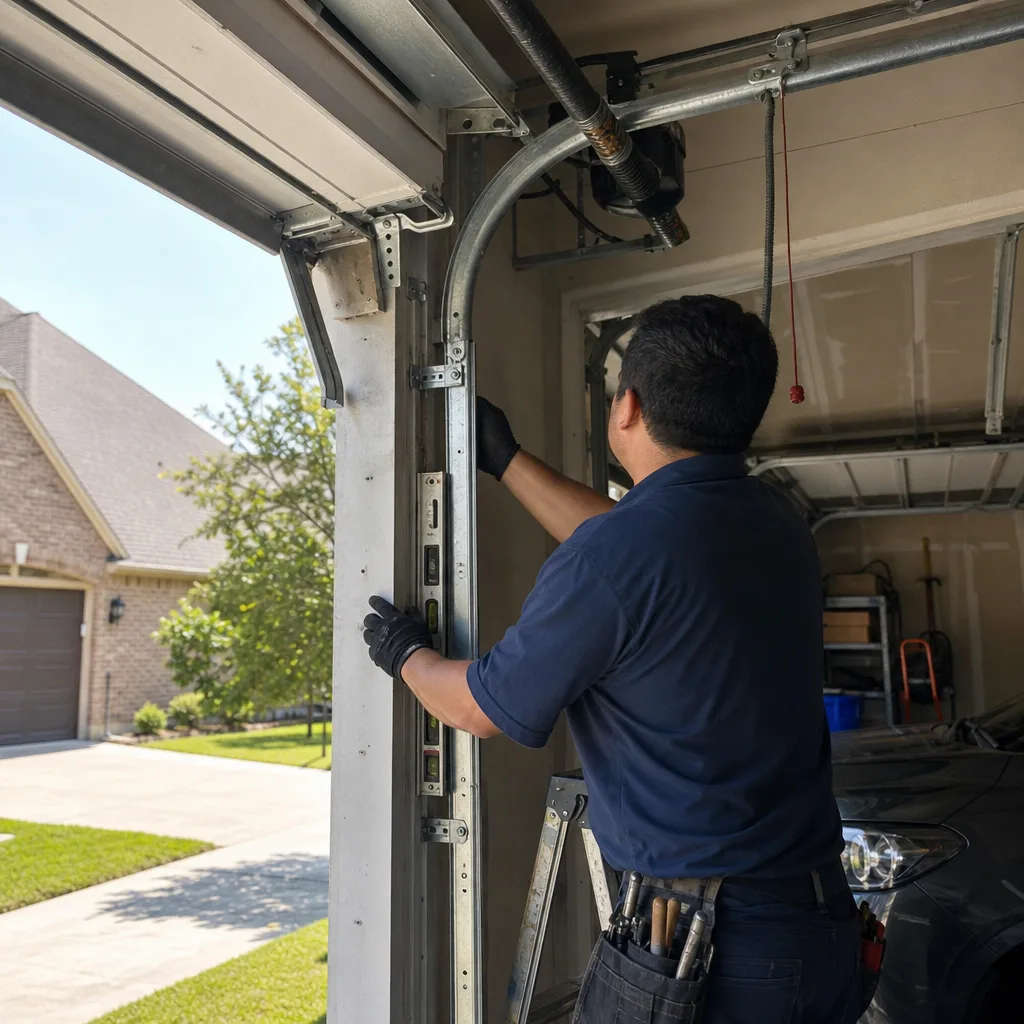
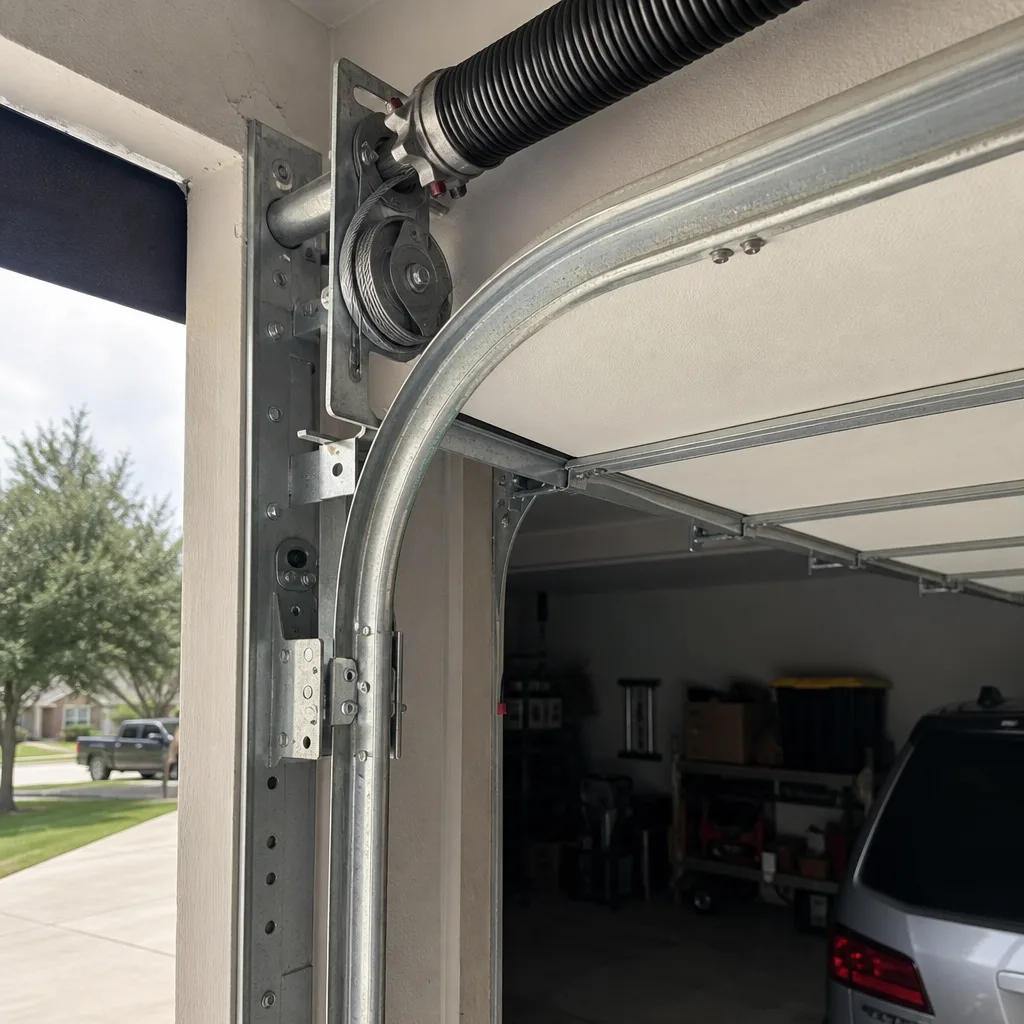
The torsion spring sits above the closed door on a horizontal shaft, and it does the heavy lifting for the entire system. Your opener motor only moves the door about 20 percent of the way; the spring does the rest. That’s why a door with a broken spring barely moves when you press the button, even though the opener motor runs fine.
When a spring breaks, it typically breaks in two sections, and you’ll hear a sharp crack that sounds like a board snapping inside the garage.
The reason this job can’t be DIY is simple arithmetic. A spring wound to balance a 250-pound door stores the energy of lifting that door, and it releases that energy through the winding cone in under a second if the winding bars slip. The bars are 18 inches long, and when they let go, they rotate at high speed with roughly 100 foot-pounds of torque behind them. That’s enough to break a wrist, fracture a jaw, or cause a serious hand injury. No amount of YouTube preparation changes that physics.
Manufacturers don’t sell torsion springs through retail channels for exactly this reason. You can buy a bottom seal at any Allen home improvement store, but a correct-weight torsion spring is a distributor item. When a Allen homeowner attempts to source one, they almost always get the wire gauge or the coil count wrong, which means the door either flies open or drops like a stone when they think they’ve finished the job.
The other reason this is a hard line is that the failure isn’t recoverable. If you program an opener incorrectly, you press reset and try again. If you wind a spring incorrectly, you may not be able to undo what you’ve done, because the door is now held by a spring you don’t know how to release safely. That’s when Allen homeowners call us, and the call starts with “I tried to do it myself and now the door won’t…” We’ve answered that call many times. We don’t lecture anyone, we just fix the door, and the Garage Door Repair in Allen we do after a failed DIY attempt is always more expensive than the original repair would have been.
The Hidden Cost of Failed DIY in Allen
The financial math on DIY garage door work usually looks like this: spring replacement by a professional in Allen costs roughly $180 to $380 depending on the spring’s wire gauge and the door’s weight. For a full cost breakdown for Allen homeowners, see our 2026 pricing guide. The same spring from a distributor costs $60 to $120. Looks like $120 to $260 in savings. But that math only works if the job goes perfectly the first time, and the consequences of it not going perfectly are not symmetric.
What an Emergency Call Costs After a Failed DIY Attempt
- Emergency service rate. When a door is mid-repair and the spring is wound incorrectly, the door often cannot be raised or lowered by hand, and the homeowner cannot leave their car in the garage. That’s an emergency service call in Allen, typically $50 to $150 more than a standard scheduled repair. This is not a markup for extortion; it’s the cost of dispatching a technician immediately to a door that’s in an unsafe partial-repair state.
- Drum damage. The drum is the grooved wheel at each end of the shaft that holds the lifting cables. If a spring is wound unevenly, or if the winding bars are removed incorrectly, the drum can be scored or the cable can jump the groove and wrap backwards. Replacing drums adds $80 to $150 per drum plus labor. In our experience across Allen, drum damage happens in about one failed DIY attempt in five.
- Additional labor to undo incorrect work. If a homeowner has already replaced a spring but wound it to the wrong tension, the technician must first unwind the spring they find, inspect the shaft and bearing plates, and then either rewind it correctly or replace it. That’s typically 30 to 60 minutes of diagnostic and correction labor on top of the repair. At Allen’s standard labor rates, that’s $45 to $90 that is entirely the cost of the first attempt.
The honest number: a failed DIY spring job in Allen turns a $250 repair into a $450 repair in the best case, and a $700 repair if the drum or cable was damaged. The savings on the successful case is between $120 and $260. The downside is roughly double the upside, even before counting the risk of physical injury.
How to Reduce a Professional Service Call Cost
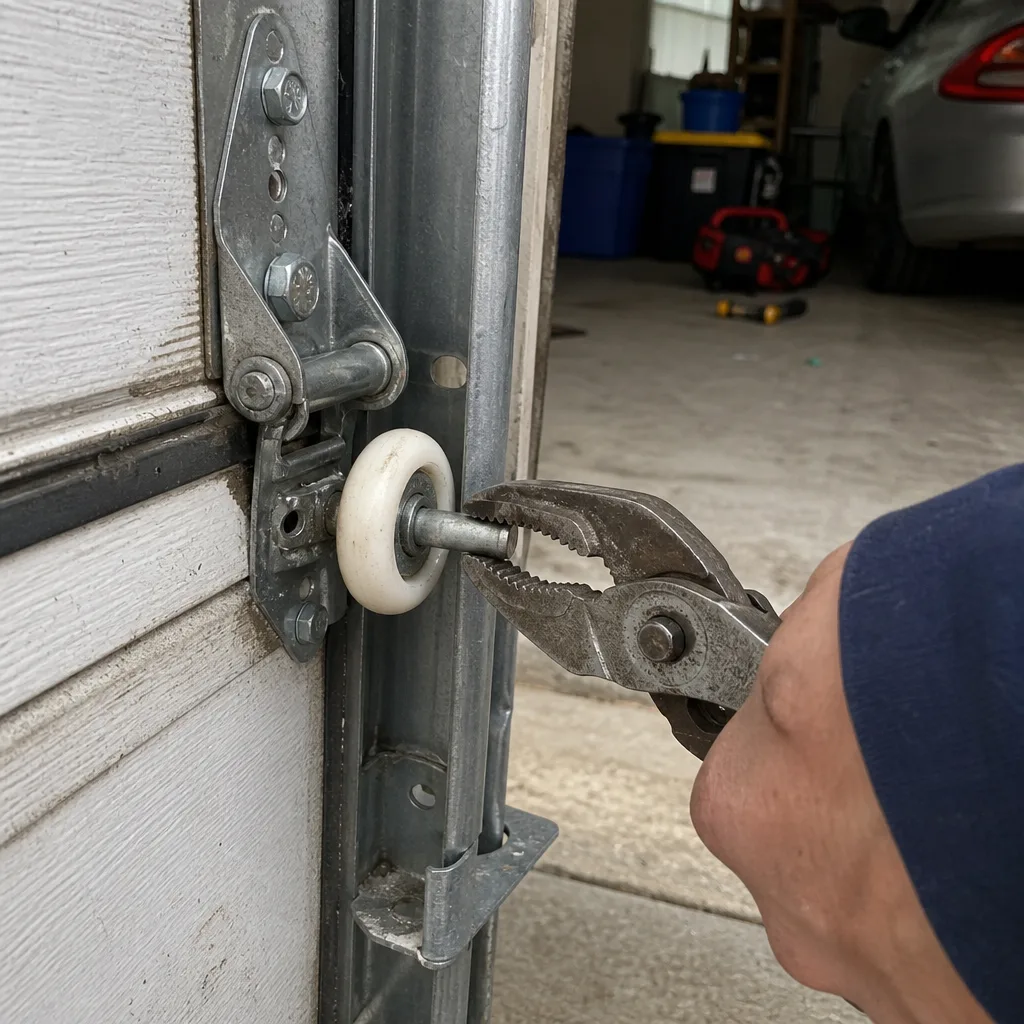
You don’t have to do the repair yourself to be useful to the technician. The reason a professional service call can cost more than it should is time spent diagnosing what’s actually wrong. Allen homeowners who do these three things before calling routinely get a faster, more accurate repair and a tighter quote.
Step 1: Identify Which Component Failed
Look at the door and figure out exactly what stopped working. A door that won’t move at all with a spring that looks intact on both sides is usually an opener problem. A door that opens a foot and then stalls, with a visible gap in the spring above it, is a spring problem. A door that drops on one side is a cable problem. The more specific you can be on the phone, the faster the repair goes. When you call a company like Servo Garage Doors Allen, the technician dispatches with the likely parts already on the truck.
Step 2: Have the Model Number Ready
If your opener failed, the model number is on the motor housing. If the door itself is the problem, the manufacturer name and year of installation matter because door models from the same maker can use different spring sizes. A Clopay door from 2017 often uses a different spring than a Clopay from 2023, even for the same size door. That information takes the guesswork out of the quote.
Step 3: Photograph the Failed Part Before You Call
This is the one that matters most. A photo of the broken spring, snapped cable, or flashing error code on the opener upends the whole interaction. You’re no longer calling and describing a noise. You’re sending a picture of a broken coil, and the technician on the phone can tell you what you’re looking at and quote a realistic price range before anyone drives to your house. This is exactly what a documented company like Servo does from the other side: every visit includes a photo record of what we found and what we did, so there’s no mystery on either end.
Where Allen Homeowners Buy Parts vs. What Requires a Distributor
Allen is well served for commodity garage door parts, but the line between retail and distributor-only items is drawn exactly where the DIY line is drawn. The parts that are safe to replace yourself are stocked at retail. The parts that require professional installation are not.
What You Can Buy in Allen Home Improvement Stores
- Bottom seals and weatherstripping, in standard 8, 9, and 16-foot lengths, pre-cut and ready to slide into the channel. Some Allen stores stock the T-shaped and bulb-shaped profiles for the most common door brands, including Clopay and Amarr.
- Rollers, both nylon and steel, in standard 2-inch sizes. Nylon rollers with sealed bearings run $10 to $20 per roller. You’ll find these on the shelf in Allen, and they’re the same ones a professional installs.
- Keypads and remotes, for LiftMaster, Chamberlain, and Genie openers. If your opener was installed after 2015, it likely uses Security+ 2.0 or a comparable rolling-code system, and the retail units will pair with it. Programming takes about five minutes.
What Requires a Distributor Order
- Torsion springs. Correct-weight torsion springs are specified by wire gauge, coil count, and winding direction. Retail stores in Allen do not stock them, because the manufacturer will not supply them to retail shelves. A professional garage door company orders from a distributor that verifies the spec before shipping.
- Lift cables. Replacement cables are sized for the specific door height and weight. A cable for a 7-foot door does not fit a 10-foot door, and installing the wrong length is a mechanical failure waiting to happen.
- Logic boards for current-model openers. The board for a Chamberlain B2405 or a Genie StealthDrive is a distributor-line item. Retail stores stock universal remotes and keypads, not the control board itself. A professional garage door company can pull these same boards from their local distribution network in one to two days, which is usually faster than a homeowner can source one online and confirm it’s the right revision.
If you’re unsure which category your part falls into, the part’s availability is usually your answer. If you can buy it at an Allen home improvement store, the manufacturer considers it a homeowner-serviceable component. If you can’t, that’s a signal the manufacturer expects a trained technician to handle it.
How to Evaluate a Quote After a Failed DIY Attempt
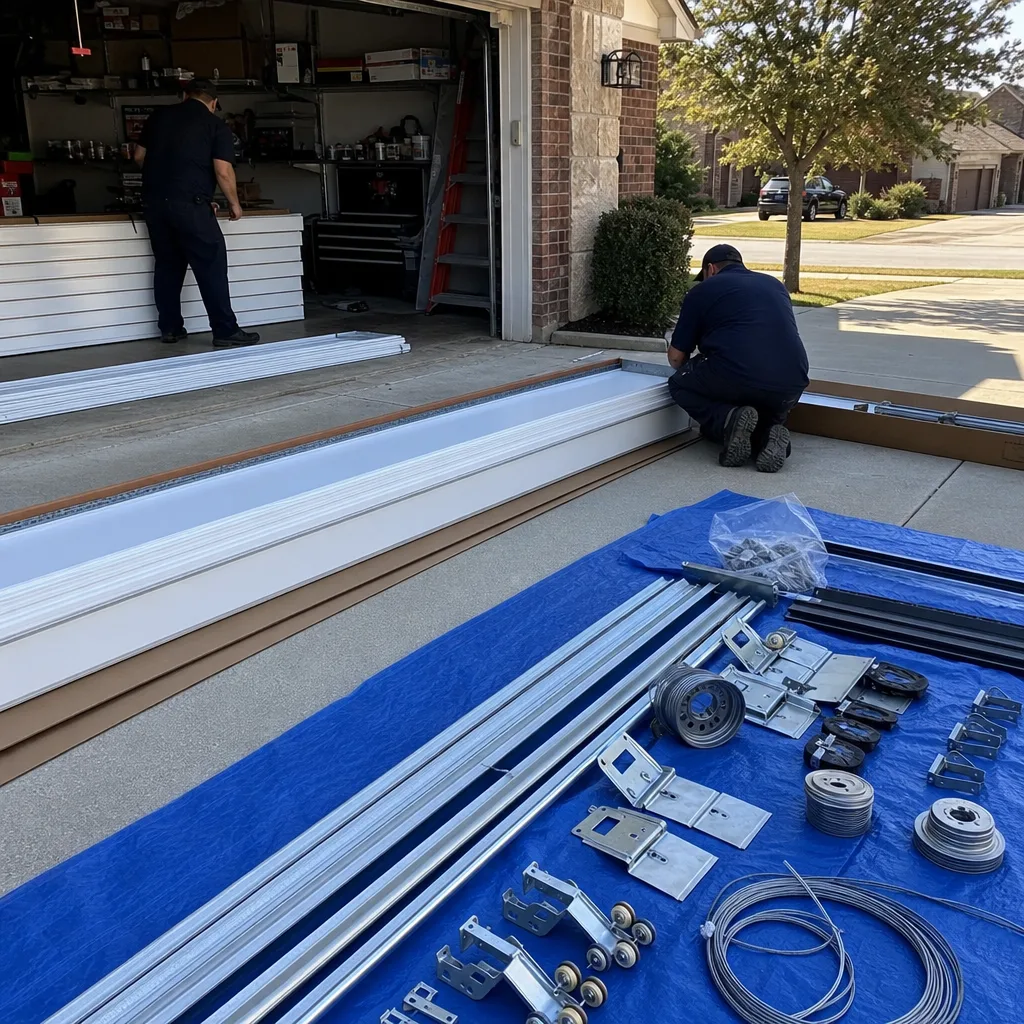
This section is for the specific situation where you’ve already tried to fix the door, it didn’t work, and now you’re calling a professional. The quote you get will include some line items that a standard repair wouldn’t have, and knowing which of those are legitimate helps you avoid either overpaying or arguing with a fair price.
Line Items That Are Legitimate After a Failed DIY
- Correction labor. If the technician has to unwind a spring you installed, that’s labor that would not have occurred without the DIY attempt. Thirty to sixty minutes of correction time is reasonable and should be listed as a separate line item.
- Part replacement due to incorrect installation. If you installed the wrong spring and it’s been operating under the wrong tension, even briefly, replacing it with the correct one is a new part cost, not a repair. A company should show you the difference in spec before you pay for the second spring.
- Safety inspection extension. When a technician takes over after a DIY attempt, they should check every component you touched and everything connected to it. That inspection is a real time cost and should be itemized.
Line Items That Should Be Included in the Standard Repair Scope
- Basic diagnosis. A professional should not charge extra to identify what a broken spring looks like. Diagnosis is part of the repair.
- Post-repair balance test. After a spring replacement, the technician should run the door up and down by hand and under opener power to confirm the spring is balanced. That’s standard and should not be a surcharge.
- Documentation. A company that photographs the failed component and the completed repair, and gives you a written warranty, is not charging extra for that. It’s how a legitimate shop operates. At Servo Garage Doors Allen, Clause 4 of The Haven Standard is the founding rule: the customer sees the failed part before anyone quotes a replacement. That photo record isn’t an upsell; it’s the documentation that makes the work verifiable.
Ask the company to walk you through the line items before they start work, in writing. If a line item can’t be explained in one plain sentence, ask again. You’re not being difficult; you’re doing what the entire system of written upfront pricing exists for.
Safety Check: When the Risk Outweighs the Savings
Let’s be clear about the risk categories without being dramatic. Some garage door failures are inconvenient, and some are dangerous. The dangerous ones all involve stored energy or uncontrolled weight.
Torsion springs store energy, as we’ve covered. Extension springs, the older style mounted on each side of the horizontal tracks, store energy in a different way: when they break, the spring can become a projectile, which is why modern code requires safety cables routed through the spring. Texas permit and code requirements for garage doors mandate these safety cables in new installations. If your Allen home has extension springs without safety cables, that’s a safety issue, not a DIY opportunity.
Lift cables are the other high-risk component, because a snapped cable means the door is being held by only one side. A 250-pound door can twist in the tracks and drop to one side quickly. Never work on cables without the door fully secured in the open position or the spring tension released by a qualified technician.
The low-risk items are the ones where nothing in the system has the potential to move on its own: the bottom seal, the opener remote programming, the lubrication. The moderate-risk items are the ones where the door is heavy and the consequence of a mistake is damage to the door or your hands from pinching, not a serious mechanical injury: roller replacement, sensor alignment, track cleaning.
The threshold for Allen homeowners should be this: if the component you’re about to touch stores energy or bears load, and you can’t explain to another person exactly how you would release that energy safely before touching the part, you should not be touching it.
Common Mistakes to Avoid
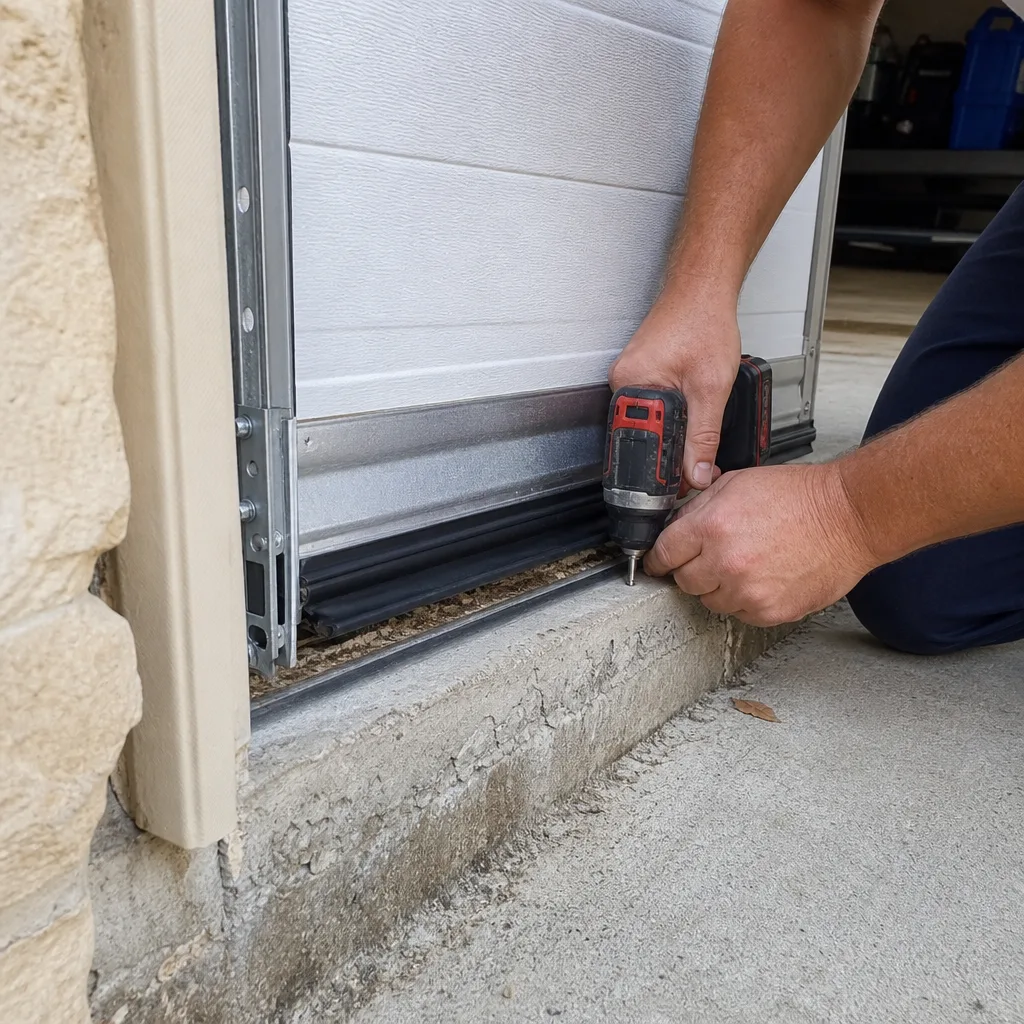
- Assuming all springs are equally dangerous. Torsion springs require winding bars and a specific sequence; extension springs require the safety cables first. The approach is different, and confusing the two is the most common cause of injury in Allen garages.
- Watching a video and attempting the job in the same day. A video shows you the sequence, but it doesn’t show you the feel of a properly wound spring or the resistance of a cable under correct tension. If you can’t describe the mechanical steps in your own words before starting, you’re not ready.
- Forcing the door when the spring is broken. When the spring breaks, the door becomes a dead weight. Trying to lift it manually, especially with a car in the way or an opener still attached, can tear the bottom bracket off and bend the track. That converts a $250 spring replacement into a $700 repair.
- Skipping the photo before calling a pro. Taking a photo of the broken component before you call costs nothing and saves a misdiagnosis. We’ve had Allen homeowners describe a “broken opener” that was actually a snapped torsion spring, and the only reason we knew before arriving was a photo they sent while on the phone.
- Using the wrong lubricant. WD-40 is not a garage door lubricant; it’s a solvent that strips the existing grease and accelerates wear. Use white lithium grease on metal-to-metal contact points and silicone spray on the weather seal. This is a simple rule, and most Allen homeowners get it wrong from the brand name confusion.
- Ignoring the balance test. After any spring repair, a balanced door will stay in place when opened halfway by hand. If it drifts up or down, the spring is wound incorrectly. A professionally repaired door should always pass this test before the technician leaves.
When to Call a Professional
The decision is often clearer after you’ve categorized the task. If you have a snapped torsion spring, a broken lift cable, a door that fell off its track, or an opener that’s unresponsive at the circuit board level, the right call is to a licensed, insured garage door technician. If you’ve already started a repair and you can’t finish it safely, or you’re not confident the spring is wound to the correct tension, the right call is to a professional who can correct the work without making it worse. Garage Door Opener Repair & Installation in Allen is routine for a company that does it daily; for a homeowner, an opener logic board replacement can turn into a 120-volt electrical hazard in the wrong hands. Servo Garage Doors Allen offers a free estimate on any repair in Allen; call (469) 613-4703 and we’ll give you a written price before any work starts. No urgency needed. Just the number and the scope.
Frequently Asked Questions
Garage door spring replacement in Allen typically costs $180 to $380 depending on the spring’s wire gauge, coil count, and whether it’s a single or double spring system. The part cost ranges from $60 to $120, and labor accounts for the remainder, which includes winding the spring to the correct tension and running a balance test. Call (469) 613-4703 for an exact quote on your door, and you’ll get a written price before any work starts.
No. Lift cables are under tension equal to roughly half the door’s weight, and replacing one requires releasing the spring tension first. A cable failure with the spring still wound is a serious safety hazard, and a failed cable replacement can result in an uncontrolled door drop. This is a professional-only repair.
Homeowners can safely replace the bottom seal, program or reprogram opener remotes and keypads, lubricate hinges and rollers with white lithium grease, and realign photo-eye sensors. These tasks involve no stored energy and no risk of the door moving on its own.
A failed DIY spring replacement in Allen that causes drum or cable damage typically ends up costing $450 to $700 total, compared to $180 to $380 for a standard spring replacement done correctly the first time. The additional cost covers correction labor, damaged parts, and in some cases an emergency dispatch rate.
Yes, Servo Garage Doors Allen handles emergency and same-day garage door repairs across Allen, and every call is answered by a live person, 24/7, including holidays. For more guides & resources on garage door care, explore our blog. We’ll send you the name of the technician and an on-the-way text before we arrive. Call (469) 613-4703 and we’ll work out the timing on the phone.
No. Servo Garage Doors Allen operates under Clause 1 of The Haven Standard: every job is quoted with a flat, written price and a written scope before any work begins. That price is not a range and it’s not a maybe; it’s the number you’ll pay unless the scope changes and you agree to the change in writing first.
The Bottom Line
The DIY-vs-professional question for garage doors is not about how handy you are. It’s about which components store energy and which don’t. Bottom seals, opener programming, and lubrication are safe, legitimate homeowner tasks. Torsion springs and lift cables are not, because the failure mode leaves no room for a second attempt. Allen homeowners who stay on the right side of that line save money and avoid the hidden costs of a failed repair, and the most useful thing a homeowner can do before calling a professional is photograph the failed part, identify the component, and have the model number ready. Garage Door Installation in Allen follows the same rule as every other service: written price first, documentation on the way out, with the 365-Day Done Right Promise behind it. The garage door is the largest moving object in your house, and the fact that it’s unglamorous doesn’t mean it’s simple. That’s the whole decision, in one sentence.
Written by Marcus Deller, Owner at Servo Garage Doors Allen, serving Allen since 2015.