
Last updated September 20, 2026
Full 25-point door and opener safety check with every visit - springs, cables, rollers, tracks, and your LiftMaster or Chamberlain opener included
You get a price before we start. It does not change when the truck arrives.
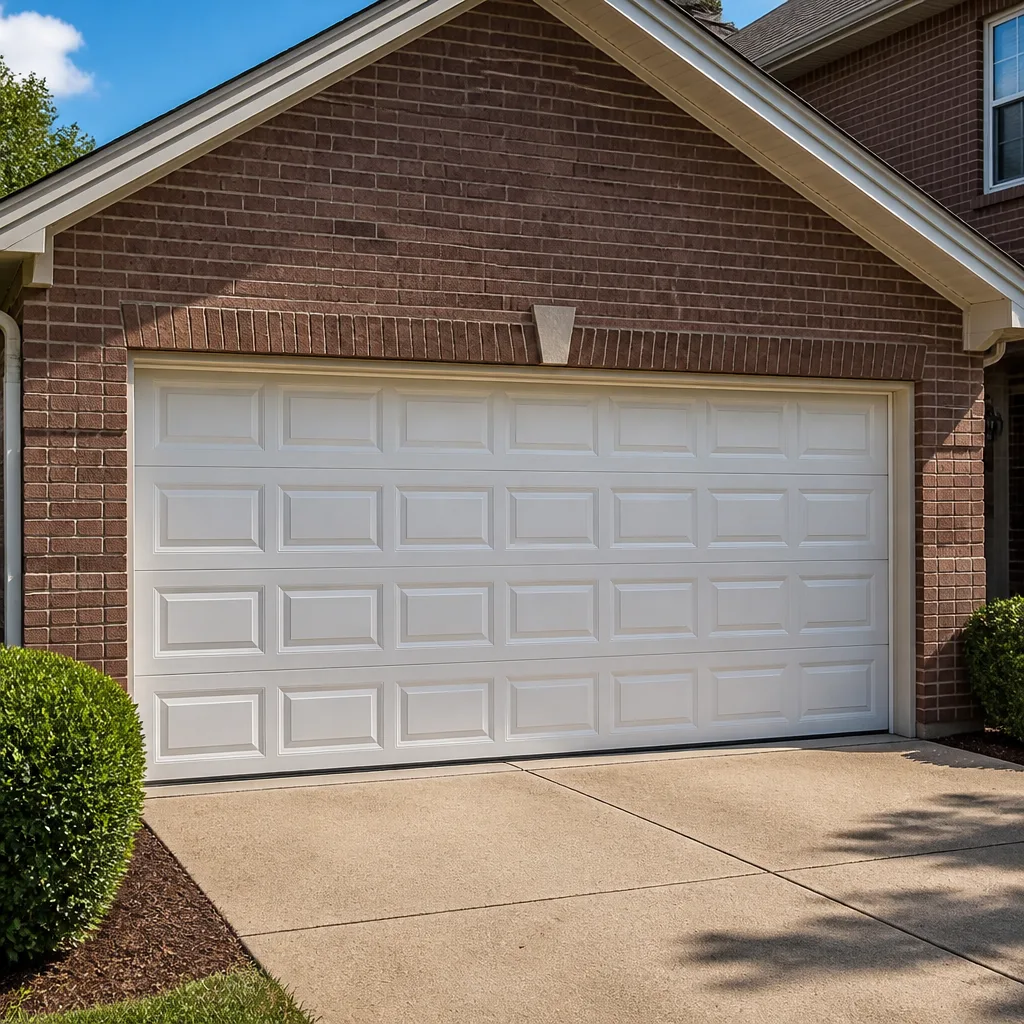
Carriage house
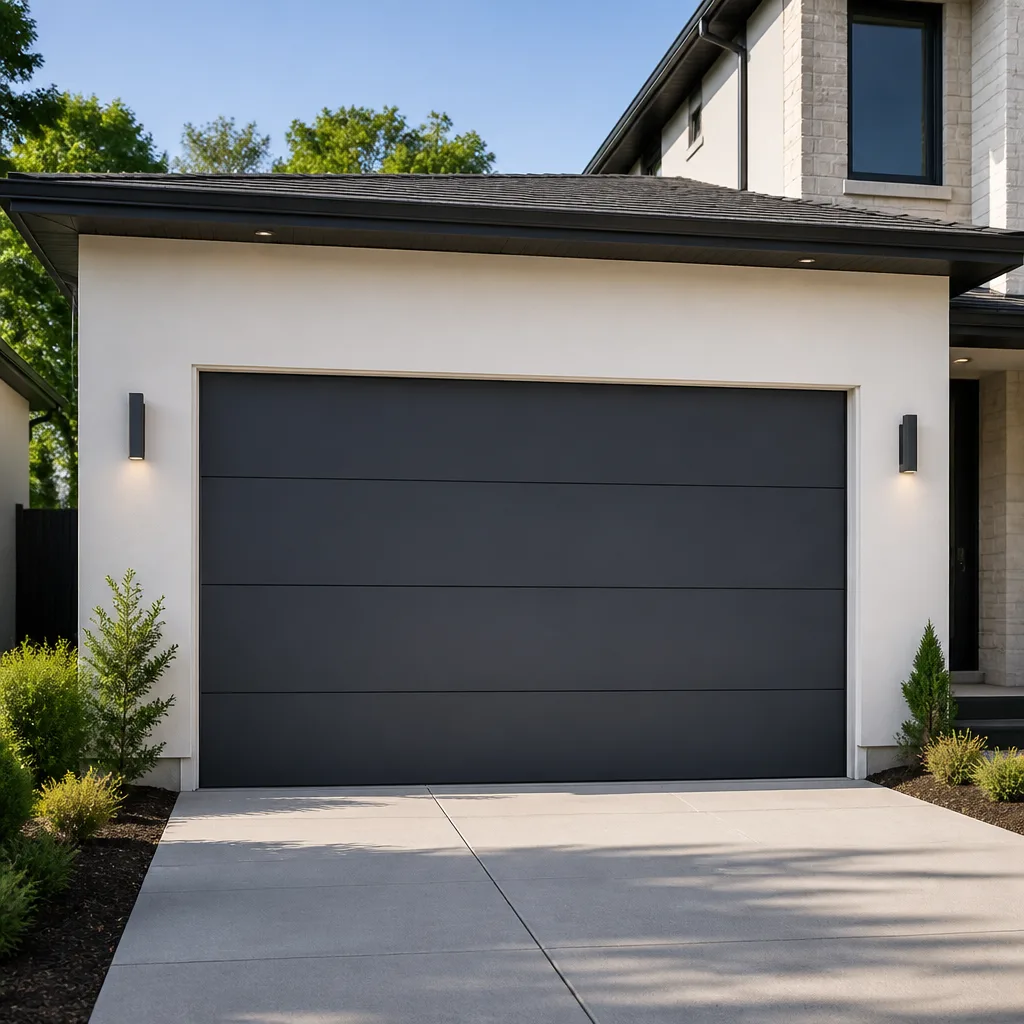
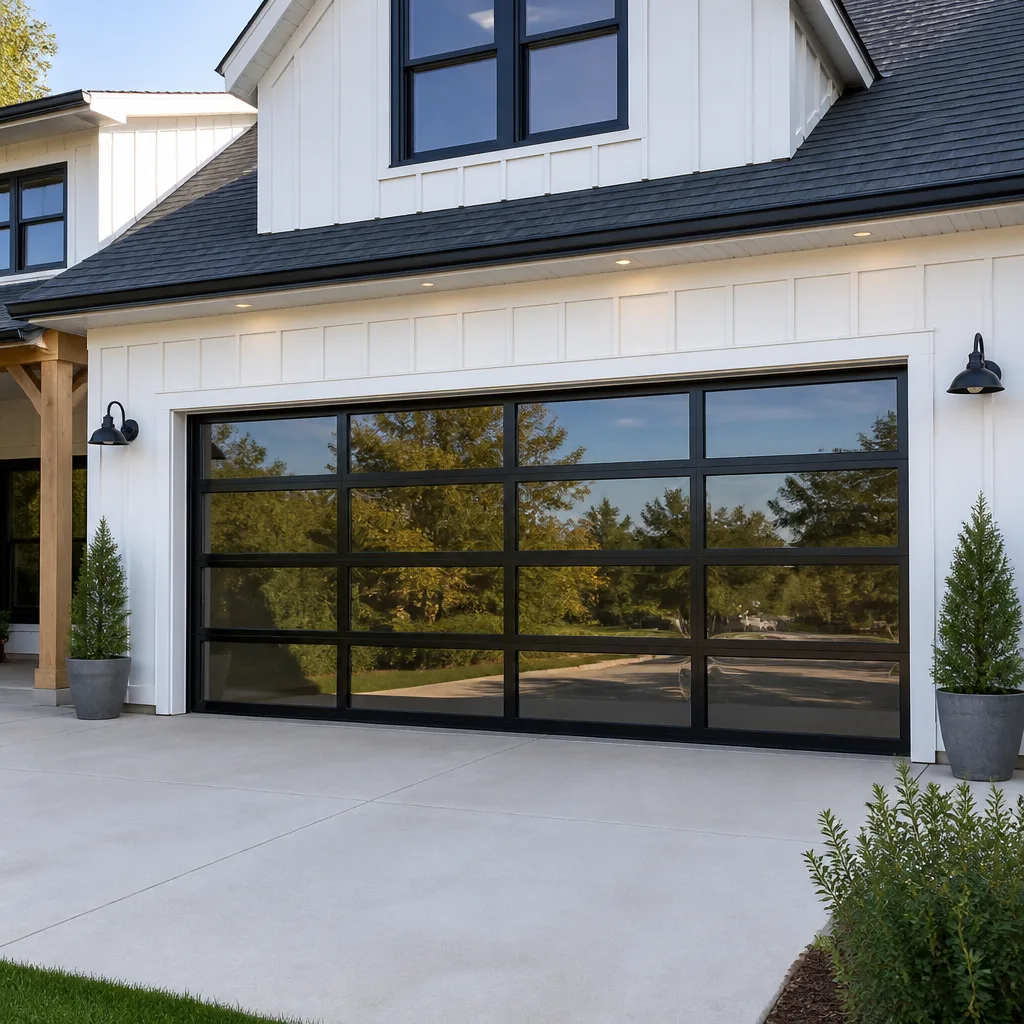
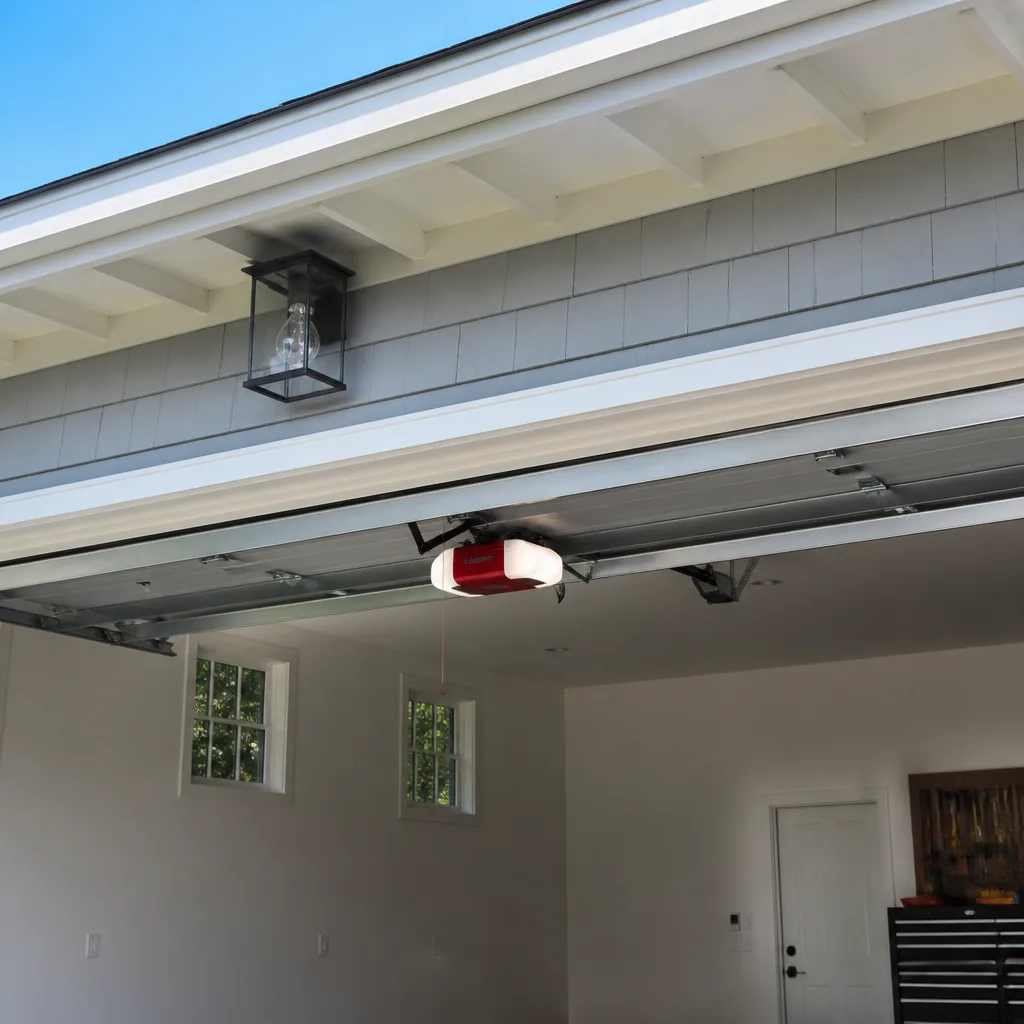
 Before
 After
After Before
 After
After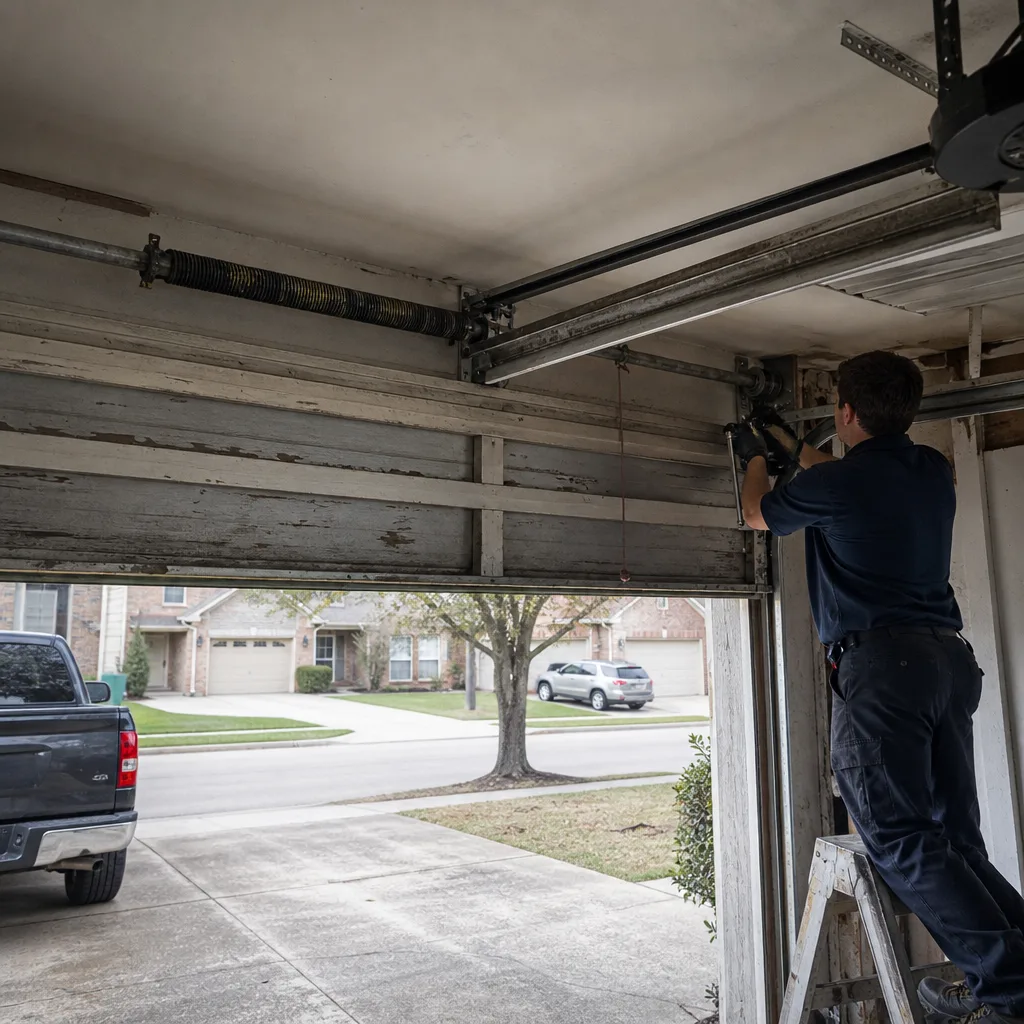 Before
 After
AfterGarage Door Cost Breakdown: The Allen Homeowner’s Reference for 2026
Two Allen homeowners can receive quotes for a “new garage door” that differ by $1,600 and both quotes are accurate. One is for a 24-gauge single-layer door with a chain-drive opener. The other is for a 25-gauge insulated door with a belt-drive unit. Nobody explained the difference to either homeowner, and that failure of explanation is why garage door cost guides keep publishing useless averages. This reference walks through the actual pricing variables in Allen’s 2026 market: steel gauge, spring cycle rating, opener horsepower, insulation R-value, and what a fair contractor margin actually looks like on paper. You will leave knowing exactly which line items on a written quote are worth paying and which ones you should question before signing.
Quick Answer
A complete garage door replacement in Allen, TX typically costs $1,150 to $3,800 in 2026 depending on door construction, insulation level, opener type, and labor. A basic 24-gauge single-layer door with a chain-drive opener on an existing frame runs $1,150 to $1,600 installed. A 25-gauge insulated door with a belt-drive smart opener runs $2,200 to $3,800. The single largest variable is not labor or brand: it is steel gauge and insulation, which together account for up to $1,200 of the spread.
Table of Contents
- The Spec-to-Price Table: What Actually Moves the Number
- Opener Pricing by Drive Type, Horsepower, and Smart Features
- MSRP, Distributor Cost, and Contractor Markup: What a Fair Margin Looks Like
- Repair Versus Replace: The Cost Threshold That Tells You When to Stop Fixing
- How to Read a Written Garage Door Quote: Line Items That Matter
- Allen-Specific Factors: Climate, Code, and Local Market Conditions
- Common Mistakes to Avoid
- When to Call a Professional
- Frequently Asked Questions
- The Bottom Line
BeforeAfterThe Spec-to-Price Table: What Actually Moves the Number
Every garage door quote in Allen traces back to four specifications: steel gauge, insulation R-value, panel count, and finish type. When you know what each one costs, you can read any quote as a series of choices rather than a single opaque number. Here is the breakdown at Allen’s current labor rates, which have stabilized in 2026 after the post-2022 spikes.
Steel Gauge: The Cost of Thickness
Steel gauge runs inversely to thickness: a lower gauge number means thicker steel. The three gauges you will see on residential doors in Allen are 24, 25, and 26.
- 26-gauge (thinnest, approximately 0.018 inches): Adds $0 to base. This is the economy spec found on entry-level doors. It dents more easily, which matters in Allen because hail season runs March through May and thin-gauge panels show hail damage faster. Fine for a garage you do not care about cosmetically. Not recommended for street-facing doors in Allen’s newer subdivisions where curb appeal affects resale.
- 25-gauge (mid-range, approximately 0.021 inches): Adds $150 to $350 over 26-gauge on a standard 16×7 door. This is the residential sweet spot. Holds up to hail better, still affordable, and it is what we install most often in Allen neighborhoods like Twin Creeks, Watters Crossing, and Star Creek.
- 24-gauge (thickest, approximately 0.024 inches): Adds $400 to $700 over 26-gauge. This is the commercial-grade residential spec. You see it on premium homes and on garage doors that face west into afternoon sun and spring storm fronts. The weight difference also matters: a 24-gauge double-layer door can weigh 40 to 60 pounds more than its 26-gauge equivalent, which means the springs and opener need to be specced accordingly.
Insulation R-Value and Construction Layers
Garage door insulation uses a different R-value scale than wall insulation because the door panels are thin. The number you see on a spec sheet (R-6.5, R-9, R-12, R-18) measures the panel’s resistance to heat flow, but the practical difference for an Allen homeowner is about garage temperature and noise. An uninsulated single-layer door adds $0. An insulated double-layer door (steel skin with a polystyrene backing) adds $400 to $700. A triple-layer door (steel skin on both sides with insulation sandwiched between) adds $700 to $1,200.
In Allen’s climate, where garage temperatures hit 110°F in August and dip below freezing a few nights each winter, the insulated door does two jobs: it keeps the garage marginally cooler in summer, and it stiffens the panel so the door flexes less when the wind pushes against it. If your garage is attached and shares a wall with living space, insulation is worth the money. If it is a detached garage used for storage and weekend projects, a double-layer is the most we would recommend spending on this line item. Triple-layer doors are for homeowners who park expensive vehicles inside, use the garage as a workshop year-round, or live in a neighborhood like Estates of Twin Creeks where the door itself is a visible architectural element.
Panel Count and Finish Type
A standard 16×7 door comes in four horizontal panels. Panel count stays constant on most residential installs, but the finish is where Allen homeowners make a real choice. Flush steel panels cost nothing extra. Raised panels (the classic rectangular indentations) add $80 to $180. Carriage-house styling, which mimics swing-out wood doors with decorative hardware, adds $300 to $900 depending on whether it is stamped steel carriage style or actual wood-look composite. Factory-finished colors beyond basic white, almond, and brown add $150 to $400, which is less than the $1,200 to $2,800 you would pay for a real wood door that needs resealing every two years in Allen’s UV-heavy sun.
Opener Pricing by Drive Type, Horsepower, and Smart Features
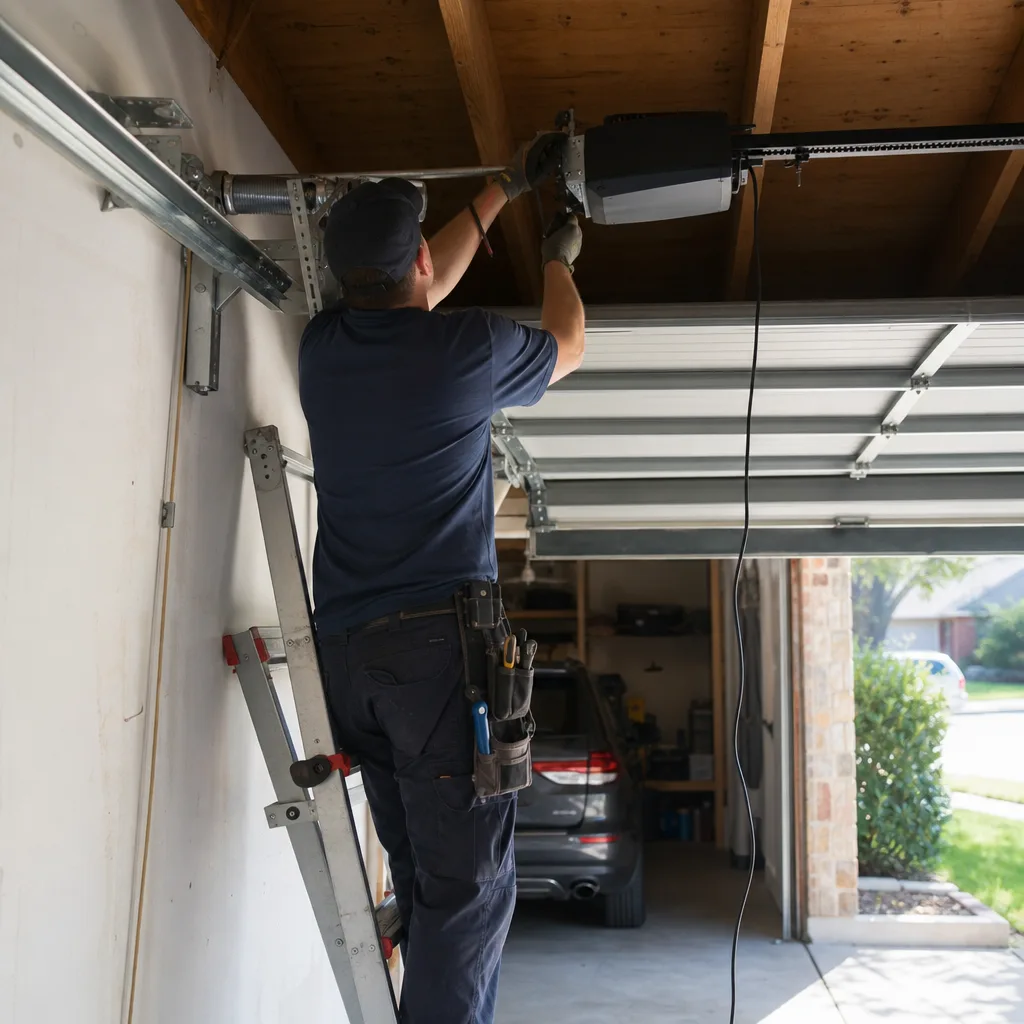
Openers are where Allen homeowners most often overspend or underspend relative to what they need. The question is not which opener is best in some abstract sense. The question is which opener matches your door weight, your garage’s proximity to bedrooms, and whether you care about smart-home integration.
A typical two-car garage in Allen has a 16×7 door weighing 130 to 180 pounds depending on construction. For that weight class, the drive type matters more than horsepower. Chain drives are loud and cost the least. Belt drives are quiet and run $80 to $150 more. Screw drives and direct drives sit in between and have largely converged with belt-drive pricing in 2026.
- Chain-drive, 1/2 HP (AC motor): $180 to $260 installed as part of a door replacement. Loud enough to hear through the wall of an attached garage. Fine for detached garages. This is the spec on most builder-grade Allen homes from the 2015-to-2020 construction wave.
- Belt-drive, 3/4 HP (DC motor): $280 to $420 installed. The standard recommendation for attached garages and any bedroom-over-garage layout, which is common in Allen’s newer builds where bonus rooms sit above the garage. DC motors also start and stop more gently, which extends door and spring life.
- Belt-drive or screw-drive, 1 HP with smart compatibility (LiftMaster, Chamberlain): $380 to $550 installed. The smart features are what you are paying for here: app control, camera integration, and the ability to check remotely whether you left the door open. LiftMaster dominates this tier in Allen’s market, and the camera-enabled models are the single most-requested opener upgrade we installed in 2025.
Horsepower beyond 1 HP on a residential door is spec theater. A 16×7 residential door, even a heavy 24-gauge triple-layer unit, does not need a 1.25 or 1.5 HP motor. That money is better spent on a higher-cycle spring or a better door panel. The spec that actually matters for a typical Allen two-car garage is cycle rating on the springs and belt-drive on the opener if the garage shares a wall with living space.
MSRP, Distributor Cost, and Contractor Markup: What a Fair Margin Looks Like
Every garage door contractor in Allen buys from distributors, not manufacturers directly. The distributor buys at a volume discount and sells to contractors at roughly 50 to 65 percent of manufacturer suggested retail price. The contractor then marks the product up to somewhere near MSRP, or slightly below it, and adds labor.
What this means in practice: a door with a $1,400 MSRP costs the contractor somewhere around $750 to $850 from the distributor. The contractor quotes you $1,200 to $1,400 for the door and charges $250 to $450 in labor, and that is a completely normal, fair quote. The margin covers the contractor’s time measuring, ordering, coordinating the distributor delivery, and standing behind the product for the warranty period. A contractor who quotes below distributor cost is either losing money deliberately, which does not last long, or they are installing a thinner-gauge door than what they wrote on the quote, which is why the documentation matters.
Labor in Allen has settled into a predictable range in 2026: $200 to $350 for a standard door replacement on an existing frame, taking two to three hours. If the quote shows labor below $150, that is a red flag. It usually means the crew is paid per job and will be in a hurry, or the installer is not carrying proper insurance. Background-checked, uniformed technicians cost real money to employ, and that cost appears on the labor line.
The manufacturer you choose has less markup variance than homeowners expect. Wayne Dalton, Craftsman, Raynor, and LiftMaster all operate within the same distributor pricing structure. The brand name on the door matters less than the gauge, insulation, and spring cycle rating. We stock parts for all of them because the difference between brands at a given spec level is more about finish options and availability than about build quality.
Repair Versus Replace: The Cost Threshold That Tells You When to Stop Fixing
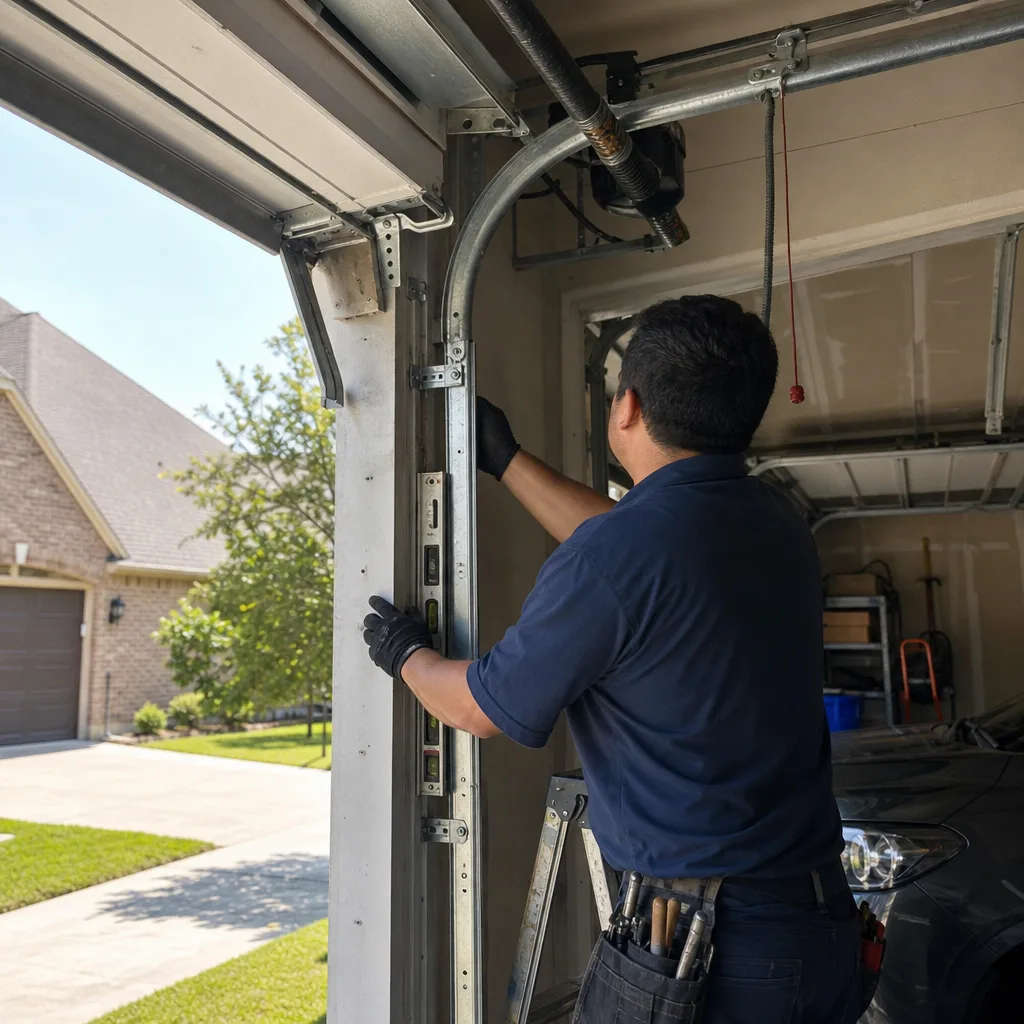
The decision to repair or replace a garage door is a math problem, and most Allen homeowners answer it emotionally. The rule we use in our own estimates: when the repair cost exceeds 40 percent of the replacement value of the door, replacement becomes the financially rational choice. Here is why that threshold exists.
A 16×7 25-gauge double-layer door with a belt-drive opener has a replacement value of roughly $2,400 to $2,800 installed in Allen. Forty percent of that is $960 to $1,120. If the repair quote to fix multiple failed components (say, a broken torsion spring at $280, a bent track section at $220, and worn rollers at $140) totals $700, the repair still makes sense: the door has years of service life left, and the components you are replacing are wear items anyway. If the quote is $1,300 because the door itself has rusted through at the bottom panel and the spring failed and the opener logic board is dead, you are putting new parts on a door that has already told you it is finished.
There is another factor Allen homeowners should weigh: the dated look. A 2005-era raised-panel door on a home you are selling in 2026 is a visible liability. Replacing it before listing typically recovers 80 to 90 percent of its cost in perceived value, and it removes a negotiating point from the buyer’s agent. The repair-versus-replace math changes when resale enters the picture. For more detail on what repair actually costs line by line, see our Garage Door Repair in Allen guide, which covers spring replacement, cable repair, and track work separately.
How to Read a Written Garage Door Quote: Line Items That Matter
A properly itemized quote tells you what you are buying and why it costs what it costs. Here is what you should see, line by line, when you get a written price in Allen:
- Door model and manufacturer with the exact gauge and R-value stated. If the quote says “steel door” without specifying 24, 25, or 26 gauge, you cannot compare it to anything. This is the most common omission we see from competitor quotes, and it is how two quotes for the “same door” end up $700 apart.
- Insulation and construction layer (single, double, or triple). Stated explicitly as a line item with its own cost, not buried inside the door price.
- Labor as a separate number. Same for haul-away and disposal of the old door. These are fixed costs. They are not negotiable, and a contractor who pads them to hide margin elsewhere is giving you a dishonest quote structure.
- Opener with drive type, horsepower, and motor type (AC or DC). If smart features are included, the quote should name the exact feature set, not just “smart opener.”
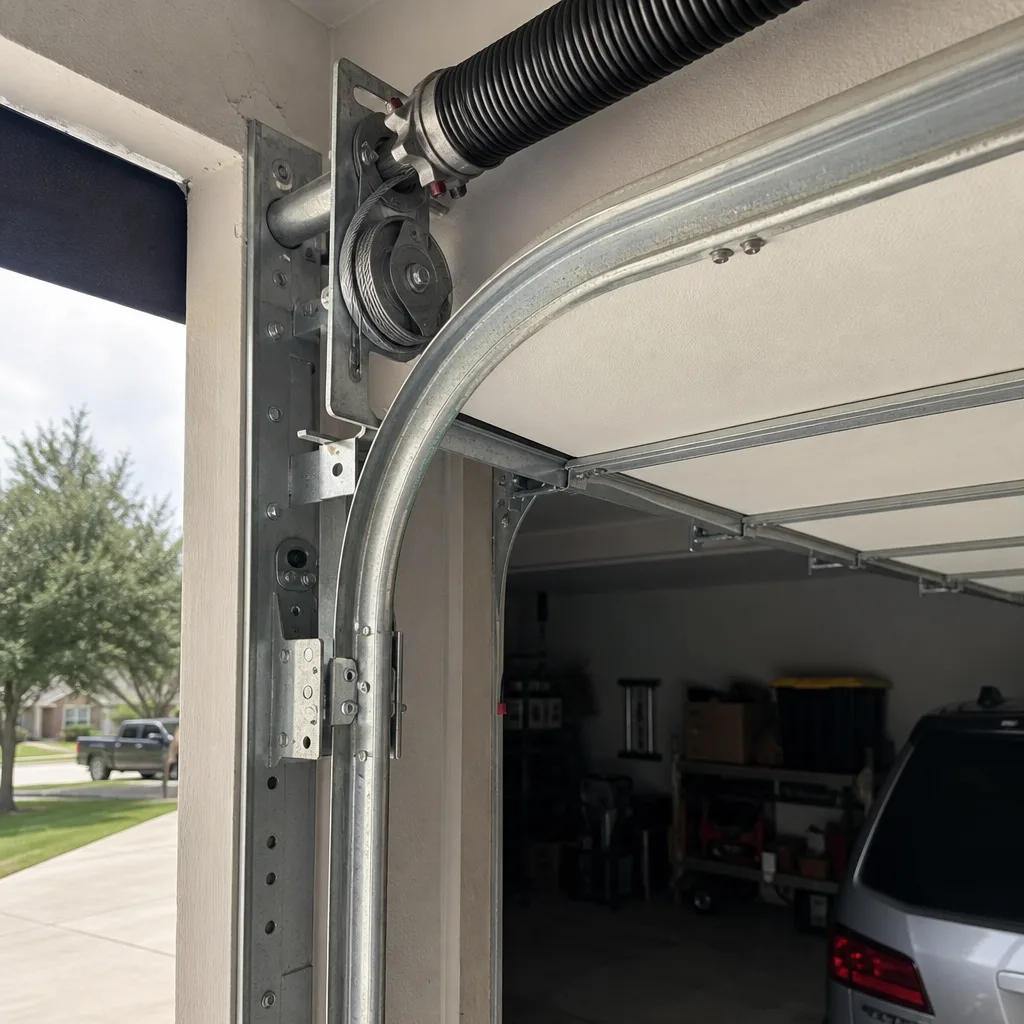
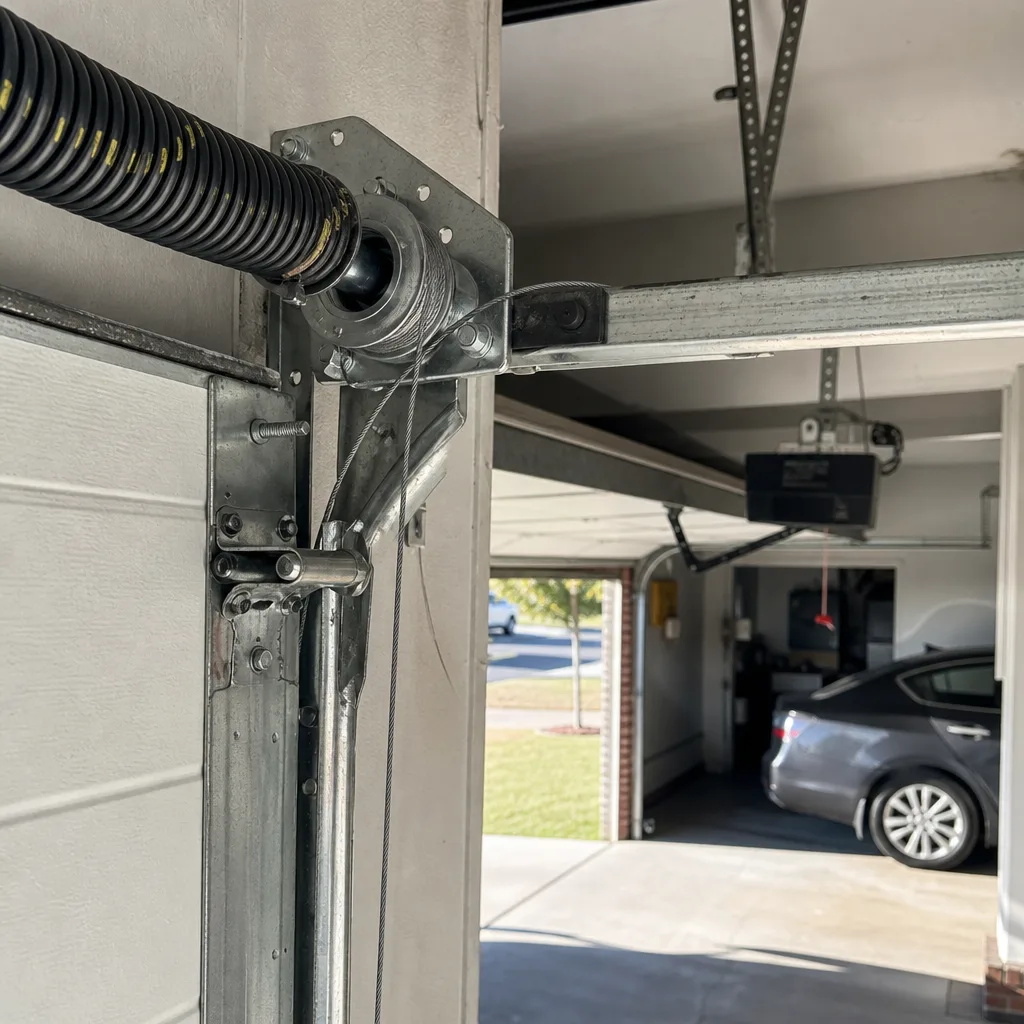
- Spring cycle rating. A 10,000-cycle spring and a 20,000-cycle spring are not the same part, and the improved spring adds $60 to $100. In Allen, where doors cycle through heavy use in April and May (car goes out, car comes in, repeat during storm season), we recommend the 20,000-cycle spring on any mid-range or premium install.
- Warranty terms in writing, including what the labor warranty covers and for how many years. The manufacturer warranty covers the door; the labor warranty covers the installation. These are different documents.
Which line items are negotiable? Almost none on the product side. The contractor’s price on the door from the distributor is what it is, and labor is labor. What you can negotiate, or simply ask about, is the opener tier: dropping from a smart belt-drive to a standard belt-drive saves $100 to $170 without touching the door itself. You can also ask about panel finish: the fancy carriage-house hardware is purely cosmetic and removable from the quote. The line items that are fixed are the door, the labor, and the disposal. Everything else is a choice.
At Servo Garage Doors Allen home, our quotes are flat and written before any work starts. Clause 1 of The Haven Standard is the rule: a written price and written scope on every job. If a quote from another company is missing any of the six line items above, you can bring it to us for a free second opinion.
Allen-Specific Factors: Climate, Code, and Local Market Conditions
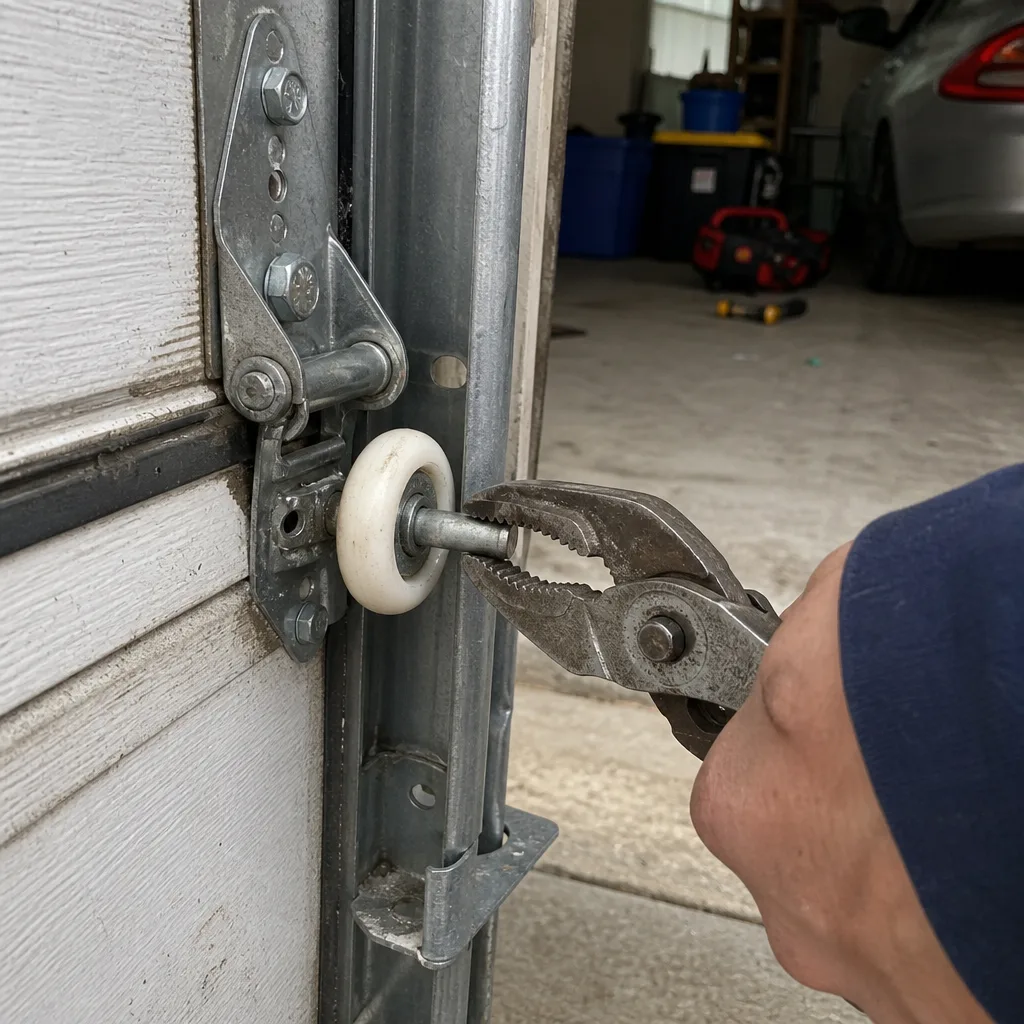
Allen’s climate and building landscape shape garage door pricing in ways that a generic cost guide will never mention. Here are the four that actually affect your quote.
Hail and wind exposure. Allen sits in Collin County, which sees more than its share of severe thunderstorm activity in spring. Hail over one inch in diameter can dent a 26-gauge door in minutes. The neighborhoods east of Highway 75, including Lost Creek Ranch and Twin Creeks, catch the same storm lines as the rest of the metro, and doors there get replaced at a higher rate after bad hail years. If your door faces open sky with no tree cover or neighbor’s roofline to break the wind, step up to 25-gauge and consider the thicker spec worth the money.
Heat and sun exposure. A west-facing garage door in Allen absorbs direct afternoon sun from roughly 4 to 8 PM during summer. That heat load shortens spring life and ages the door’s finish faster. The fix is not a more expensive door: it is a higher-cycle spring and a factory finish rather than a site-painted one. Factory finishes hold up visibly better under sustained UV.
Permitting and code. Garage door replacements in Allen do not require a city permit when the track, springs, and opener are being replaced on an existing opening. The work is considered a like-for-like replacement. What does matter is wind-load rating, and this is where quoting gets specific: doors in this region need to meet the wind-load requirements for the door’s location and exposure. A properly rated door for Allen’s wind zone costs slightly more than a door sold without a wind-load rating, which is another reason online national averages run low.
Market maturity. Allen’s housing stock runs from 1990s builds in neighborhoods like Fountain Park to 2020s construction in the developments along the east side. The older homes frequently have doors with tired springs, worn rollers, and openers that predate smart technology. The newer homes have builder-grade 26-gauge doors that were installed to meet a budget, not to last. Both situations create steady demand, which keeps Allen’s garage door contractor pricing competitive and predictable compared to smaller surrounding cities.
Common Mistakes to Avoid
- Buying by brand name instead of spec. A Wayne Dalton 26-gauge door and a Raynor 26-gauge door are functionally identical. Pay for gauge and insulation, not the logo. The brand matters more on openers, where LiftMaster’s smart ecosystem and Chamberlain’s app reliability have real differences, and even there the gap narrows every year.
- Skipping the spring upgrade on a new door. A standard door ships with a 10,000-cycle spring. For $60 to $100 more, the 20,000-cycle spring effectively doubles the lifespan of the most frequently replaced component on your door. This is the single best value upgrade in the entire quote.
- Accepting a verbal quote on a repair you have not seen itemized. If the contractor cannot tell you what the torsion spring measured at and why it failed, they have not diagnosed anything. They are guessing, and you are paying for the guess. Clause 4 of The Haven Standard exists for this exact reason: the technician photographs the failed part before quoting a replacement, and you see the evidence.
- Replacing the opener when the problem is the door. A door that is heavy, misaligned, or riding on worn rollers will burn out a new opener’s motor prematurely. We see this in Allen constantly: homeowner replaces an opener, door still struggles a year later, and the original problem was never addressed. Diagnose the door before you replace the opener.
- Ignoring the wind-load rating. A door sold without a wind-load rating will be cheaper, and it may not perform in a spring storm. The saving is not worth the risk in Allen’s climate. Ask to see the wind-load documentation.
- Paying extra for horsepower you do not need. A 1.25 HP opener on a standard 16×7 residential door is wasted money. The weight does not require it. Spend that money on a better spring or better insulation instead. For guidance on matching an opener to your door and garage configuration, our Garage Door Opener Repair & Installation in Allen guide walks through each drive type in more detail.
When to Call a Professional
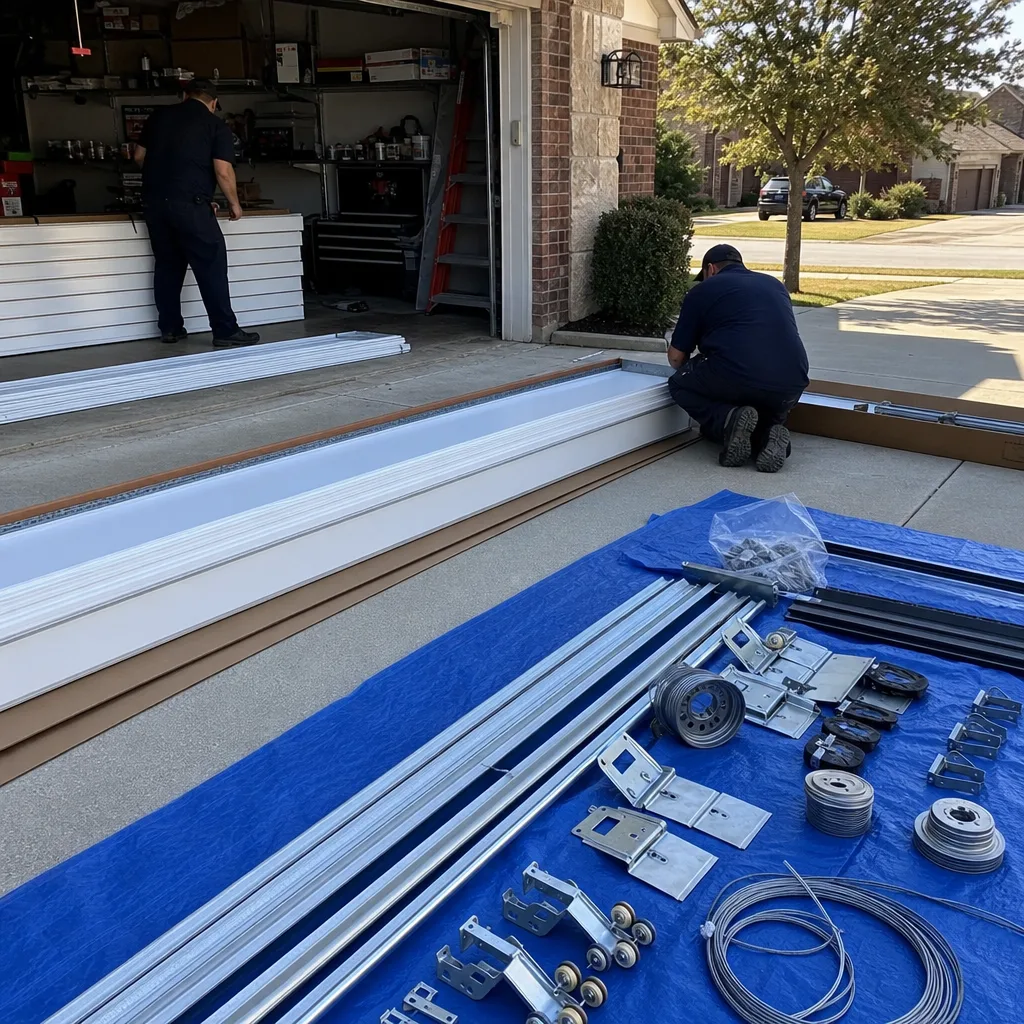
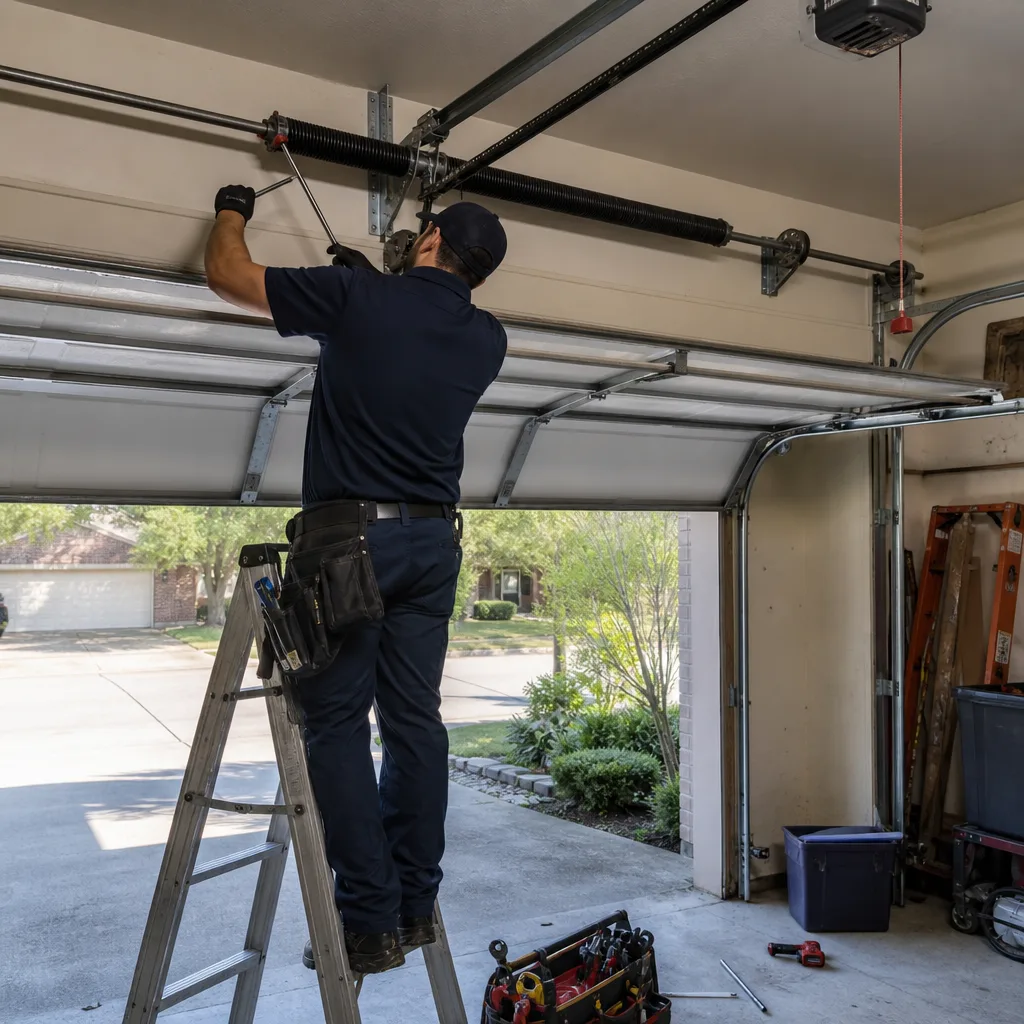
Garage door work sits on a spectrum. Replacing a remote battery or reprogramming a keypad is homeowner territory. Anything involving torsion springs, cables under tension, or track adjustment is not. Torsion springs hold enough stored energy to cause serious injury if they release unexpectedly, and the cables routed through them are under constant load. Even a door that is visibly sagging on one side can drop suddenly if you attempt to adjust the track without the right tools and training. If you hear a loud bang from the garage and the door will not open, that is a broken spring, and the correct move is to leave the door closed and call someone who does this daily. For a quick self-check of symptoms before calling, see our Garage Door Warning Signs: A Allen Homeowner’s Reference Guide. Servo Garage Doors Allen offers free estimates in Allen, and our technicians are background-checked and uniformed on every job. Call (469) 613-4703 and you will reach a live person, not a recording.
Frequently Asked Questions
A complete garage door replacement in Allen costs $1,150 to $3,800 in 2026 depending on steel gauge, insulation level, opener type, and finish options. A basic 24-gauge single-layer door with a chain-drive opener starts around $1,150 installed. A 25-gauge insulated door with a belt-drive smart opener runs $2,200 to $3,800. Steel gauge and insulation, not labor, are the variables that create the spread. Call (469) 613-4703 for a written quote on your specific door and opening.
Repair is cheaper when the repair cost is below 40 percent of the door’s replacement value. On a $2,500 door, that means repairs under $1,000 make sense if the door itself is structurally sound. Once the repairs exceed that threshold, or the door has multiple failing components plus visible panel damage, replacement is the better financial choice. We can assess this on site with a written breakdown of both options.
A new garage door typically recovers 80 to 90 percent of its cost in resale value, making it one of the highest-return exterior improvements available. In Allen’s competitive housing market, a dated or dented garage door on a street-facing elevation is a visible negotiating point for buyers. A 25-gauge insulated door with a belt-drive opener is the replacement we recommend for homes going on the market.
25-gauge is the best value for most Allen homes. It balances cost, dent resistance, and weight. A 24-gauge door makes sense for west-facing garages with no shade or for homeowners who want the extra panel stiffness. A 26-gauge door is only recommended for detached garages where cosmetics and hail resistance are not priorities. The difference between 25 and 26 gauge is $150 to $350 on a standard 16×7 door.
Belt-drive is the right choice for any attached garage in Allen, especially if a bedroom or bonus room sits above or next to the garage. Belt-drive openers cost $80 to $150 more than chain-drive but run significantly quieter and last longer because the DC motors start and stop more gently. Chain-drive is acceptable for detached garages where noise does not travel into living space.
No. A properly done garage door installation in Allen starts with measuring the opening, confirming the door and opener specifications, ordering from the distributor, and scheduling the install. That process typically takes a few days to a week depending on stock. Any company that promises same-day door installation is not measuring properly or is installing whatever is already in the truck. Our Garage Door Installation in Allen process includes a free measure and a written price before your door is ordered. Emergency repairs are different: broken springs and cables are repaired same day. Call (469) 613-4703 to schedule a free estimate at your convenience.
The Bottom Line
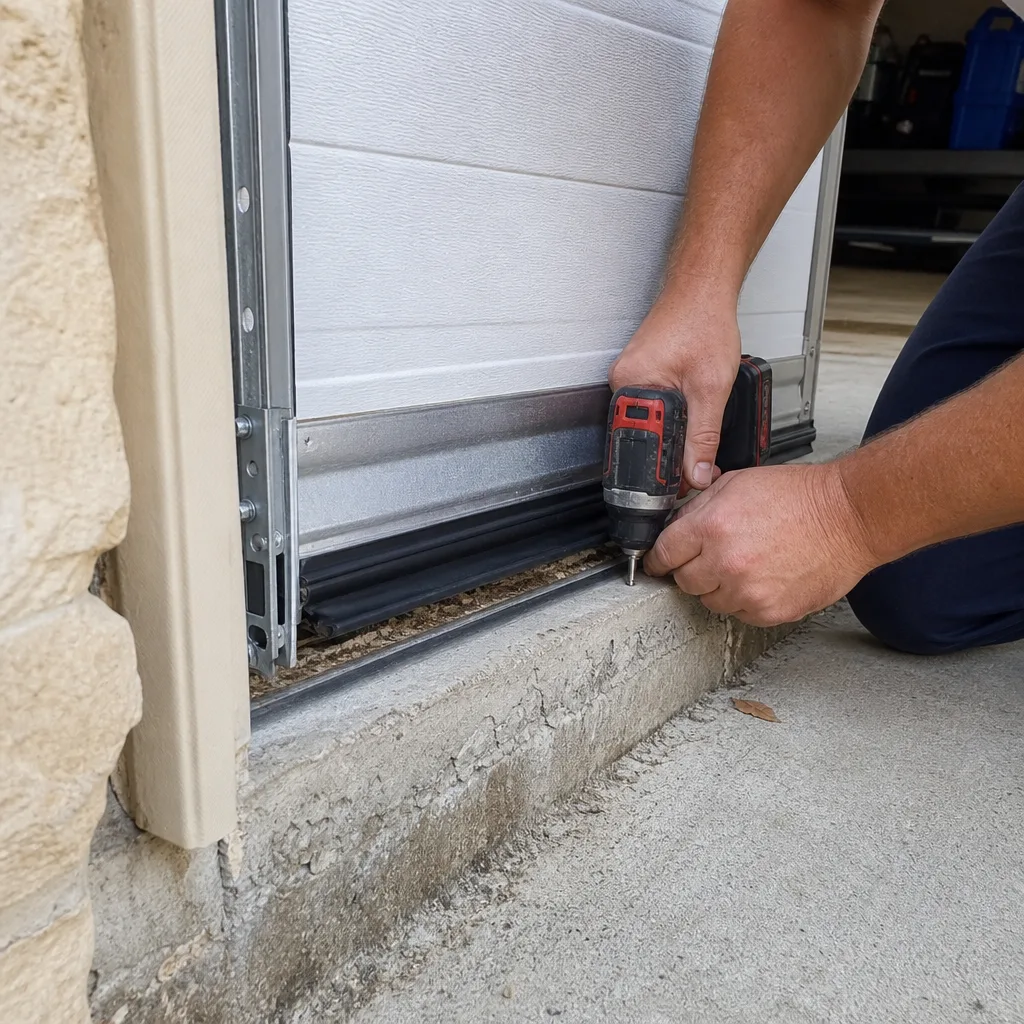
The garage door cost number that matters is not the national average. It is the number you get when you choose a steel gauge, an insulation level, an opener drive type, and a spring cycle rating, and then see each of those choices on a written quote as a separate line item. In Allen’s 2026 market, that number ranges from $1,150 on the economy end to $3,800 for a fully specced premium install. The difference is real and explainable. And the difference between a quote you can trust and one you cannot is documentation: a written price before any work starts, a photo record of what was found, and warranty terms in writing. That is how a garage door company should leave you feeling about the money you spent, and it is the standard we have worked to since 2015. Explore more guides & resources to keep your door running right.
Written by Marcus Deller, Owner at Servo Garage Doors Allen, serving Allen since 2015.